October 5, 2026 • Celeste Morrow • 10 min reading time • Prices verified June 4, 2026
The AI-Assisted Skincare Routine: What Buyers Who Used ChatGPT to Build Their Regimen Actually Ended Up Using
If you’ve ever stood in a drugstore aisle holding two serums you can’t quite decode — one with retinol (a vitamin A derivative that speeds up skin-cell turnover) and one with vitamin C (an antioxidant that brightens and protects) — and thought I wish someone could just tell me what to buy and in what order, you are now statistically likely to have opened a chatbot and asked. AI tools like ChatGPT have quietly become skincare consultants for a growing slice of shoppers, and the product reviews left behind by those shoppers are unusually detailed. They describe their full five-step stacks, their failed combinations, and whether the AI’s logic actually held up in practice. This article pulls from that aggregated review data, layers in expert sourcing, and gives you the honest tradeoff map — where AI-assembled routines are genuinely working, where the failure points are, and what the emerging consensus routine actually looks like.
| EDITOR'S PICKClinique 3-Step Dramatically Di… | Mid-tierLa Roche-Posay Toleriane Double… | Budget pickThe Ordinary Niacinamide 10% +… | |
|---|---|---|---|
| Key active | Glycerin | Ceramide, Niacinamide | Niacinamide 10% + Zinc 1% |
| SPF | SPF 35 | — | — |
| Size | 4.2 Fl Oz | — | 1 Fl Oz |
| Skin type | Dry to dry combo | All skin types | Blemish-prone |
| Product type | Moisturizing lotion | Face moisturizer | Serum |
| Price | $34.00 | $24.99 | $6.00 |
| See on Amazon → | See on Amazon → | See on Amazon → |
The Routine That Keeps Appearing — And Why AI Keeps Recommending It
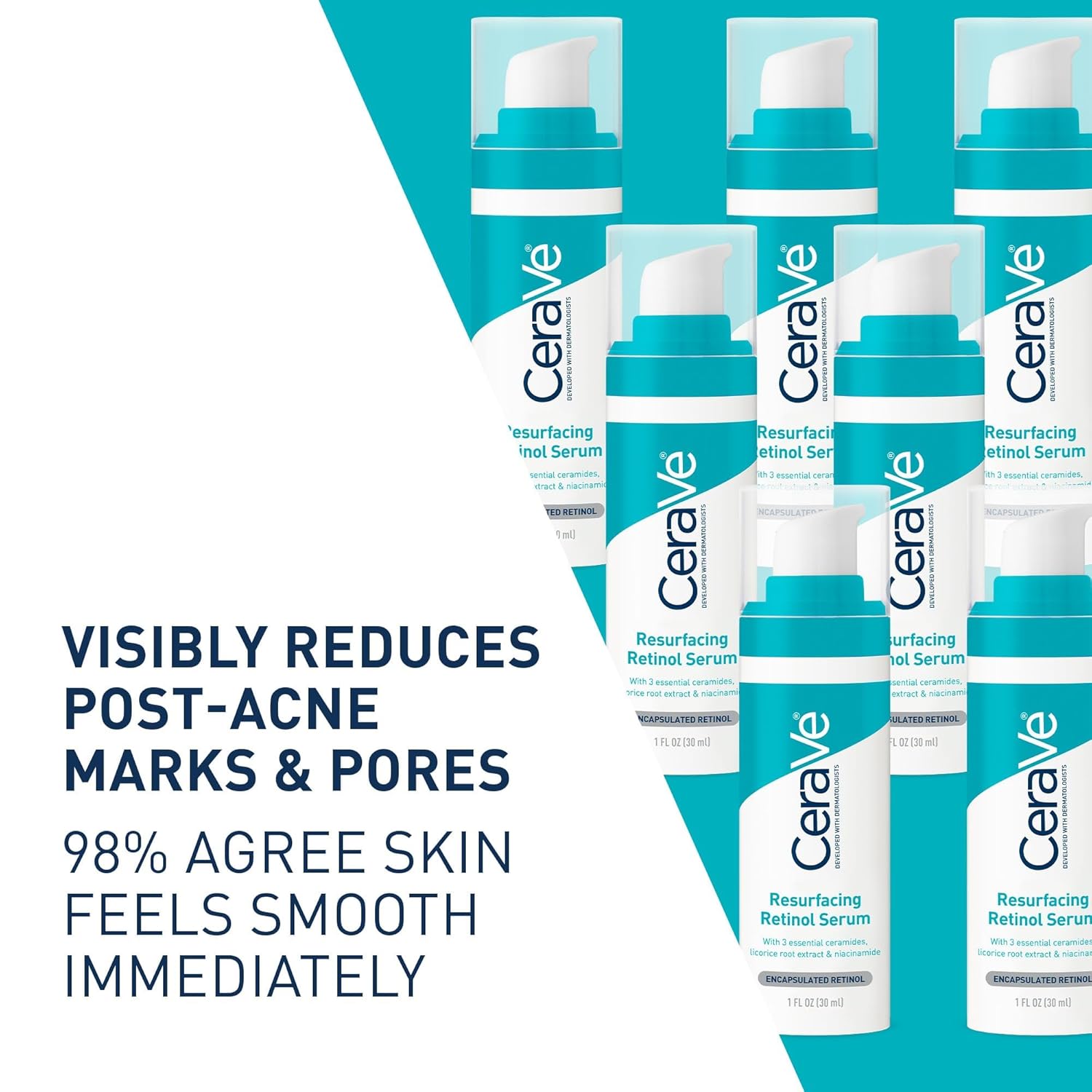
Across aggregated reviews for mid-range actives in the drugstore-to-specialty price band, a remarkably consistent five-product stack surfaces again and again. One CeraVe Resurfacing Retinol Serum reviewer explicitly credits ChatGPT with assembling the combination: a vitamin C serum in the morning (specifically, Timeless 20% Vitamin C + E Ferulic), niacinamide (a form of vitamin B3 that calms inflammation, regulates oil, and functions as a versatile connector between stronger actives) as a midday bridge, and a retinol serum in the evening — with the CeraVe product as the retinol entry point. Paula’s Choice 2% BHA Liquid Exfoliant (BHA, or beta hydroxy acid, is a chemical exfoliant that unclogs pores and smooths texture) appears as the fifth player, slotted a few nights per week rather than daily.
What’s striking isn’t that this combination exists — it’s that multiple reviewers describe arriving at it independently, suggesting AI tools are now reflecting back a genuine consensus. Paula’s Choice’s skincare education library has long advocated this basic architecture: antioxidant protection in the morning, cell-turnover actives at night, with a non-irritating connector like niacinamide woven through both. Byrdie’s routine guides echo the same logic. When AI models are trained on that corpus, they reproduce it — and in this case, the corpus happens to reflect solid dermatological reasoning.
Reviewers using this stack for sun damage and aging spots report visible improvement at the eight-to-twelve-week mark, with the vitamin C and retinol pairing drawing the most credit for hyperpigmentation fade. The AI’s instinct to combine a morning antioxidant with an evening retinoid is — per Allure’s retinol deep-dive — exactly what board-certified dermatologists recommend.
Where the AI Gets It Right (and the Math Behind the Picks)
The products AI tools most frequently land on in the accessible-to-mid-tier range share a few characteristics that make them defensible recommendations even under scrutiny:
By the numbers — the AI-consensus stack, approximate retail:
| Product | Role in Routine | Approx. Price |
|---|---|---|
| Timeless 20% Vitamin C + E Ferulic | AM antioxidant | ~$25 / 1 oz |
| Niacinamide 10% + Zinc serum (various) | AM or PM connector | ~$8–$15 / 1 oz |
| CeraVe Resurfacing Retinol Serum | PM retinoid | ~$20 / 1 oz |
| Paula’s Choice 2% BHA Liquid | 2-3x/week exfoliant | ~$34 / 4 oz |
| CeraVe Moisturizing Cream or La Roche-Posay Toleriane Double Repair | PM buffer moisturizer | ~$16–$22 |
The per-day cost of running this full stack lands somewhere around $0.60–$0.90 depending on usage rate — a figure that makes the ingredient quality-per-dollar calculation hard to argue with. The AI’s tendency to anchor on these brands isn’t arbitrary: they have large review footprints, established ingredient transparency, and high coverage in the sources those models train on. EWG’s Skin Deep database rates most of these formulas favorably on ingredient safety, which likely amplifies their signal in training data.
What AI gets right is the architecture: morning antioxidant defense, evening cell-renewal actives, and a moisturizer heavy enough to buffer the retinoid. Self’s 2025 coverage of AI-generated skincare advice noted that chatbots tend to perform best when the question is structural (“what order do I apply these?”) and worst when the question requires personalized diagnostic work (“why is my skin still breaking out?”).
The Failure Points: What Buyers Report Going Wrong
The single most consistent failure point across AI-assisted routine reviews isn’t a bad product recommendation — it’s a missing instruction. Reviewers who report burning, peeling, or barrier damage almost universally share one thing: they skipped or underweighted the buffer moisturizer, particularly on nights when they combined retinol with BHA.
This isn’t a flaw in AI reasoning so much as a flaw in how most people prompt it. When a buyer types “build me a routine for dark spots,” the chatbot tends to optimize for ingredient efficacy, not for the friction-reduction layer that makes those ingredients tolerable long-term. Dermstore’s editorial breakdown of retinol versus prescription retinoids flags this specifically: the standard clinical guidance is to apply moisturizer before or directly after retinol when starting out — a technique called “sandwiching” — because it slows absorption and reduces irritation without meaningfully reducing efficacy over time.
La Roche-Posay Toleriane Double Repair Moisturizer surfaces specifically in reviews from prescription retinoid users — tretinoin, adapalene — who cite it by name for being fragrance-free, ceramide-forward, and non-reactive with even the most aggressive topical prescriptions. For this subgroup, the AI occasionally under-recommends moisturizer weight: several reviewers note they had to upgrade from a lighter gel moisturizer after the prescription retinoid caused visible flaking at the cheek and chin.
The postpartum re-entry case is worth naming explicitly. A CeraVe Resurfacing Retinol Serum buyer who describes returning to retinol after pregnancy chose that product specifically for its encapsulated retinol format, which releases more slowly and is gentler on a skin barrier that’s been off actives for months. The AI recommendation in her case was calibrated correctly — gentle over-the-counter retinol before re-escalating to prescription strength — and her review at the ten-week mark describes steady, irritation-free improvement on melasma (hormonally triggered hyperpigmentation).
Niacinamide as the Connective Tissue — Why It Keeps Appearing
Niacinamide’s near-universal presence in AI-generated stacks reflects something real. It is, in the language of formulation science, a “safe mixer” — it plays well with vitamin C (the old myth about niacinamide deactivating vitamin C has been largely walked back in formulation literature; Paula’s Choice’s education library addresses this directly), with retinol, and with BHA. It calms post-active redness and supports ceramide production in the skin barrier, which is precisely what a barrier stressed by retinol or exfoliants needs.
Reviewers in the AI-assisted stack cohort tend to use niacinamide one of two ways: as a morning layer between vitamin C and sunscreen, or as a PM layer between retinol and moisturizer. Both placements appear in reviews without meaningful difference in reported outcomes. The flexibility is the point — niacinamide is the ingredient an AI recommends when it needs to give a routine room to breathe.
Frequently Asked Questions
Is it actually safe to build a skincare routine based on ChatGPT or AI recommendations?
For general structural advice — what order to apply products, which ingredient categories pair well, what to avoid mixing — the answer from aggregated reviewer experience is: mostly yes, with caveats. AI tools perform reliably when answering architecture questions drawn from well-documented ingredient science. They perform poorly on individualized diagnostic questions (why is my skin reacting?) and on anything requiring knowledge of your personal health history, current medications, or skin conditions. Treat AI as a starting framework, not a dermatologist substitute. Self’s reporting on AI skincare tools makes the same distinction.
What order should I apply vitamin C serum, niacinamide serum, and retinol if I’m using all three?
Morning: cleanse, vitamin C serum, niacinamide serum, moisturizer, SPF. Evening: cleanse, retinol, wait five to ten minutes, moisturizer. Niacinamide can double as a PM post-retinol layer if you want additional barrier support before your moisturizer. Paula’s Choice’s layering guidance follows this same sequence.
Can I use vitamin C in the morning and retinol at night every single day, or do I need rest days?
Most reviewers running this exact combination report no need for scheduled rest days once their skin has acclimated — typically four to six weeks in. The more relevant variable is BHA frequency: that exfoliant is where most people find a natural ceiling (two to three nights per week is the common stopping point). Allure’s retinol coverage notes that daily retinol use at low-to-mid percentages is well-tolerated by most skin types after a proper ramp-up period.
What moisturizer should I use if a prescription retinoid is making my skin burn and peel?
La Roche-Posay Toleriane Double Repair Moisturizer appears most frequently in this specific use case across reviews, praised for being fragrance-free, non-comedogenic (meaning it won’t clog pores), and ceramide-rich enough to visibly reduce retinoid-induced flaking. CeraVe Moisturizing Cream is the other consistent answer — heavier texture, identical absence of fragrance, broadly available. The sandwiching technique (moisturizer before retinoid application, not just after) is worth trying before switching products entirely.
Is the CeraVe Resurfacing Retinol Serum strong enough to replace a prescription retinoid?
No, not as a direct clinical substitute. Prescription retinoids like tretinoin operate at concentrations and molecular structures that over-the-counter retinol cannot replicate. What the CeraVe product offers is a meaningful step down for people who need to pause prescription strength (postpartum, skin barrier recovery, cost management), or a well-tolerated entry point for people who have never used a retinoid at all. Dermstore’s retinol-versus-prescription editorial lays out this distinction clearly: over-the-counter retinol converts to retinoic acid in the skin at a slower rate, producing gentler but real results over a longer timeline.
How long does it take to see results when following a multi-step serum routine consistently?
The honest answer from the review data: four weeks for texture improvement and pore appearance, eight to twelve weeks for visible hyperpigmentation fade, and up to six months for the most stubborn sun damage. Reviewers who describe the biggest results are almost universally the ones who also describe the most consistent application — no skipped nights, no abandoned weeks. The AI’s job is to get you into a routine you’ll actually maintain; the chemistry does the rest over time.
The Decision Frame: If X, Then Y
If you’re starting from zero and an AI has handed you a five-product stack: prioritize the retinol and sunscreen. Those two produce the most documented long-term results. Add the vitamin C in month two when your skin has adjusted.
If you’re re-entering actives after pregnancy or a barrier-disruption event: CeraVe Resurfacing Retinol Serum’s encapsulated format is the lowest-friction on-ramp. Pair it with a heavy, fragrance-free moisturizer from night one.
If prescription retinoid irritation is your specific problem: the answer is almost certainly not a different retinoid — it’s a heavier buffer moisturizer applied before or immediately after. Try La Roche-Posay Toleriane Double Repair before you swap products.
If you’re deciding whether to trust AI’s ingredient advice at all: trust the structural recommendations (layering order, timing, pairing logic). Verify anything diagnostic (why is my skin doing X?) with a licensed esthetician or dermatologist. The reviews suggest AI is a genuinely useful tool for the former and a genuinely risky substitute for the latter.