August 25, 2026 • Celeste Morrow • 11 min reading time • Prices verified June 4, 2026
Budget Niacinamide Serums Head to Head: The Ordinary, Good Molecules, Naturium, and COSRX at 10%, 12%, and 15%
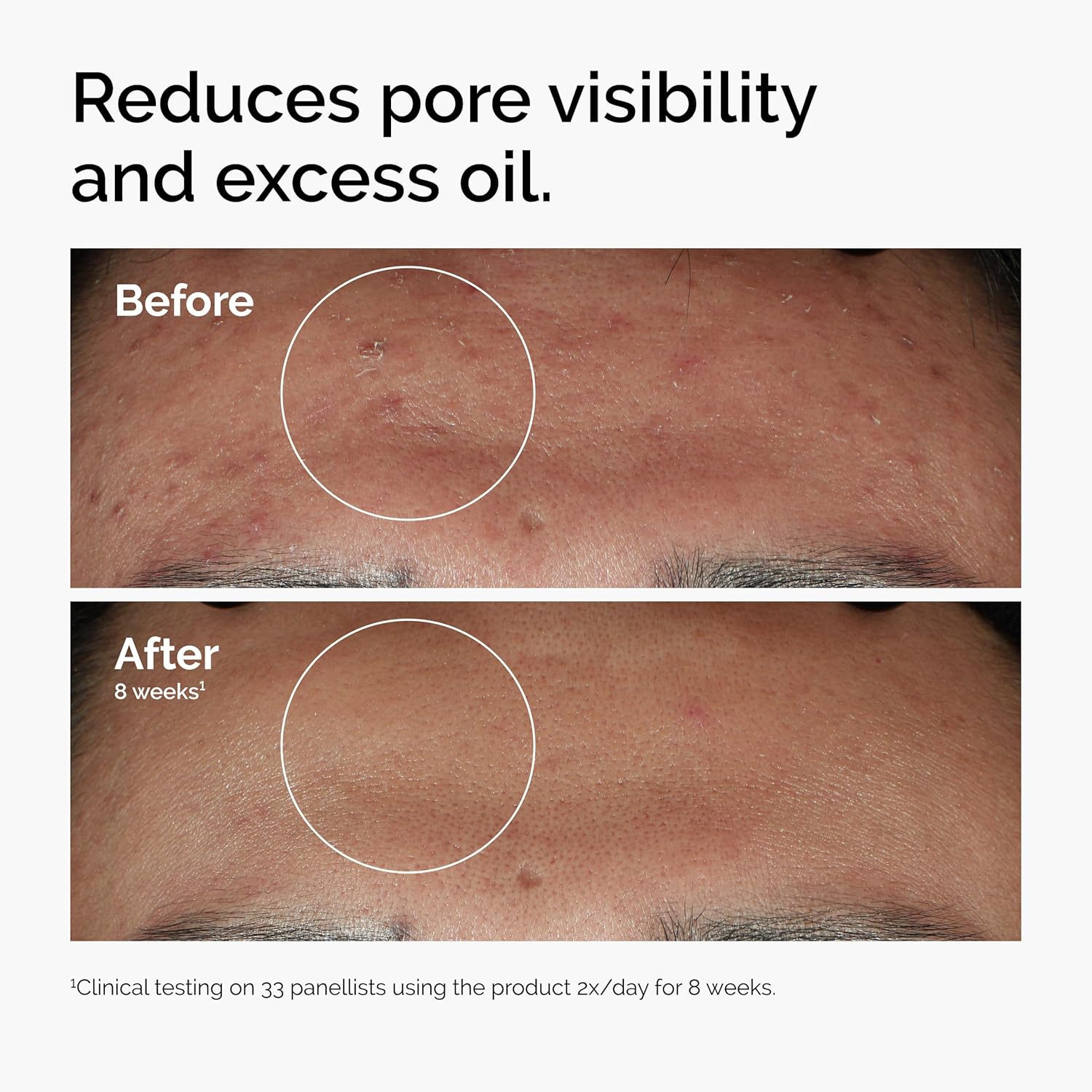
Niacinamide (say it: nye-a-SIN-a-mide) is a form of vitamin B3 that your skin actually knows what to do with. Applied topically, it’s one of the most well-documented multi-taskers in skincare: it helps regulate oil production, soften the look of enlarged pores, fade post-acne marks, and support the skin’s moisture barrier — all without the irritation risk you’d get from retinol or acids. It’s also one of the few active ingredients that works across almost every skin type, which is why you’ll find it in everything from a $9 bottle at the drugstore to a $280 luxury serum. This article is specifically for readers deciding between four budget-to-mid-range serums — The Ordinary, Good Molecules, Naturium, and COSRX — at concentrations ranging from 10% to 15%. We’ll break down what the concentration numbers actually mean, surface the most useful patterns from long-term owner reviews, and give you a clean decision framework by the end.
If you already know your niacinamide basics, skip straight to the concentration breakdown. If you’re earlier in the process, the FAQ at the bottom covers the questions that come up most often.
| EDITOR'S PICKPaula's Choice CLINICAL 20% Nia… | Mid-tierNaturium Niacinamide Face Serum… | Budget pickThe Ordinary Niacinamide 10% +… | |
|---|---|---|---|
| Concentration | 20% | 12% | 10% |
| Size | 0.67 oz | 1 oz | 1 oz |
| Zinc added | — | ✓ | ✓ |
| Hyaluronic acid | — | ✓ | — |
| Vitamin E | — | ✓ | — |
| Vegan | — | ✓ | — |
| Price | $38.50 | $16.99 | $6.00 |
| See on Amazon → | See on Amazon → | See on Amazon → |
What the Concentration Numbers Actually Tell You
Before you optimize for 10% versus 15%, it’s worth understanding what the percentage means in practice. Niacinamide concentration refers to how much of the active ingredient is present by weight in the formula. More is not automatically better — the research base for niacinamide is strongest in the 2%–10% range, which is where most clinical studies have been conducted. According to the Paula’s Choice ingredient glossary, Niacinamide entry, concentrations above 10% are not well-studied in peer-reviewed literature, and the incremental benefit above 5% is already subject to diminishing returns for most skin concerns.
That said, real-world owner data tells a slightly more nuanced story. Allure’s article “Everything You Need to Know About Niacinamide” notes that higher concentrations are tolerated by most people, and the practical gap between 10% and 15% shows up most clearly in timelines — not in whether something works, but in how quickly owners perceive visible change.
Here’s a fast reference for where these four products sit:
| Product | Concentration | Notable Co-Ingredient | Approx. Price per ml |
|---|---|---|---|
| The Ordinary Niacinamide 10% + Zinc 1% | 10% | Zinc PCA | ~$0.05/ml |
| Good Molecules Niacinamide Serum | 10% | Hyaluronic Acid | ~$0.07/ml |
| Naturium Niacinamide Face Serum | 12% | Vitamin C, Panthenol | ~$0.10/ml |
| COSRX The Niacinamide 15 Serum | 15% | Adenosine | ~$0.15/ml |
Prices estimated from authorized retailer listings as of May 2026. Per-ml math assumes standard bottle sizes (30 ml).
The Four Serums Compared: Formulation, Performance, and Best-Fit Skin Types
The Ordinary Niacinamide 10% + Zinc 1%
The Ordinary Niacinamide 10% + Zinc 1% is the genre-defining product in this category — not because it’s the most sophisticated formulation, but because it’s the one nearly everyone has tried, which makes owner data unusually rich. Byrdie’s “The Best Niacinamide Serums, Tested and Reviewed” consistently names it as the most widely reviewed option in the accessible price bracket, and its longevity on bestseller lists at mass-market retailers reflects genuine repeat-purchase behavior.
The zinc component — zinc PCA specifically — is doing real work here. Zinc PCA is an oil-regulating compound that complements niacinamide’s sebum-reduction effect, creating a double mechanism that explains why this formula is particularly well-regarded among oily and combination-skin owners. Self’s article “What Is Niacinamide and What Does It Do for Skin?” notes that zinc’s anti-inflammatory and sebum-regulating properties make it a logical pairing for anyone whose primary concern is shine control or blackhead frequency.
Long-term owner reviews show a consistent pattern: combination-skin users describe initial hesitation — concern about the formula being too simple or too watery — that resolves by week three or four once results become visible. The phrase that recurs across review aggregators is some version of “earned a permanent place in my routine,” which represents the highest-trust outcome in habitual skincare adoption.
The trade-off worth naming: the earlier formula had a documented tendency to pill under silicone-based makeup, and some users with very dry skin find the texture less comfortable than a hydrating serum base. If layering under foundation is your primary use case, check current formulation notes before committing.
Best for: Oily and combination skin; shine control; blackhead reduction; lowest cost-per-use entry point.
The
$6.00
In stock on Amazon
Check price on AmazonGood Molecules Niacinamide Serum (10%)
Good Molecules is the most interesting case study in this group because of a specific and documented owner experience that doesn’t appear in product copy: a rosacea flare-up pattern on the first two to three uses that resolves by the fourth application. This has been reported consistently enough across long-term reviewers that it functions as predictive information rather than a red flag. The practical implication is that if you have reactive skin or rosacea, you shouldn’t abandon Good Molecules after use two — the adjustment period is real and time-limited.
Reviewers who pushed through describe more than a year of continuous use for blackhead reduction with stable, non-irritating results. That longitudinal owner behavior is unusual and meaningful: this is not a product people try for a month and move on from. Byrdie’s coverage of budget niacinamide serums reflects a similar finding — Good Molecules earns strong marks specifically from sensitive-skin users who gave it adequate trial time.
The formula includes hyaluronic acid, a humectant that draws moisture into the skin, which gives it a more hydrating finish than The Ordinary’s zinc-forward formula. For dry-combination skin or anyone layering niacinamide under a lighter moisturizer, this is the better comfort profile of the two 10% options.
Best for: Sensitive or rosacea-prone skin; dry-combination skin types; long-term blackhead management with a hydrating finish.
The
$6.00
In stock on Amazon
Check price on AmazonNaturium Niacinamide Face Serum (12%)
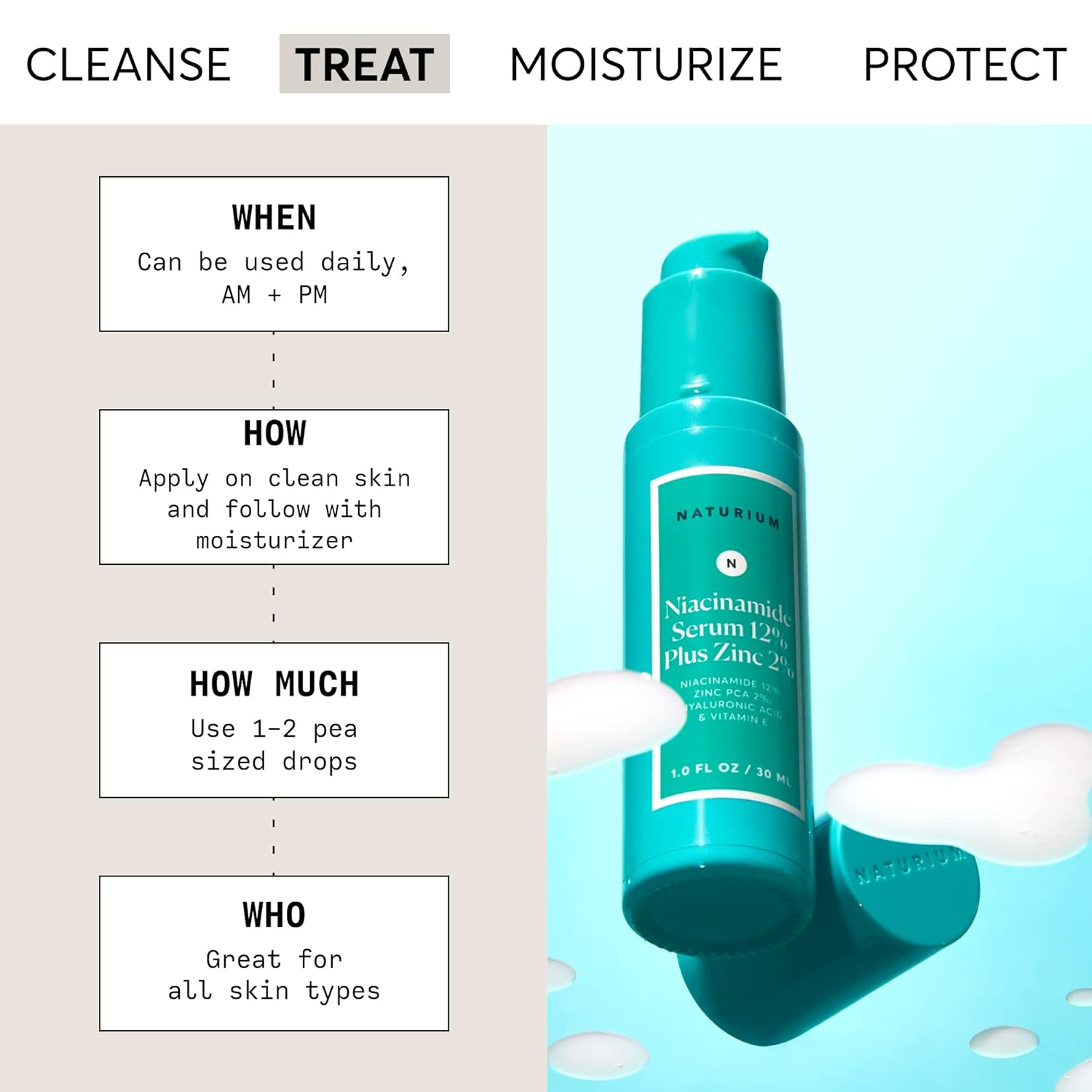
Naturium occupies a meaningful middle position at 12%. Per the Paula’s Choice ingredient glossary, Niacinamide entry, this sits above the research-tested ceiling of 10% — which means the incremental benefit is theoretical rather than clinically established — but owner reviews provide their own evidence base. A two-year consecutive purchase history from verified long-term reviewers, with updated reviews confirming continued use, is about as strong a retention signal as the consumer market produces. These are buyers who tried alternatives and returned.
The formula adds a low concentration of vitamin C (ascorbic acid) alongside panthenol, a skin-conditioning form of vitamin B5. This positions Naturium as a brightening-adjacent serum rather than a pure pore-and-oil play. Allure’s “Everything You Need to Know About Niacinamide” identifies tone-evening as one of niacinamide’s best-supported secondary benefits, and Naturium’s formulation is more purposefully constructed for that outcome than either The Ordinary or Good Molecules. If your goals are pore refinement and skintone evening simultaneously, the ingredient stack here is more targeted.
Best for: Multi-goal users; uneven skintone combined with pore concerns; mid-cycle step-up from 10% products.
Naturium
$16.99
In stock on Amazon
Check price on AmazonCOSRX The Niacinamide 15 Serum
COSRX is the highest concentration in this comparison, and the owner review data reveals a pattern worth naming directly: multiple verified buyers have requested a 20% version, which tells you the COSRX audience is self-selecting for results-maximizers who want speed over caution. The formula includes adenosine, an anti-aging compound with published evidence for wrinkle reduction and firming support, which gives it a slightly different value proposition — less “pore and sebum control” and more “comprehensive skin quality over time.”
The K-beauty channel’s appetite for higher concentrations is well-documented, and COSRX is tracking it accurately. At 15%, this is the formula to reach for if you’re comfortable with the evidence ceiling on high-concentration niacinamide and want the fastest observable timeline. Self’s ingredient overview of niacinamide confirms that the core mechanisms — barrier support, sebum regulation, and pigmentation reduction — are active regardless of concentration, but the speed of visible change does correlate with dose within a reasonable range.
The honest trade-off: if you have reactive or sensitized skin, starting at 15% is a higher-risk entry point than starting at 10% and titrating upward over several weeks.
Best for: Results-maximizers; oily or resilient skin types; users who want anti-aging support layered into a niacinamide formula; K-beauty enthusiasts tracking the higher-concentration trend.
Paula's
$38.50
In stock on Amazon
Check price on AmazonThe 20% Question and Where These Four Sit in the Broader Market
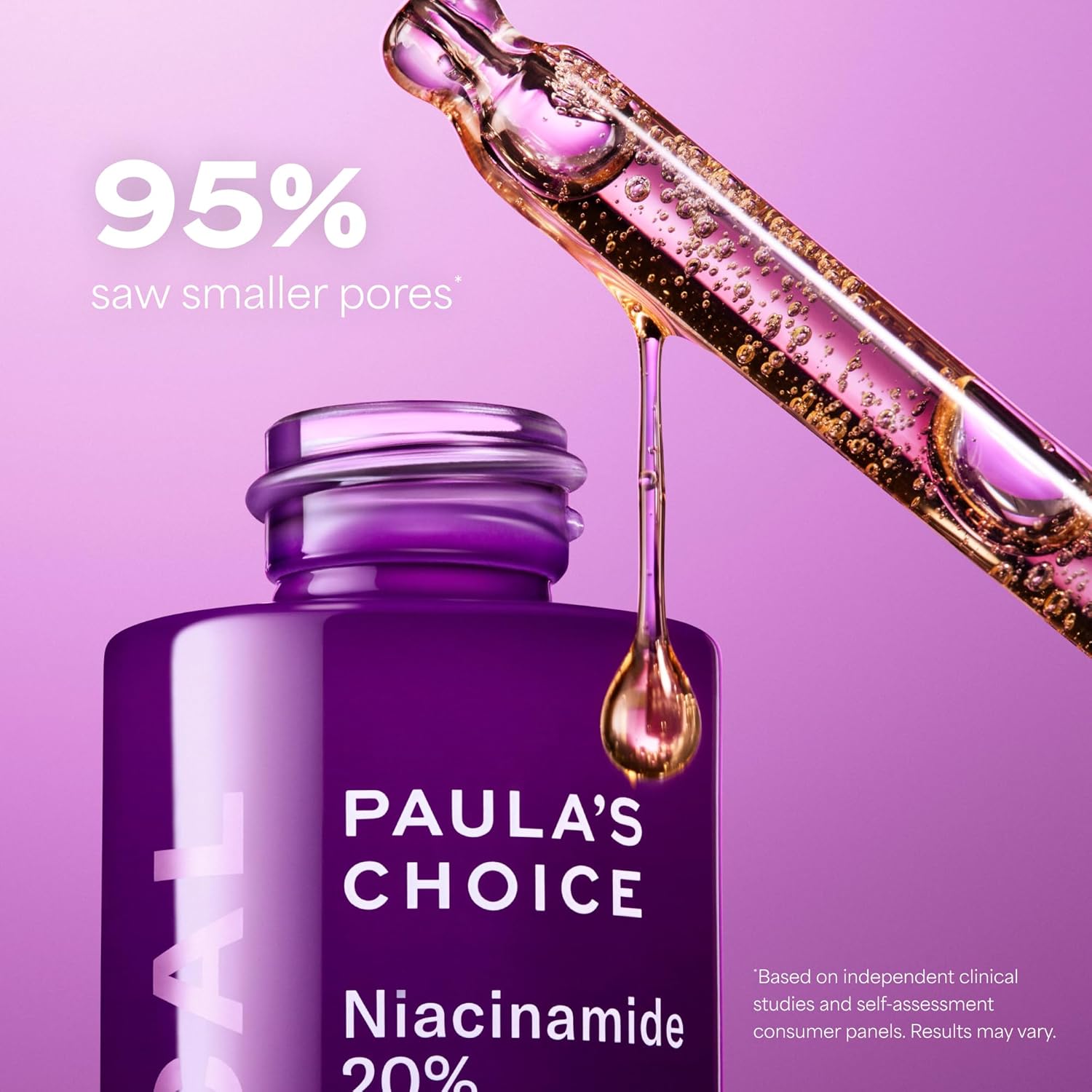
Several Paula’s Choice 20% Niacinamide owners in long-term review data describe moving away from luxury clinical brands due to price and finding results comparable — a direct luxury-displacement story that contextualizes where this entire budget segment sits. The 20% question matters for readers of this article because it frames what you’re trading away or trading for.
Per Allure’s “Everything You Need to Know About Niacinamide” and Self’s “What Is Niacinamide and What Does It Do for Skin?”, the honest answer is that the research does not support 20% as meaningfully superior to 10%–12% for most skin concerns. The owners who migrate to 20% are typically chasing faster timelines or treating more persistent hyperpigmentation, not achieving outcomes that 10% cannot reach — they’re simply reaching them on a compressed schedule. If you’re price-sensitive, the diminishing returns on niacinamide start well below 20%.
Where these four serums sit in that context: The Ordinary at 10% is the proven floor — everything above it in this comparison is iteration, not revolution. Good Molecules is the choice for reactive skin willing to manage an adjustment period. Naturium is the choice for multi-goal users who want brightening alongside pore-and-oil benefits. COSRX is the choice for results-maximizers who want the highest accessible concentration in a clean, well-reviewed K-beauty format.
If X, then Y decision rules:
- Primary concern is shine control and blackheads → The Ordinary 10% + Zinc
- Rosacea or sensitized skin, willing to front-load the adjustment → Good Molecules 10%
- Pore refinement and tone-evening in one step → Naturium 12%
- Highest accessible concentration, skin tolerates actives well → COSRX 15%
- Considering Paula’s Choice 20% over any of these → the price premium is real; the clinical advantage over 10%–12% is marginal; step up only after giving a lower concentration eight to twelve weeks of consistent use
One layering note: several buyers describe sequencing a centella asiatica ampoule with niacinamide serums. Centella asiatica is a plant extract with documented calming and barrier-repair properties. It’s not a niacinamide product, but its soothing profile makes it a logical companion — particularly for anyone managing the Good Molecules adjustment period or running niacinamide alongside a retinol. The typical sequencing reported is centella first (thinner texture, calming base), niacinamide second.
Frequently Asked Questions
Is 10% niacinamide enough, or should I use 15% or 20% for faster results? The research base for niacinamide is strongest at 2%–10%, as noted in the Paula’s Choice ingredient glossary, Niacinamide entry. Above 10%, results may come slightly faster, but the incremental clinical evidence thins out considerably. For most people, 10% is sufficient — the gap between 10% and 15% shows up in timelines, not outcomes.
Can niacinamide cause a breakout or flare-up when you first start using it? Yes, and Good Molecules reviewers document this specifically: a rosacea or reactive-skin flare on uses one through three that resolves by use four. This is an adjustment response, not a sign of incompatibility. If you have reactive skin, start every other day and give it at least five to seven applications before drawing conclusions.
What does the zinc in The Ordinary formula actually do? Zinc PCA regulates sebum production and has mild anti-inflammatory effects. Combined with niacinamide’s own oil-control properties, it creates a double mechanism for shine reduction — which is why this formula is disproportionately popular with oily and combination-skin users, as Self’s overview of niacinamide confirms.
Can I layer multiple niacinamide products, or is that too much? Layering two niacinamide-forward products is generally considered redundant rather than harmful. The concern isn’t toxicity — niacinamide is well-tolerated at these concentrations — it’s that doubling up adds concentration without proportionally adding benefit. Focus on one well-formulated niacinamide serum and let it work.
How long does it take for niacinamide to visibly reduce pore size? Owner reviews consistently describe first visible changes at four to eight weeks of daily use. Significant pore refinement typically takes three months. The two-year Naturium owner and the year-plus Good Molecules owner both suggest that results compound gradually rather than appearing all at once.
Is Paula’s Choice 20% Niacinamide significantly better than The Ordinary 10%? Based on aggregated owner feedback — including reviewers who switched from clinical luxury brands and landed at Paula’s Choice 20% as a price-conscious step-down — the results are described as comparable to clinical-grade options, but the gap versus 10% is modest. If 10%–12% has worked for eight weeks and you want more, the upgrade is defensible. If you haven’t given 10% a full trial, it’s premature to spend more.