August 24, 2026 • Celeste Morrow • 9 min reading time • Prices verified June 4, 2026
Centella, Ceramides, and Barrier Repair: The Calming Serum Tier for Sensitized and Redness-Prone Skin
If you’ve ever started a prescription skin treatment — think tretinoin (a vitamin A derivative your dermatologist prescribes to speed cell turnover) or hydroquinone (a brightening agent that reduces dark spots) — and your face suddenly felt like sandpaper wrapped in a sunburn, you already understand the problem this article is trying to solve. These actives work, but they stress the skin barrier: the outermost protective layer that keeps moisture in and irritants out. When that barrier is compromised, almost everything you put on your face stings, flushes, or flakes. The calming serum and barrier-repair moisturizer category exists specifically for this moment — and for anyone whose skin is chronically sensitive, redness-prone, or simply exhausted. This guide maps the best products in this tier, explains the key ingredients (centella, ceramides, niacinamide), and gives you a clear layering sequence so you’re not guessing.
Why the Barrier Is the Whole Game Right Now
The beauty industry has spent the last several years moving aggressively toward prescription-adjacent actives — tretinoin, azelaic acid, hydroquinone, clindamycin. That’s largely a good thing. But the downstream effect, visible across reviewer communities and documented by dermatologists cited in Allure’s sensitive-skin moisturizer roundup (2025), is a generation of skincare users whose barrier is chronically degraded. Their skin is simultaneously over-treated and under-supported.
The barrier-repair category responds to this with three core ingredient families:
Centella asiatica (also called cica, tiger grass, or gotu kola): A plant extract whose active compounds — madecassoside, asiaticoside, asiatic acid — have documented anti-inflammatory and wound-healing activity. The International Journal of Molecular Sciences’ 2021 overview of centella in dermatology confirms these compounds help reduce erythema (redness) and support collagen synthesis at low concentrations. Paula’s Choice’s ingredient dictionary notes it’s well-tolerated even on reactive skin, making it a rare active that soothes rather than challenges a damaged barrier.
Ceramides: Lipids (fats) that form roughly 50% of the skin barrier’s structural matrix. When you’re over-exfoliating or on drying prescription treatments, ceramide levels drop. The Journal of Clinical and Aesthetic Dermatology’s 2018 review of ceramides in barrier function found that topical ceramide application measurably improves transepidermal water loss (TEWL) — the rate at which your skin loses moisture to the air — in both healthy and diseased skin.
Niacinamide (vitamin B3): Anti-inflammatory, barrier-supporting, and pore-minimizing. At 2–5%, it’s one of the most thoroughly validated calming ingredients in modern formulation.
The decision you’re actually making in this category isn’t “which ingredient is best” — it’s: what texture fits my barrier’s current state, and where does each product sit in my existing prescription routine?
The Product Tier: What Reviewers Report at Each Price Point
Entry and Mid-Range: SKIN1004 Madagascar Centella Ampoule and Good Molecules
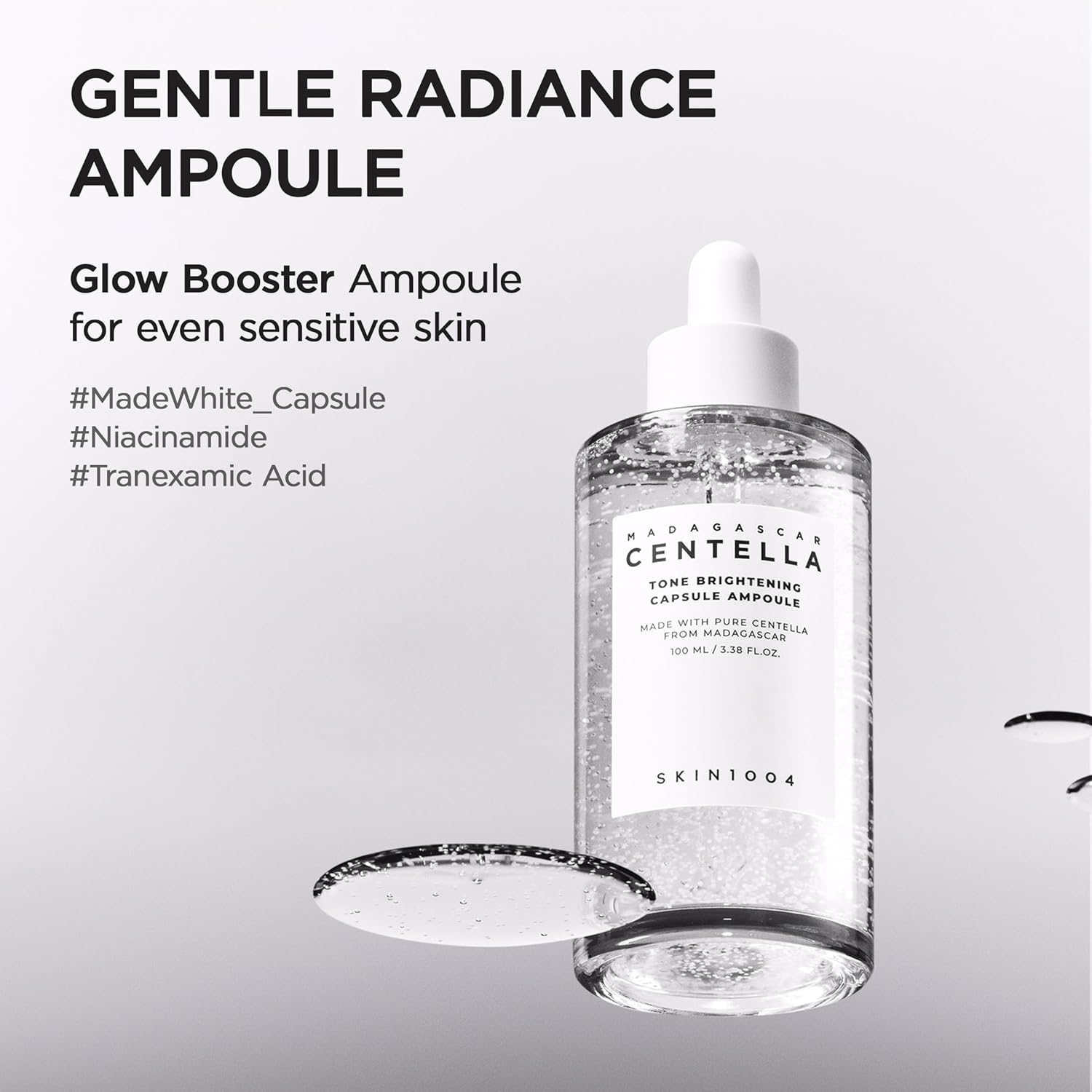
SKIN1004 Madagascar Centella Ampoule is the product that convinced a significant segment of the K-beauty-adjacent buyer to take cica seriously. Reviewers across Sephora and Dermstore note an unusually specific application ritual: dripping the ampoule directly onto skin and patting rather than rubbing — a technique that makes sense given that rubbing a liquid onto sensitized skin creates friction-related irritation. Multiple long-term owners also report it performs better when layered beneath a second, slightly richer hydrating serum rather than used as a standalone treatment. The formula is intentionally minimal: centella extract is the lead ingredient, the base is lightweight, and there are no added fragrance compounds — a real differentiator for reactive-skin buyers.
The tradeoff: it’s not a moisturizer. If your barrier is severely compromised, the SKIN1004 ampoule alone won’t provide enough occlusion (the protective seal that stops moisture from evaporating). It’s a treatment step that needs a moisturizer on top.
Good Molecules has carved out an interesting position in this category. Their Gentle Retinol Cream, for instance, consistently attracts a buyer who has tried and failed with multiple low-strength retinols. Reviewers frequently note it’s their third or fourth retinol attempt — which is a meaningful data point about how sensitized this buyer segment is, and how cautious the formulation needs to be. The brand’s broader philosophy of single-focus, fragrance-free formulas resonates with barrier-repair buyers who can’t afford wild-card ingredients.
Mid-Prestige: La Roche-Posay Toleriane Double Repair Face Moisturizer
La Roche-Posay occupies an interesting position: it’s priced in the $20–$30 range, but it’s consistently recommended by dermatologists in clinical contexts. Reviewers on Dermstore and in Allure’s 2025 sensitive-skin roundup frame it as a consolidating product — replacing both a separate hydrating gel (like Neutrogena Hydro Boost) and a separate moisturizer in one step. That matters to the buyer who is already using multiple prescription products and wants to reduce total product count.
The formula combines ceramides, niacinamide (5%), and La Roche-Posay’s proprietary prebiotic thermal water. Per Self’s 2024 overview of barrier repair timelines, consistent use of a ceramide-rich moisturizer twice daily for two to four weeks is the realistic window for measurable barrier improvement — Double Repair’s reviewers consistently confirm this timeframe.
The tradeoff: it’s a moisturizer, not a serum. If your routine includes both a treatment ampoule and a moisturizer, this sits at the end of your lineup, not the middle.
Prestige Tier: Farmacy Honey Halo and Glow Recipe Watermelon Dew Drops
Farmacy Honey Halo Ultra-Hydrating Ceramide Moisturizer has developed a surprisingly specific loyal following among prescription-treatment users. One pattern that emerges repeatedly across reviewer aggregations: buyers describe it as the only moisturizer they can use without stinging during an active tretinoin or hydroquinone cycle. That’s a high bar. The formula is ceramide-forward, uses propolis (a hive-derived antioxidant with anti-inflammatory properties) alongside honey for humectancy, and sits in a thick-but-not-heavy texture that reviewers on sensitive skin describe as immediately calming. Byrdie’s barrier-repair overview (2025) calls out propolis specifically as an underrated anti-inflammatory agent that pairs well with compromised skin.
The “no-sting” signal is the critical buying indicator here: if you’re mid-prescription-treatment and every moisturizer currently feels like it’s burning your face, Honey Halo is the most commonly cited solution in that specific scenario. Price-per-use math favors it given how little product is needed per application.
Glow Recipe Watermelon Dew Drops sits in a different use-case lane. It’s a hybrid hydrating serum — hyaluronic acid, watermelon extract, and some niacinamide — with a distinctly dewy, glow-forward finish. Reviewers consistently love the finish and the hydration payoff, but the stickiness caveat is real and worth naming plainly: multiple owners note that applying too much product leaves a tacky film, which on compromised skin can feel occlusive in an uncomfortable way. For barrier-repair purposes, lighter-handed application (two to three drops maximum, patted not rubbed) resolves this.
The tradeoff for sensitive-skin buyers: Glow Recipe Dew Drops contains fruit extracts that some reactive-skin users flag as mild irritants. It’s not a universal problem, but if your skin is in an acute flare, start with the SKIN1004 or La Roche-Posay before reaching for anything with a fruit extract base.
The Layering Sequence: A Decision Frame
The order in which you apply barrier-repair products matters more than the products themselves when your skin is compromised. Here’s the framework, grounded in formulation logic rather than brand marketing:
On prescription-treatment nights (tretinoin or hydroquinone applied):
- Cleanse, pat dry (don’t rub)
- Wait 10–15 minutes (this reduces direct-contact irritation from actives)
- SKIN1004 Centella Ampoule — patted on, thin layer
- Second hydrating serum if needed (Glow Recipe Dew Drops, lightly applied)
- Farmacy Honey Halo or La Roche-Posay Double Repair to seal
On non-prescription nights or AM routine: The centella ampoule can go directly after cleansing. The moisturizer still comes last. Niacinamide serums (standalone or in a moisturizer like Double Repair) are safe to use both AM and PM on reactive skin — there’s no contraindication with prescription actives at standard concentrations.
By the Numbers
| Product | Key Actives | Texture | Best Use Case |
|---|---|---|---|
| SKIN1004 Centella Ampoule | Centella asiatica | Thin liquid | Prescription-support, first serum step |
| La Roche-Posay Double Repair | Ceramides + 5% Niacinamide | Light lotion | Consolidating moisturizer, post-Rx |
| Farmacy Honey Halo | Ceramides + Propolis | Rich cream | Active-treatment barrier rescue |
| Glow Recipe Dew Drops | Hyaluronic acid + Niacinamide | Gel-serum | Hydration boost, stable skin |
Frequently Asked Questions
Can I use a centella ampoule while on prescription tretinoin or hydroquinone? Yes — centella is one of the few actives specifically suited to prescription-support routines. Its anti-inflammatory compounds don’t interfere with tretinoin’s cell-turnover mechanism or hydroquinone’s melanin-inhibiting action. Apply the ampoule after your prescription product has had time to absorb (10–15 minutes), not simultaneously.
Should the calming ampoule go before or after moisturizer? Before. Ampoules are water-based and designed to be absorbed into skin before a heavier, occlusive moisturizer seals everything in. Applying moisturizer first would block the ampoule’s absorption.
How long does it take for a ceramide moisturizer to repair a damaged barrier? Self’s 2024 overview of barrier repair timelines puts the honest range at two to four weeks of twice-daily consistent use for measurable improvement in hydration and reduced sensitivity. Acute prescription-induced irritation often calms within five to seven days once you add the right moisturizer, but full barrier normalization takes longer.
Is niacinamide safe to use when my skin is actively red and irritated? At standard over-the-counter concentrations (2–5%), yes. Niacinamide is one of the few anti-inflammatory ingredients that works with — not against — a compromised barrier. The old concern about niacinamide plus vitamin C causing niacin flush has been largely disproven at modern formulation standards, per Paula’s Choice’s ingredient research documentation.
Will Glow Recipe Dew Drops cause breakouts on acne-prone skin? Reviewers on acne-prone skin report mixed results. The formula is not heavily comedogenic (pore-clogging), but the watermelon and fruit extract base can be a wildcard for very reactive skin. If you’re simultaneously managing acne and a compromised barrier — a common scenario during clindamycin treatment — start with SKIN1004 or a plain niacinamide serum before introducing Dew Drops.
Can I use La Roche-Posay Double Repair as my only moisturizer, or do I need a separate serum? Entirely reasonable as a standalone, especially if you’re trying to simplify a prescription-heavy routine. Its ceramide and niacinamide content covers both barrier repair and anti-inflammatory support in one step. The buyers who add a separate serum are typically looking for targeted treatment (centella for redness, hyaluronic acid for deep hydration) on top of the baseline Double Repair provides — not because Double Repair is insufficient, but because their skin goals require an additional layer.
The decision rule: If your skin is actively stinging, flushing, or peeling from prescription actives, the purchase priority is Farmacy Honey Halo or La Roche-Posay Double Repair first — get the barrier sealed before worrying about treatment ampoules. If your skin is stable but you’re building a maintenance routine to stay stable through a prescription cycle, lead with SKIN1004 Centella Ampoule as your treatment layer and add one of those moisturizers on top. Glow Recipe Dew Drops earns its place only once the acute phase is resolved.