July 5, 2026 • Celeste Morrow • 10 min reading time • Prices verified June 4, 2026
The Dewy Glow Moisturizer Guide: From Embryolisse and Tatcha to Farmacy and L'Occitane
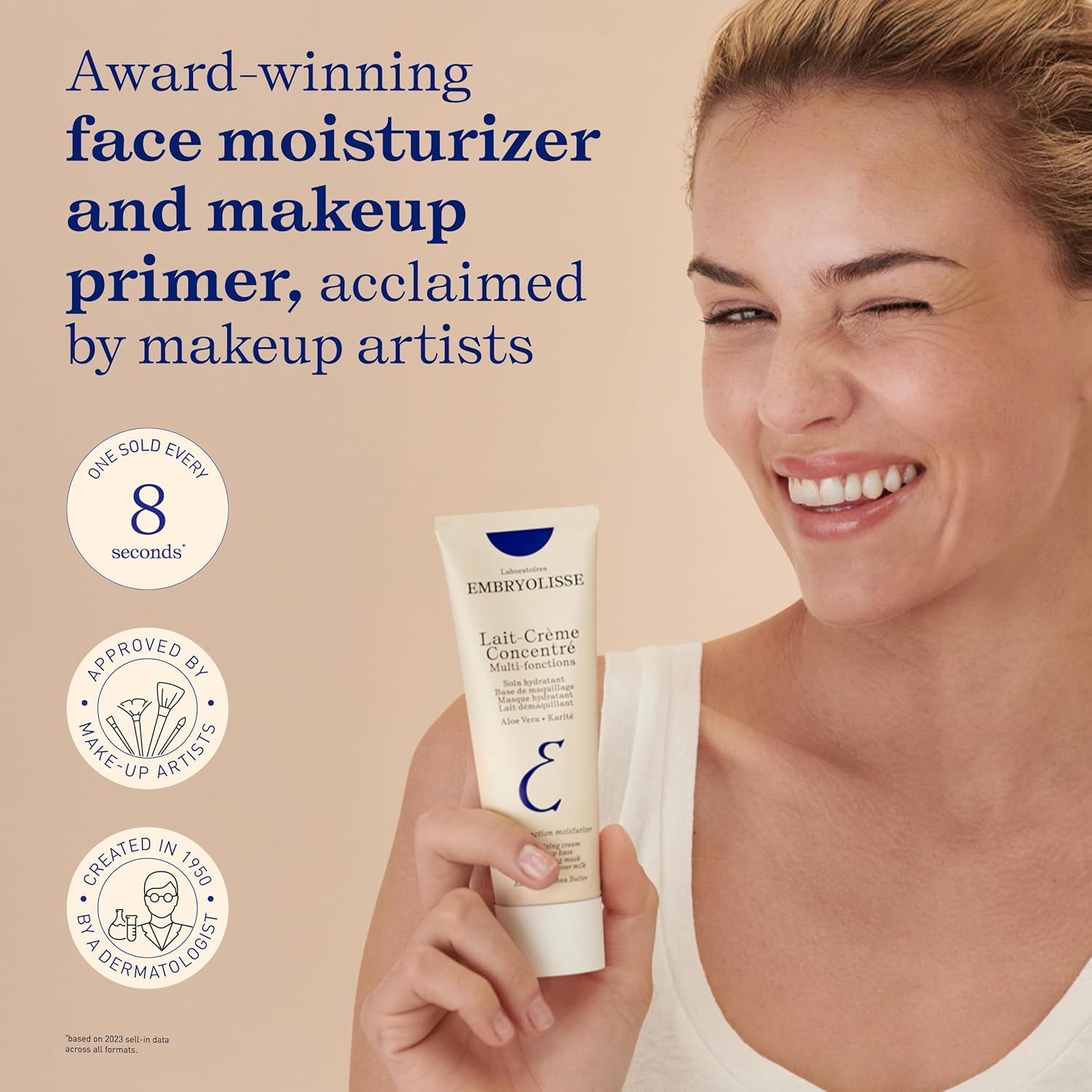
A “dewy glow moisturizer” is exactly what it sounds like: a face cream (or gel-cream) formulated to leave skin looking luminous and hydrated rather than flat or matte. The “dewy” finish refers to that fresh, lit-from-within appearance — think of skin that looks like it just had a long drink of water, as opposed to skin that’s been powdered down. These products do two things at once: they deliver real hydration through ingredients like hyaluronic acid (a moisture-binding molecule), ceramides (fatty compounds that reinforce the skin’s protective barrier), and occlusives (heavier ingredients that seal moisture in) — and they produce a visual effect, usually a soft luminosity from light-reflecting particles or simply well-hydrated, plump skin. If you’ve ever wondered why some moisturizers make your skin look alive and others just make it feel comfortable, the answer is almost always finish formulation. This guide works through five products that come up repeatedly in serious skin-care conversations — Embryolisse Lait-Crème Concentré, Tatcha Dewy Skin Cream, Farmacy Honey Halo, L’Occitane Immortelle Precious Cream, and No7 Lift & Luminate — and gives you an honest decision framework for each.
| EDITOR'S PICKKiehl's Ultra Facial Cream | Mid-tierEmbryolisse Lait-Crème Concentr… | Budget pickNo7 Lift & Luminate Triple Acti… | |
|---|---|---|---|
| Key ingredient | 4.5% Squalane | Shea Butter & Aloe Vera | Collagen Peptides |
| Size | — | 2.54 Fl Oz | 1.69 Oz |
| SPF | ✗ | ✗ | SPF 30 |
| Fragrance free | — | — | ✓ |
| Absorption | Fast-absorbing | — | — |
| Multi-use | — | ✓ | — |
| Price | $70.00 | $32.00 | $20.69 |
| See on Amazon → | See on Amazon → | See on Amazon → |
What You’re Actually Comparing: Finish, Function, and Formula
Before you compare price tags, it helps to know what variable you’re actually optimizing for. Dewy moisturizers split along three axes:
Finish type. Some glow comes from light-reflecting pigments (think micro-shimmer). Some comes from humectant-heavy formulas that physically plump the skin. Most of the products here are in the second camp — genuine hydration creating genuine luminosity — which is why they read differently on extremely dry versus combination skin.
Occlusivity level. A more occlusive formula (richer, slower to absorb) will feel heavy to oily or normal skin and life-changing to someone with chronic dryness or a compromised barrier. This is why you’ll see the same moisturizer described as “light” and “heavy” in reviews — both reviewers are right, because they have different baselines.
Treatment compatibility. If you’re on actives — particularly prescription-strength retinoids or hydroquinone — barrier integrity matters more than luminosity. A moisturizer that stings compromised skin disqualifies itself immediately, regardless of how good it looks.
By the numbers — quick price-per-mL comparison:
| Product | Size | Approx. retail | Per mL |
|---|---|---|---|
| Embryolisse Lait-Crème Concentré | 75 mL | ~$28 | ~$0.37 |
| Farmacy Honey Halo | 50 mL | ~$42 | ~$0.84 |
| No7 Lift & Luminate | 50 mL | ~$25 | ~$0.50 |
| Tatcha Dewy Skin Cream | 50 mL | ~$68 | ~$1.36 |
| L’Occitane Immortelle Precious Cream | 50 mL | ~$88 | ~$1.76 |
Prices reflect 2026 mid-year averages; sale pricing at Sephora, Ulta, and brand DTC can shift these meaningfully.
The Five Products, Honestly Assessed
Embryolisse Lait-Crème Concentré: The Pro-Kit Workhorse
Embryolisse has been a fixture in French makeup-artist kits for decades, and the recurring insight from reviewers is that it serves two functions simultaneously: a moisturizer and a primer. Makeup artists and regular users independently report discovering that it doubles as a foundation base — not a claim the brand makes loudly on the front of the tube, but a consistent pattern in long-run reviews. That dual functionality explains the product’s loyalty rate better than any single ingredient story.
The formulation relies on a milk-protein and shea-butter base, which sits in a middle zone of occlusivity — not as rich as a traditional night cream, not as light as a water-gel. Allure’s coverage of French pharmacy staples notes Embryolisse as a recurring recommendation among makeup artists for exactly this primer-adjacent positioning.
The “light vs. heavy” split in reviews is real and worth naming. Owners with very dry or dehydrated skin describe it as lightweight and easily absorbed. Owners with oily or combination skin describe it as rich and slow to absorb. The product has not changed — the variability is entirely about starting-point skin barrier. If your skin is dry enough to drink it up quickly, it reads light. If your skin is already well-hydrated, it sits on top longer. Decision rule: if you have normal-to-dry skin and want one product that moisturizes and primes, Embryolisse is the most cost-efficient pick in this group. If you have oily skin and are hoping for a no-makeup-makeup primer, patch-test first.
Tatcha Dewy Skin Cream: The Emotional-Resonance Pick
Tatcha’s Dewy Skin Cream is built around a trio of Japanese ingredients — Hadasei-3, which the brand defines as a complex of green tea, rice, and algae — alongside squalane and hyaluronic acid. The formula sits in a plush, cloud-like texture that absorbs to a glowy (not greasy) finish. Allure’s coverage of Japanese skincare products consistently references Tatcha as a bridge product: authentically inspired by Japanese skincare philosophy while positioned for a Western prestige audience that wants clear ingredient storytelling.
The most compelling account in the reviewer record here comes from a dialysis patient who describes medically dry, dull skin as a baseline condition. She reports that Tatcha Dewy Skin Cream gave her an even complexion and the dewy glow she’d been looking for — a personal account worth citing carefully, because it speaks to what the formula does for genuinely compromised moisture levels, not just normal dryness. That kind of skin (chronically dry, often dull from systemic health factors) is where deeply hydrating humectant-and-occlusive formulas earn their keep. We cite this as one person’s experience, not a clinical claim — but it’s specific, credible, and consistent with the formula’s ingredient logic.
At $68 for 50 mL, Tatcha sits at the upper-mid tier of this comparison. The price-per-mL math does not favor it against Embryolisse for daily all-over use, but if your skin runs dry and you want a plush texture with genuine hydration payoff, the premium is defensible.
Farmacy Honey Halo: The Reactive-Skin Safe Bet
Farmacy’s Honey Halo is built around propolis (an antimicrobial compound bees produce to seal hives, used in skincare for its barrier-supporting and soothing properties) and ceramides, with a rich but non-irritating profile. The specific use case that stands out in the review record: a user under prescription-strength retinoid and hydroquinone treatment describes this as the only moisturizer that does not sting her compromised skin. That’s a narrow but extremely credible endorsement — prescription-strength actives create a compromised barrier that disqualifies most fragrance-containing or occlusive-heavy creams immediately.
Per Self’s coverage of moisturizers compatible with retinol use, the key variables for reactive-skin compatibility are: absence of fragrance, no alcohol denat in the first half of the ingredient list, and a barrier-supportive base (ceramides, fatty acids, or squalane). Farmacy Honey Halo meets all three. Paula’s Choice’s analysis of ceramide formulations reinforces that ceramide-rich creams are among the most tolerated options for disrupted skin barriers.
Decision rule: if you’re on tretinoin, adapalene, or prescription hydroquinone, Honey Halo moves to the top of this list. If your skin is not reactive, you’re paying a mild premium for soothing properties you may not need.
L’Occitane Immortelle Precious Cream: The Long-Game Loyalty Pick
L’Occitane Immortelle Precious Cream is the anti-impulse-buy in this group. The brand’s Immortelle line is built around helichrysum (immortelle flower) extract, which L’Occitane positions for its antioxidant and skin-tone-evening properties. At roughly $88 for 50 mL, it’s the priciest product per mL in this comparison.
What distinguishes Immortelle in the review record isn’t a dramatic before-and-after story — it’s longevity. One couple’s account of using the product consistently across all four seasons, year after year, signals something more meaningful than early enthusiasm: genuine, repeated repurchase. That kind of sustained loyalty is a signal worth weighting. It suggests the product delivers enough consistent satisfaction to survive the “is this actually doing anything?” re-evaluation that kills most premium skincare relationships.
Reviewers at Byrdie note L’Occitane as a reliable pick for users who want French pharmacy-adjacent quality with accessible luxury positioning — not Augustinus Bader territory in terms of actives complexity, but a notch above basic department store options. If you’re building a long-term routine and want something with a seasonal-round use case, Immortelle earns consideration.
No7 Lift & Luminate: The Competitive-Switch Justifier
No7 is a British drugstore brand with a decades-long dermatological testing heritage, and Lift & Luminate sits at the affordable end of this guide. The review that defines it best: a 67-year-old who abandoned Rodan + Fields for No7, reporting that people now think she’s 50. That’s an unusually direct competitive-switch account, and it names a premium brand on the losing side — worth noting.
Lift & Luminate is formulated with peptides (amino acid chains that signal skin to produce collagen) and a luminosity-enhancing base. At approximately $25 for 50 mL, it’s the lowest barrier-to-entry option here that still delivers a visible finish. It doesn’t have the occlusive richness of Honey Halo or the plushness of Tatcha, but for a user who is skeptical of premium pricing or wants to test the dewy-finish category without significant investment, it’s a logical starting point.
Frequently Asked Questions
Can I use Embryolisse as a primer under foundation every day without clogging pores?
Most reviewers with normal-to-dry skin report no pore-clogging issues with daily use as a primer base. The formula is not comedogenic-tested in a formal clinical sense, but the milk-protein and shea-butter base is relatively well-tolerated across skin types. If you have acne-prone or congestion-prone skin, introduce it gradually and monitor for a month before committing to daily primer use.
Is Tatcha Dewy Skin Cream worth the price compared to Farmacy Honey Halo?
If your skin is dry-to-very-dry and not reactive, Tatcha’s texture and finish are genuinely distinctive — the plushness is real, and the hydration payoff is consistent with what owners report. If your skin is reactive, on actives, or prone to sensitivity, Farmacy Honey Halo’s ceramide-and-propolis base makes it the more defensible choice. The Honey Halo is also meaningfully cheaper per mL. Decision: choose Tatcha for luxurious daily hydration on dry skin; choose Honey Halo if barrier support is your first priority.
Which of these moisturizers is best if I am on tretinoin and my skin is peeling and reactive?
Farmacy Honey Halo, without much competition. The specific reviewer account of tolerating it under prescription-strength retinoid and hydroquinone treatment, combined with its ceramide and propolis base and absence of notable irritants, makes it the clearest recommendation for compromised-barrier skin. Self’s guidance on retinol-compatible moisturizers points to exactly the formula characteristics Honey Halo has.
Does a dewy moisturizer make oily skin look greasy?
It depends on the formula. Products that achieve dewiness through humectants (like hyaluronic acid) rather than heavy occlusives tend to work better on oily skin — they add luminosity without adding surface oil. Embryolisse and No7 Lift & Luminate are more likely to read as too rich on oily skin. Tatcha’s Dewy Skin Cream, despite the name, has a gel-cream texture that owners with combination skin report tolerating well. The practical rule: if your skin produces its own oil by midday, you want a formula that adds water-based luminosity, not a cream-heavy one.
What is the difference between a glow moisturizer and a regular hydrating cream?
A standard hydrating cream is formulated to restore and maintain moisture — it’s optimized for comfort and barrier function. A glow or dewy moisturizer adds a luminosity objective: either through light-reflecting particles in the formula, or through high humectant content that physically plumps skin cells and creates a reflective, healthy-looking surface. The best ones in this guide do both. You can think of a regular hydrating cream as solving a problem (dryness), and a dewy-glow moisturizer as solving a problem while also producing an aesthetic result.
The Decision Matrix
If you’re currently sitting with one of these in a cart and need a clear frame:
- Routine efficiency matters, budget is moderate, you want primer functionality: Embryolisse
- Skin is very dry, you want genuine plushness, willing to pay for it: Tatcha Dewy Skin Cream
- On prescription actives, skin is reactive, barrier is compromised: Farmacy Honey Halo
- Want a long-term loyalty product with seasonal versatility: L’Occitane Immortelle
- Skeptical of premium pricing, want to test the category first: No7 Lift & Luminate
The dewy-glow category rewards matching formula to skin condition more than any other moisturizer segment. The reviews that stick — the dialysis patient, the retinoid user, the couple who’ve repurchased across seasons — are compelling precisely because they describe real compatibility, not just pleasant texture. Match the formula to your actual skin state, and the finish takes care of itself.