July 18, 2026 • Celeste Morrow • 11 min reading time • Prices verified June 4, 2026
Encapsulated vs. Standard Retinol: What CeraVe, RoC, and Good Molecules Buyers Actually Notice
Retinol is a form of vitamin A that speeds up the skin’s natural renewal cycle — nudging cells to turn over faster so that dull, uneven, or fine-line-prone skin gradually looks fresher. It is one of the most studied actives in over-the-counter skincare, and also one of the most misused, because “retinol” on a label can mean very different things depending on how the molecule is packaged inside the formula. That packaging difference — standard (free) retinol versus encapsulated retinol, where the molecule is wrapped in a protective shell that releases slowly — is the core decision point this article breaks down. If you are choosing between CeraVe’s retinol lineup, RoC Correxion, Good Molecules Gentle Retinol Cream, or La Roche-Posay Redermic R and wondering whether the format actually matters in practice, the answer is yes, and the pattern across thousands of owner reviews is clearer than you might expect.
The Actual Difference Between Encapsulated and Standard Retinol
Standard retinol sits in the formula as a free molecule. The moment it contacts your skin — and as it sits in the bottle exposed to light and air over time — it begins to degrade and interact with skin immediately on application. That is not inherently bad; it is why lower-concentration standard retinol products can still deliver real results. But it is also why irritation (redness, peeling, sensitivity to the touch) tends to show up earlier and more intensely, especially for newcomers or people with compromised barrier function.
Encapsulated retinol wraps the active molecule in a lipid, polymer, or silicone microsphere. That shell delays the release of retinol into skin, distributing delivery over hours rather than minutes. According to Paula’s Choice Ingredient Dictionary entry on retinol, the time-released approach may mean slower visible results in exchange for better tolerability — a worthwhile swap for some skin types, not for others.
Aggregate format comparison — ranges drawn from published formulation guidance and reviewer-reported timelines:
| Format | Typical onset of irritation | Typical onset of visible results | Stability in-bottle |
|---|---|---|---|
| Standard retinol | Days 3–14 | 4–8 weeks | Lower (degrades with light/air) |
| Encapsulated retinol | Weeks 2–4 (or none) | 6–12 weeks | Higher |
These are aggregate ranges, not controlled clinical claims. Individual variation is significant.
Product Comparisons: Four Formats, Four Buyer Profiles
The products below are grouped by the tolerance and results profile they serve best. Each represents a different point on the encapsulated-versus-standard spectrum, and each draws a meaningfully different buyer based on aggregated owner feedback.
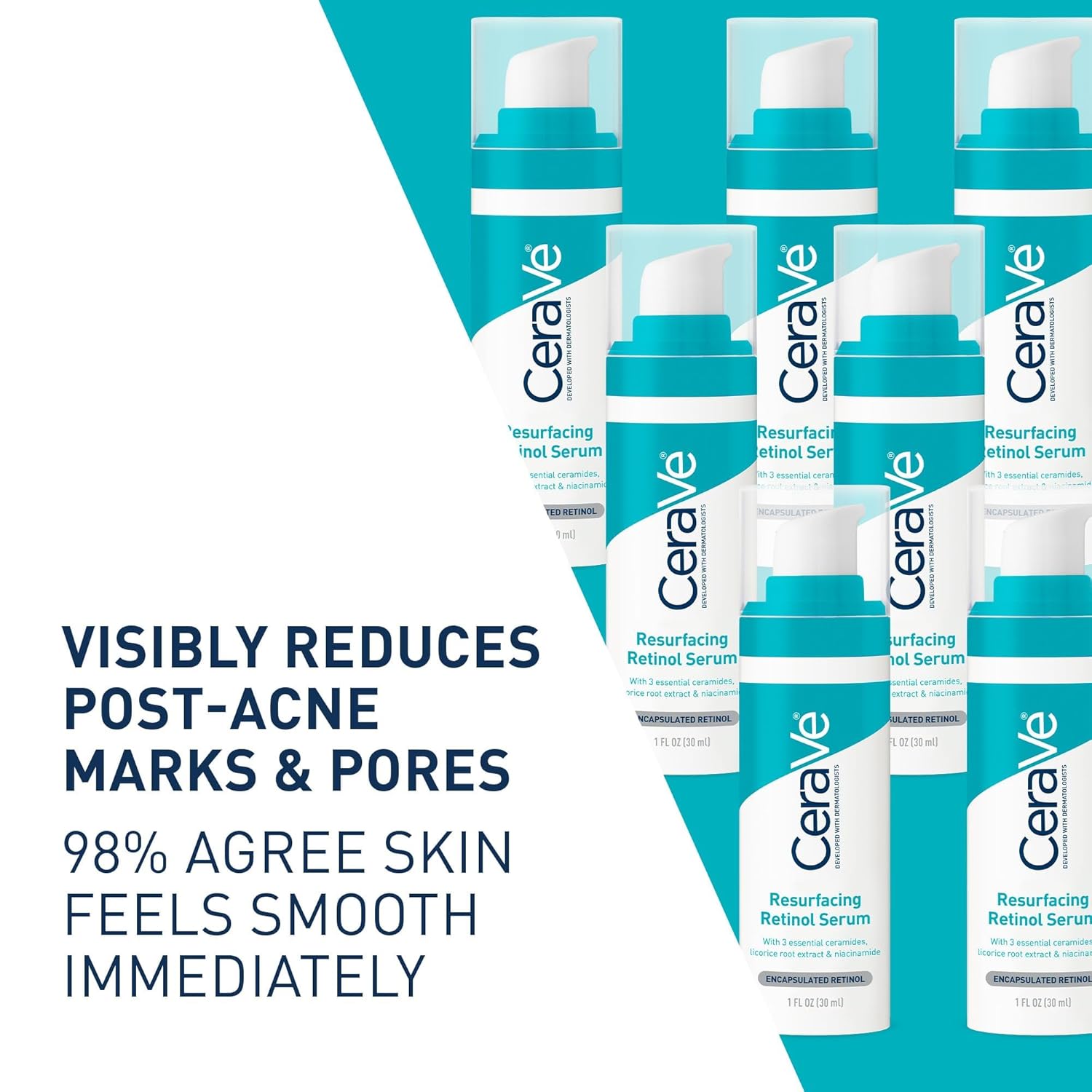
CeraVe Resurfacing Retinol Serum — For First-Time Users Prioritizing Texture
CeraVe
$18.68
In stock on Amazon
Check price on AmazonCeraVe’s Resurfacing Retinol Serum combines encapsulated retinol with licorice root extract and niacinamide in a lighter texture aimed at surface-level refinement, particularly for post-acne marks and uneven tone. Owner feedback positions it as a confidence-building entry point. One postpartum reviewer described it as “a great segway to get back to a stronger product,” praising the lack of irritation on skin that had been sensitized during pregnancy. Another reviewer with scarred skin noted a visible glow within the first few weeks.
The pattern across aggregated reviews is consistent: minimal adjustment period, visible glow and texture improvement before the six-week mark, but modest anti-aging lift compared to higher-concentration options. As Byrdie’s Beginner’s Guide to Retinol frames it, gentle-entry products are a means to an end rather than a final destination for everyone — but for someone who has never used a retinol or is coming back after a long break, this is a credible and low-risk starting point.
Best for: Retinol beginners, post-acne texture concerns, re-entry after pregnancy (with provider clearance). Honest limitation: Buyers chasing aggressive wrinkle correction may need to graduate to a stronger format.
CeraVe
$18.68
In stock on Amazon
Check price on AmazonCeraVe Anti-Aging Retinol Serum — For Sensitive Skin Seeking Anti-Aging Results
RoC
$21.97
In stock on Amazon
Check price on AmazonThe CeraVe Anti-Aging Retinol Serum (sometimes listed as the Skin Renewing Retinol Serum) leans more explicitly into the encapsulated delivery story and pairs retinol with hyaluronic acid and peptides. This is the product where reviewers actively name the encapsulation as the reason they chose it over competitors. A reviewer in her mid-sixties reported visible improvement in fine lines after five weeks — which, for a drugstore encapsulated retinol, sits at the faster end of the typical range noted in Allure’s guide to retinol. The ceramide base helps explain why sensitive-skin owners tolerate this product better than standard alternatives at comparable concentrations.
The honest trade-off: CeraVe’s gentleness is genuine, but buyers with resilient skin and aggressive timelines may find the pace slower than a standard retinol at the same price point. Self’s article “How to Use Retinol Without Wrecking Your Skin” notes that barrier-support ingredients in the surrounding formula often matter as much as retinol concentration for real-world tolerability — a principle this product embodies.
Best for: Sensitive skin, anti-aging focus, buyers who have had irritation reactions with standard retinols before. Honest limitation: Slower visible results than standard formats for users with resilient skin.
RoC
$21.97
In stock on Amazon
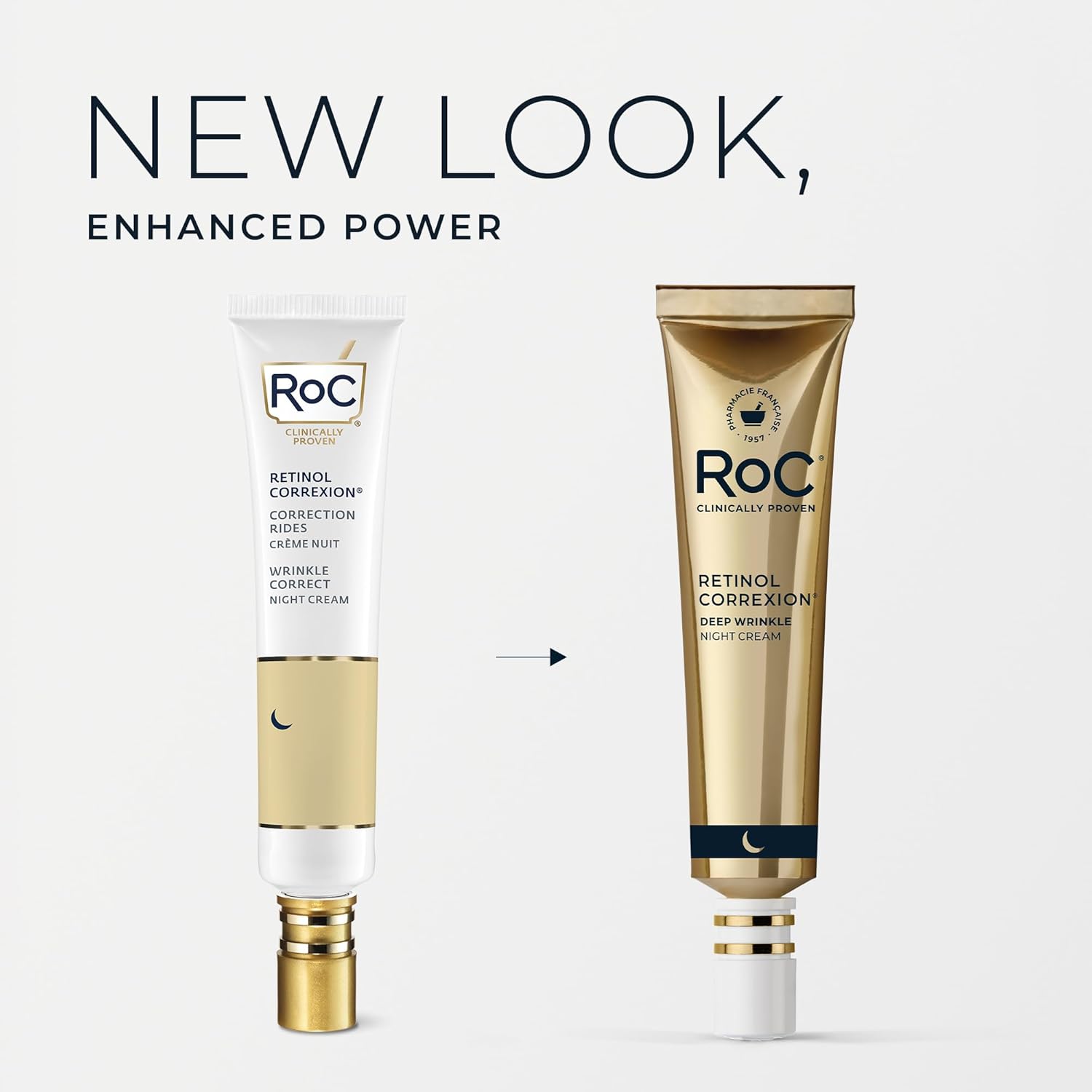
Check price on AmazonRoC Correxion Night Cream — For Resilient Skin Willing to Manage a Break-In Period
RoC
$21.97
In stock on Amazon
Check price on AmazonRoC Correxion Night Cream is one of the most reviewed retinol products in the drugstore category, and the feedback is genuinely polarized in a way that is instructive. Multiple long-term owners praise visible results — reduction in forehead lines, improved skin density — while a meaningful subset flags significant irritation, including swollen and inflamed areas near the eyes.
This is a standard (non-encapsulated) retinol in a richer cream base, which means the active hits skin at full intensity immediately. For buyers with intact, non-reactive skin, that directness is an asset: Allure’s retinol coverage consistently notes that standard retinol at sufficient concentration tends to outpace encapsulated formats on speed of clinical results. For sensitive-skin types or anyone applying product close to the orbital bone, the risk calculus flips.
One reviewer’s solution — applying RoC first, letting it absorb, then layering a separate barrier-rich night cream on top — is essentially a self-invented sandwich method, and it worked. This is worth flagging because it suggests the formula itself is not the problem for every reactive user; the application method is doing most of the heavy lifting.
The if-then rule for RoC buyers: If your skin is already barrier-compromised or you have had periorbital sensitivity with any active ingredient before, start with an encapsulated format instead. If your skin is relatively resilient and you want faster anti-aging results from a drugstore product, RoC’s standard retinol deserves its reputation — but commit to a careful introduction protocol and keep it away from the eye contour.
RoC
$21.97
In stock on Amazon
Check price on AmazonGood Molecules Gentle Retinol Cream and La Roche-Posay Redermic R — The Sensitive-Skin Rehabilitation Tier
La
$54.97
In stock on Amazon
Check price on AmazonGood Molecules Gentle Retinol Cream earns a specific kind of review that is telling: buyers describe it as their fourth or fifth attempt at a low-strength retinol after others failed them. That is not incidental. The product appears to serve a buyer who has been through the retinol irritation cycle at least once, scaled back, and is looking for a formula gentle enough to actually stay in a routine. Consistent praise from sensitive-skin owners — some of whom express genuine surprise that a sub-$15 formula produced any visible result — points to a well-balanced encapsulated or buffered formulation. Self’s “How to Use Retinol Without Wrecking Your Skin” highlights that skin conditioning and barrier support ingredients often matter as much as retinol concentration for tolerability, which aligns with what Good Molecules buyers consistently describe.
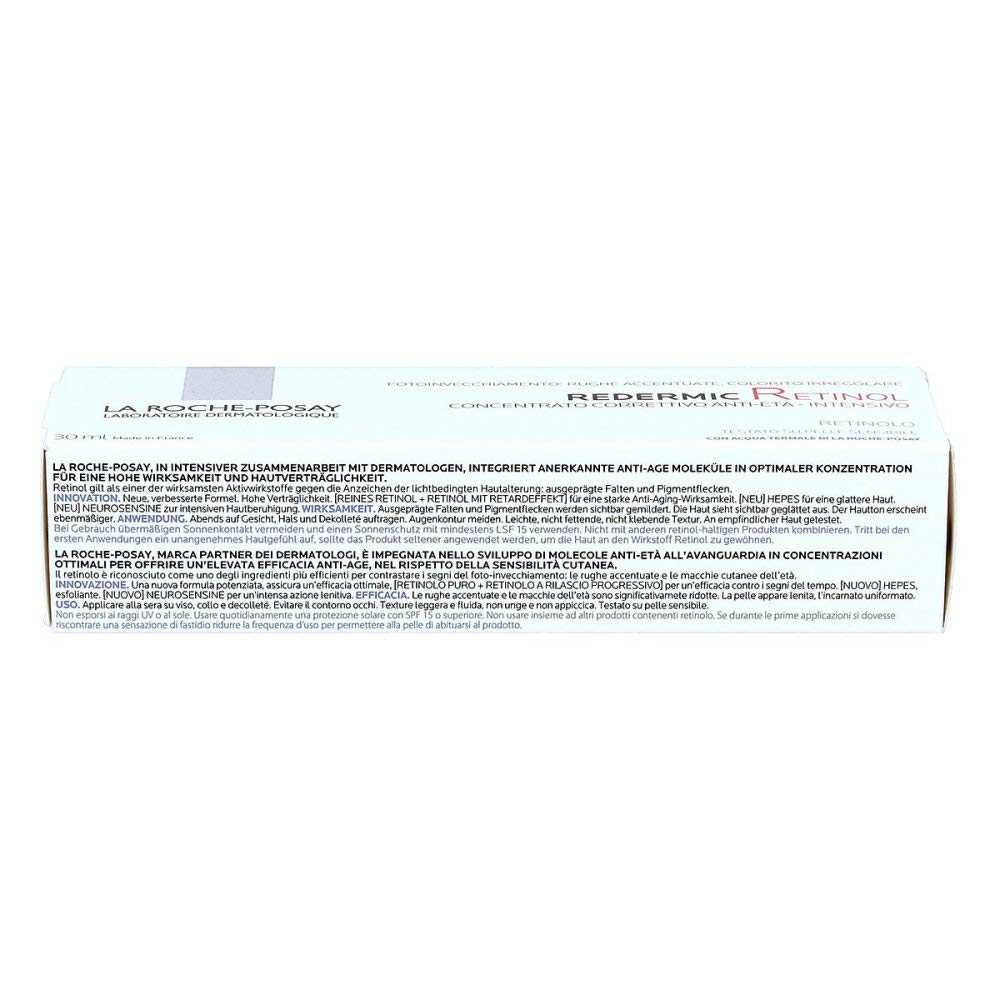
La Roche-Posay Redermic R occupies a slightly higher price tier — drugstore-premium, dermatologist-office adjacent, and frequently recommended as a step-down from stronger prescription or boutique retinols. Reviewers who had their skin disrupted by stronger formulas describe Redermic R as a rehabilitation product. Its barrier-supportive vehicle (aqueous cream base with thermal spring water) produces a tolerance profile in practice that reads similarly to encapsulated formats, even for users arriving from much stronger actives. EWG Skin Deep’s cosmetic ingredient safety overview notes that La Roche-Posay’s formulation philosophy generally prioritizes minimized irritation at efficacious doses, which tracks with the pattern reviewers describe.
Best for: Sensitive-skin types who have failed multiple retinols, anyone stepping down from prescription-strength actives, buyers rebuilding tolerance from scratch. Honest limitation: Neither product is the right choice for a buyer with resilient skin who wants aggressive, fast results — standard retinol will outpace both at that skin type.
La
$54.97
In stock on Amazon
Check price on AmazonFrequently Asked Questions
Is encapsulated retinol actually less irritating than standard retinol?
In practice, yes — for most people, most of the time. The time-release mechanism means less retinol contacts skin simultaneously, which reduces the acute inflammatory response that causes redness and peeling. Byrdie’s Beginner’s Guide to Retinol notes that while both formats are effective long-term, the tolerance advantage of encapsulated formats is real and well-documented in formulation research. The caveat: if your skin is very resilient, that gentleness may come at the cost of slower early results.
Can I use a retinol serum and a retinol cream in the same routine without overdoing it?
In almost every case, no — not at the same time. Layering two retinol products simultaneously dramatically increases irritation risk without proportionally increasing benefit. If you are using a retinol serum in your PM routine, that is your active for the night. Some experienced users alternate products on different evenings — stronger serum three nights a week, gentler cream two nights — but this requires established tolerance and should not be a starting strategy.
How long before I can expect to see results from a drugstore retinol?
Honest timeline: minimum four weeks for surface glow and texture refinement, eight to twelve weeks for meaningful line reduction or pigmentation improvement. Allure’s retinol guide sets reader expectations at the twelve-week mark for anti-aging claims, which aligns with what owners of encapsulated formats like the CeraVe Anti-Aging Serum report. Standard retinols can move slightly faster. Any product promising visible transformation in under two weeks is almost certainly overstating.
What does sandwiching retinol mean and does it work for sensitive skin?
Sandwiching means applying a moisturizer before your retinol — not just after — so the active molecule works through a thin layer of hydration before contacting skin directly. The theory, supported by dermatologist commentary covered in Self’s retinol guide, is that this slows penetration rate and reduces irritation without eliminating efficacy. For genuinely sensitive skin, it is a legitimate tool. Start with a light moisturizer underneath; adjust based on results over four to six weeks.
Is the CeraVe Resurfacing Serum safe to use postpartum or while breastfeeding?
This is a medical question that belongs to your OB or dermatologist, not skincare editorial. EWG Skin Deep’s cosmetic ingredient safety overview flags all forms of vitamin A, including retinol, as ingredients to discuss with a provider during breastfeeding due to limited safety data in that population. The postpartum reviewer who praised CeraVe’s gentleness was using it as a re-entry product after stopping retinol entirely during pregnancy — confirming the formula is tolerable once cleared to resume, not necessarily cleared for use during breastfeeding. Get explicit sign-off from your provider.
Why does RoC cause eye irritation and what can I do about it?
The eye area has thinner skin, fewer sebaceous glands, and less natural barrier protection than the rest of the face. Standard retinol applied close to the orbital bone hits sensitive tissue with full-strength actives. The fix most owner-reviewers land on: apply RoC to the face proper, leave a clear margin around the eyes, and finish with a non-retinol eye cream in that zone. The sandwich method also helps. If you have had swelling or significant periorbital irritation, stop the product and allow a full recovery period before attempting reintroduction with a gentler format.
The Decision Framework
If you are choosing between these formats right now:
- New to retinol or rebuilding tolerance after irritation: Start with an encapsulated format — CeraVe Anti-Aging Retinol Serum or Good Molecules Gentle Retinol Cream. Budget for a twelve-week trial before evaluating results.
- Sensitive skin that has failed multiple retinols: La Roche-Posay Redermic R or Good Molecules, used with the sandwich method, two to three nights per week maximum for the first month.
- Resilient skin, anti-aging focus, willing to manage a break-in period: RoC Correxion Night Cream with deliberate introduction — every third night for three weeks, then every other night. Keep it away from the eye contour.
- Postpartum or breastfeeding: Pause retinol until you have a provider’s explicit clearance. No skincare result justifies skipping that conversation.
The format debate — encapsulated versus standard — matters most in the first six to twelve weeks of use. Long-term, both can deliver real results. The question is which one you will still be using at week twelve, because tolerability is what determines compliance, and compliance is what determines outcome.