September 23, 2026 • Celeste Morrow • 10 min reading time • Prices verified June 4, 2026
The Gentle Retinoid Upgrade Path: From La Roche-Posay Redermic R to Celimax Retinal and The Ordinary Retinal 0.2%
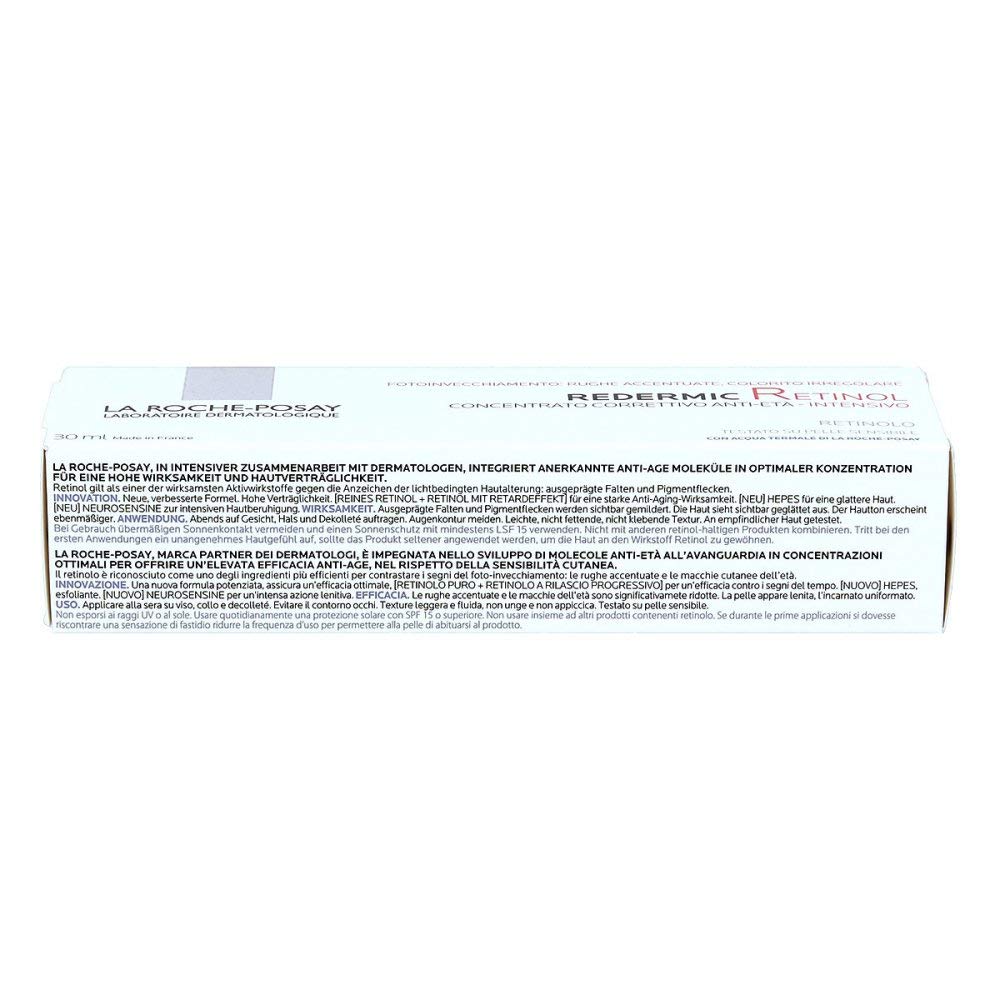
If you’ve heard the word “retinol” thrown around in skincare conversations and quietly wondered whether you’re using enough of it — or the right kind — you’re in exactly the right place. Retinol is a form of vitamin A that your skin has to convert through several biological steps before it can actually do its job (smoothing texture, fading dark spots, supporting collagen). That conversion process is part of why starter retinol products feel manageable for most people: they’re working with a diluted signal. Retinal (short for retinaldehyde) is one conversion step closer to the active form your skin uses, which means it delivers more results per application — but also, theoretically, more irritation potential. This article maps out one logical upgrade path: starting with La Roche-Posay Redermic R as a low-stakes entry point, then stepping into Celimax Retinal Shot and The Ordinary Retinal 0.2% for those ready for more. We’ll name the tradeoffs, show the per-use math, and end with a clear decision rule so you’re not guessing.
| EDITOR'S PICKLa Roche-Posay Redermic R Anti… | Mid-tierLa Roche-Posay Toleriane Double… | Budget pickThe Ordinary Retinal 0.2% Emuls… | |
|---|---|---|---|
| Retinoid type | Retinol | — | Retinal |
| Retinoid % | — | — | 0.2% |
| Size | — | — | 0.5 Fl Oz |
| Ceramides | — | ✓ | — |
| Niacinamide | — | ✓ | — |
| Format | Cream | Cream | Emulsion |
| Price | $54.97 | $24.99 | $14.90 |
| See on Amazon → | See on Amazon → | See on Amazon → |
Why the Retinol-to-Retinal Step-Up Actually Matters (and When It Doesn’t)
If you’ve been using a low-percentage retinol for six or more months and feel like progress has stalled — texture is better but not where you want it, fine lines are softer but not gone — the conversion bottleneck is probably your ceiling. Paula’s Choice ingredient glossary explains that retinaldehyde (retinal) requires only one enzymatic conversion to become retinoic acid, the biologically active form, versus two conversions from retinol. That single-step difference is meaningful in practice: across aggregated reviewer feedback on Dermstore and Sephora, owners who switched from low-percentage retinol to retinal at 0.05–0.2% consistently describe noticeably faster texture improvement, with the irritation being “less dramatic than I feared” a recurring phrase.
The anxiety around the switch is real, though, and worth acknowledging directly. Buyers new to retinal frequently arrive expecting a rerun of their worst early retinol experiences — the peeling, the purging, the red patches — because marketing language tends to frame retinal as dramatically stronger. Byrdie’s feature on retinal versus retinol notes that the irritation profile of modern retinal formulations (particularly those in encapsulated or time-release formats) can be similar to mid-strength retinol when introduced correctly, because the delivery system matters as much as the active. The step-up is real; the terror is usually overcalibrated.
The decision frame here is straightforward: if you’re not seeing further progress on 0.025–0.05% retinol after six months of consistent use, and your skin tolerates that without regular flaking, retinal at 0.05–0.1% is a logical next chapter. If you’re still managing baseline retinol irritation, the step-up is premature.
La Roche-Posay Redermic R: The Credible Entry Point
La Roche-Posay Redermic R positions itself as a “pure retinol concentrate” at a low, undisclosed concentration inside a stabilized, fragrance-free base — and that careful formulation is exactly what earns it consistent trust from dermatologists and first-time retinol users alike. Allure’s round-up of the best retinol products for sensitive skin consistently places Redermic R in the conversation for its tolerability, and reviewer feedback at authorized retailers echoes that: owners with rosacea-adjacent skin and reactive complexions describe getting through the full adjustment period without abandoning the product, which is genuinely unusual in this category.
What Redermic R does well is minimize the variables. It’s not asking you to manage a high percentage, an aggressive delivery system, and a stripped-down base all at once. A 28-year-old reviewer with only mild concerns — some uneven texture, the beginning of fine lines — is a plausible and honest target here: this is a low-stakes commitment with low risk of over-delivery or over-promise. If your main worry is “will this wreck my skin for a week,” Redermic R’s record suggests probably not.
Where it reaches its ceiling: Owners who’ve used it faithfully for a year or more tend to report that results plateau. The texture improvement comes, the skin looks healthier, but the more structural concerns — visible capillaries, thinning at the temples, loss of firmness — don’t shift the way a more potent vitamin A form might. That’s not a product failure; it’s a category ceiling, and recognizing it is how you know the upgrade conversation has become relevant for you.
Celimax Retinal Shot and The Ordinary Retinal 0.2%: Two Different Entry Points into Retinal
Celimax Retinal Shot: For the Anxious First-Timer
Celimax Retinal Shot is a Korean-market product that has quietly built a following among buyers who describe themselves as “retinal-curious but irritation-scared.” The pattern in buyer reviews is consistent: people who expected significant reaction and found the product manageable at three-times-weekly use, particularly when applied after a hydrating serum buffer. The concentration isn’t disclosed in Western retailer listings at a precise percentage, which is a genuine transparency limitation — but the reviewer consensus points to a gentler entry into retinal than The Ordinary’s 0.2% option.
One differentiating use case that comes up repeatedly in buyer reports is the eye area. Several owners describe using Celimax Retinal Shot carefully around the orbital bone, noting less irritation than they expected in that zone. This is a buyer-reported practice, not a site-verified recommendation — the eye area is thinner and more reactive, and any retinoid near that region carries real risk of irritation. But if eye-area application is something you’ve been doing with retinol and want to continue, the pattern of Celimax buyer experience is worth noting as a differentiator when you’re comparing it against higher-percentage alternatives.
The Ordinary Retinal 0.2%: The Anchor Case
The Ordinary Retinal 0.2% is where the most emotionally resonant reviews live, and understanding who is buying it changes how you read the product. One buyer account in particular anchors the entire upgrade conversation: a 40-year-old who describes addressing visibly thinning skin and capillaries, noting that they had “never done anything special” for their skin before discovering retinal. That narrative — the late starter who finds a genuinely impactful product at an accessible price — is not unusual in The Ordinary’s retinal reviews, and it’s instructive. This isn’t a product primarily for the already-optimized; it’s often a first serious skincare investment for someone who’s been benching themselves.
At 0.2% retinal in a squalane base, The Ordinary’s formula is meaningfully potent. Byrdie’s retinal feature and Dermstore’s irritation-avoidance editorial both flag that 0.2% is on the higher end of what’s commercially available without a prescription, and owners who came from low-percentage retinol creams report a noticeable adjustment period — typically two to four weeks of mild flaking and dryness if they don’t sandwich or buffer correctly. The squalane base helps, but it doesn’t fully offset the active at that level.
The tradeoff is explicit: you’re getting the most retinal available over the counter, at one of the lowest price points in the category. The adjustment period is real. The results timeline, according to owners who stuck through it, is also meaningfully shorter than what they experienced with comparable retinol products.
By the Numbers
| Product | Retinoid Type | Approx. Concentration | Frequency (starter) | Relative Irritation Risk |
|---|---|---|---|---|
| La Roche-Posay Redermic R | Retinol | Low (undisclosed) | 2–3×/week | Low |
| Celimax Retinal Shot | Retinal | Undisclosed (moderate est.) | 3×/week | Low–Moderate |
| The Ordinary Retinal 0.2% | Retinal | 0.2% | 2×/week (then build) | Moderate |
Buffer Moisturizers: The Variable That Decides Whether You Stay with Retinal
The difference between a successful retinal introduction and an abandoned bottle usually comes down to what goes on immediately after. Dermstore’s retinoid-routine editorial emphasizes the “sandwich method” — applying a hydrating serum or light moisturizer before and after retinal — as the most consistent irritation-reduction strategy, particularly during the first four to eight weeks.
Two products come up with enough specificity in buyer accounts to name directly. Good Molecules Hyaluronic Acid Serum appears in a reviewer’s post-retinol irritation account as a “rescue” layer — applied after retinal shows signs of barrier disruption, it’s described as soothing without any sting. The reviewer language here is “the only thing that calmed it down,” which is the kind of visceral specificity that makes a recommendation trustworthy. La Roche-Posay Toleriane moisturizer is cited explicitly by a prescription retinoid user as the only moisturizer that didn’t sting during peak retinoid adjustment — directly applicable here because if a prescription-strength retinoic acid user finds it non-irritating, it’s a reasonable baseline expectation for OTC retinal users as well.
The practical rule: whatever you layer after retinal, it should be fragrance-free, low in potentially occlusive actives (no niacinamide in high concentrations, no AHAs), and rich enough to support barrier recovery without trapping irritants against the skin.
Frequently Asked Questions
What is the actual difference between retinol and retinal, and is the step-up worth it? Retinal is one conversion step closer to the biologically active form of vitamin A than retinol, which means the same concentration delivers more signal to your skin. Per Paula’s Choice’s ingredient glossary, retinol requires two enzymatic conversions; retinal requires one. The step-up is worth it when you’ve plateaued on retinol and want meaningfully faster visible results — not as a first move into the category.
How many nights per week should I use retinal when I’m switching from a retinol product? Start at two nights per week regardless of your retinol history. Retinal behaves differently enough that previous tolerance doesn’t fully transfer. Celimax buyers report working up to three times weekly within four to six weeks; The Ordinary Retinal 0.2% owners typically describe a longer runway — four to eight weeks before adding a third application night.
What moisturizer should I apply after retinal to prevent dryness and irritation? Reviewer accounts point to La Roche-Posay Toleriane as a particularly non-irritating option, even for users at prescription retinoid strength. Good Molecules Hyaluronic Acid Serum is specifically cited as a post-retinol irritation rescue in buyer reviews. Fragrance-free, barrier-supportive, no competing actives — those are the criteria; both products meet them from what owner accounts consistently describe.
Can I use a retinal product around my eyes or is that only for retinol formulas? Multiple Celimax Retinal Shot buyers report using it in the orbital area with acceptable tolerance, and it’s worth noting as a differentiator if that’s a priority for you. However, this is buyer-reported practice only — the eye area is genuinely more reactive, and no formula marketed as a face serum carries a verified eye-safety claim. Proceed cautiously, and not with The Ordinary’s 0.2% concentration as a starting point near the eyes.
How long before I notice the difference between my retinol results and my new retinal results? Across owner accounts aggregated on Sephora and Dermstore, the most commonly cited timeline is six to ten weeks before visible texture and tone improvements diverge noticeably from what retinol was delivering. Structural changes — firmness, capillary visibility, significant fine-line reduction — tend to surface at the three-to-six month mark in longer-running reviews.
Is The Ordinary Retinal 0.2% too strong for someone who has only used a low-percentage retinol cream? Potentially, yes — particularly if your retinol use has been at 0.025% or below, or less than consistent. Byrdie’s retinal-versus-retinol feature suggests that starting at a lower retinal concentration (0.05–0.1%) and working up is a more forgiving path if your baseline is a gentle retinol cream. Celimax Retinal Shot serves that intermediate role better than jumping directly to 0.2%.
The Decision Rule
If you’ve used retinol consistently for six-plus months, tolerate it without regular flaking, and have plateaued on results: Celimax Retinal Shot is the lower-anxiety on-ramp into retinal, and The Ordinary Retinal 0.2% is the destination once you’ve confirmed your skin handles the retinal molecule. Start with Celimax; move to The Ordinary in three to four months if tolerance allows.
If you’re still finding retinol adjustment difficult: Don’t upgrade yet. Strengthen your buffer routine around Redermic R first. The Toleriane and Good Molecules pairing is well-documented by owners as a meaningful irritation reducer — address the baseline before you add potency.
If you’re a late starter with structural concerns (thinning, firmness, visible capillaries): The Ordinary Retinal 0.2% owner accounts suggest this formula punches above its price class for exactly that profile. Go slowly on frequency, invest in the buffer moisturizer, and give it a full eight weeks before judging.