July 21, 2026 • Celeste Morrow • 10 min reading time • Prices verified June 4, 2026
Hyaluronic Acid Serums Head to Head: Good Molecules, The Ordinary, and PCA SKIN From $8 to $98
Hyaluronic acid — usually abbreviated HA — is a molecule your skin produces naturally to hold onto water. It’s a humectant, which means its job is to attract and bind moisture rather than create a barrier that locks it in. You’ll find it in serums, moisturizers, and eye creams across every price tier, and it’s one of the few skincare ingredients with near-universal dermatologist endorsement for all skin types. In serum form, it typically goes on after cleansing and before your moisturizer or SPF, and it’s generally well-tolerated even on reactive or breakout-prone skin. If you’ve ever wondered why your $12 drugstore HA serum sometimes leaves your skin feeling tight instead of plump, or whether the $98 clinical version is genuinely different or just better packaged, this article is built to answer exactly that — using what longstanding owners, credentialed reviewers, and published formulation data consistently report.
By the time you reach the end, you’ll have a clear framework for which of these three serums belongs in your routine and why, along with the honest cost-per-use math on the priciest option.
| EDITOR'S PICKPCA SKIN Hyaluronic Acid Boosti… | Mid-tierHyaluronic Acid Serum for Skin… | Budget pickGood Molecules Hyaluronic Acid… | |
|---|---|---|---|
| Key ingredients | Niacinamide, ceramides | 100% pure HA | 1% HA |
| Size | — | 2 oz | 1 fl oz |
| Texture claim | — | Non-greasy | Non-greasy |
| Key benefit | 24-hr moisture | Anti-aging, brightening | Plumper skin |
| Paraben free | — | ✓ | — |
| Price | $128.00 | $13.98 | $5.97 |
| See on Amazon → | See on Amazon → | See on Amazon → |
What Makes These Three Serums Different (It’s Not Just Price)
Before the head-to-head, one clarification that changes everything: not all hyaluronic acid in a formula behaves the same way. Molecular weight matters. High-molecular-weight HA sits on the surface of the skin and creates an immediate plumping, smoothing effect. Low-molecular-weight HA penetrates more deeply into the upper layers of the epidermis. Some formulas use both. Co-ingredients — the things that show up alongside the HA in the ingredient deck — also dramatically affect how a serum performs in a real routine.
Paula’s Choice Skincare Ingredient Dictionary describes HA as one of the most studied and well-tolerated hydrating ingredients in cosmetic science, and notes that formulations vary widely in their molecular weight blends and supporting ingredient systems. Allure’s skin care guide on hyaluronic acid reinforces this point: the delivery system and the formula base surrounding the HA matter as much as the concentration itself. These aren’t marketing distinctions — they’re the reason a $9 serum and a $98 serum can both call themselves “hyaluronic acid serums” while behaving almost nothing alike in practice.
Here’s the fast comparison before we go deep:
| Product | Price (approx.) | Key co-ingredients | Best routine position |
|---|---|---|---|
| Good Molecules Hyaluronic Acid Serum | ~$8–$12 | Sodium PCA, panthenol | Active buffer, nightly layer |
| The Ordinary HA 2% + B5 | ~$9–$12 | Vitamin B5 (panthenol) | Damp-skin application |
| PCA SKIN Hyaluronic Acid Boosting Serum | ~$95–$98 | Ceramides, peptides, HA complex | Standalone hydration investment |
The Three Serums, Evaluated
Good Molecules Hyaluronic Acid Serum: The Workhorse Buffer
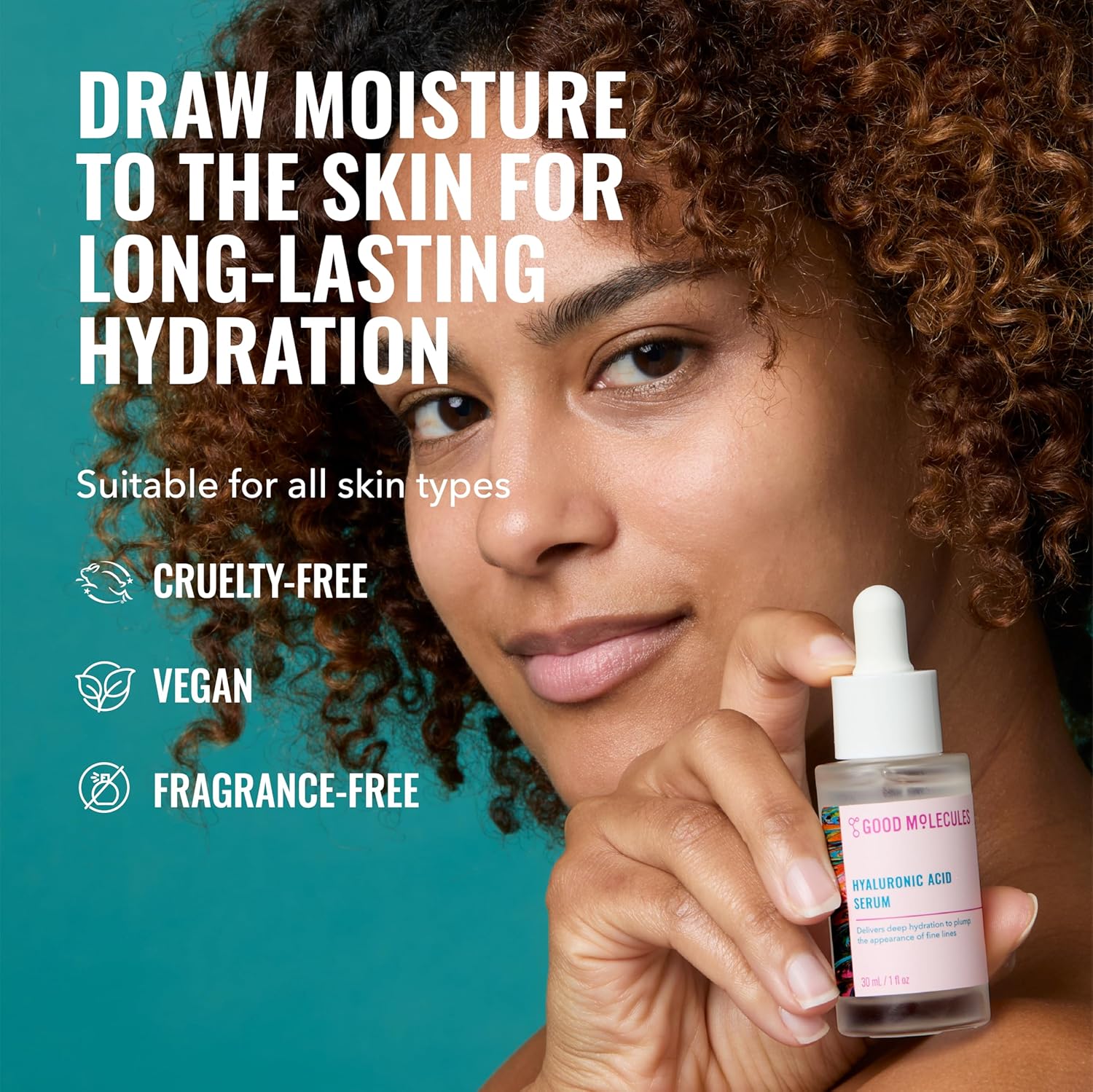
At roughly $8–$12, Good Molecules has built a cult following that is unusually loyal even by drugstore standards. What’s notable in aggregated owner reviews isn’t the first impression — it’s the retention. Multiple reviewers describe using this serum consistently for a few years, which is not language you typically see attached to a budget hydrator. One pattern that emerges repeatedly: owners who run retinol, AHAs, or other active ingredients in their routines reach for this serum specifically as a buffer layer — applied after an active and before a moisturizer to reduce potential irritation and keep the skin barrier from drying out mid-routine.
This is a real and legitimate use case. Dermstore’s editorial overview on layering skincare actives explains that applying a hydrating serum between a retinoid and a moisturizer can reduce the transepidermal water loss that actives sometimes accelerate. Good Molecules’ formula — which includes sodium PCA (another humectant) alongside the HA — supports this positioning. It’s lightweight, absorbs quickly, and doesn’t pill under subsequent layers, which matters practically if you’re running a four- or five-step routine at night.
Where it fits: If you’re layering over retinol, vitamin C, or a prescription treatment and need something that adds hydration without adding friction or weight, Good Molecules has a strong claim as the best value-per-function option at this tier. It’s not trying to be transformative. It’s trying to be reliable, and by owner report, it succeeds at that job consistently.
The trade-off: Plain humectancy without significant film-forming or occlusive ingredients means that in very dry or low-humidity climates, it may not be enough on its own. You need to follow it with a moisturizer that seals the hydration in.
Good
$5.97
In stock on Amazon
Check price on AmazonThe Ordinary HA 2% + B5: Apply on Damp Skin — And Here’s Why That’s Not a Workaround
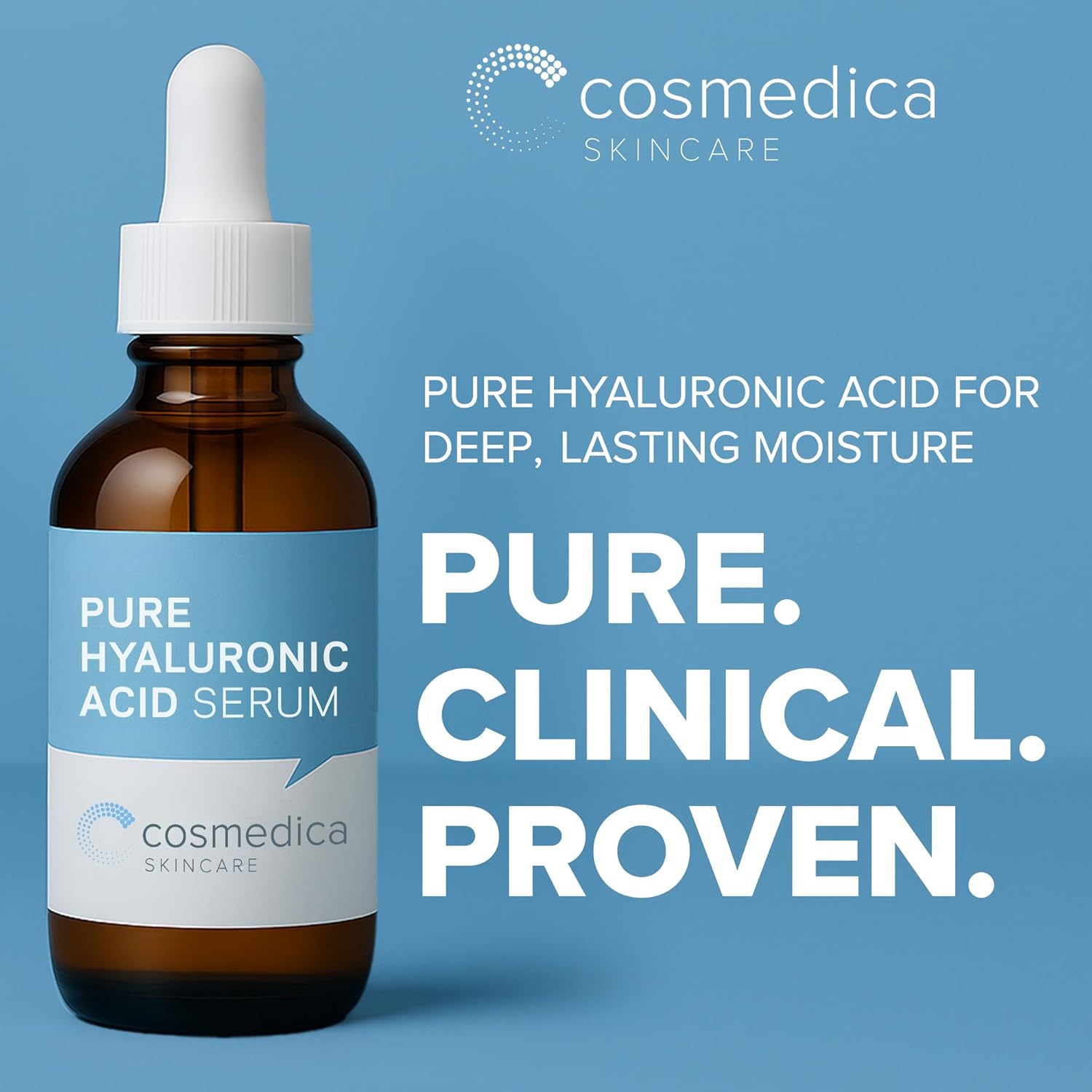
The Ordinary’s Hyaluronic Acid 2% + B5 is one of the brand’s most reviewed and repurchased products, and the most consistent reviewer-discovered best practice is almost startlingly specific: apply it on slightly damp skin. Reviewers independently arrived at this tip without it being on the label, and it circulates widely across beauty editorial and review threads as a meaningful upgrade to the standard experience.
This isn’t a workaround for a mediocre product — it’s basic humectant science working as intended. Humectants pull water toward themselves from whatever moisture source is available. When the ambient environment is dry, they’ll draw from the deeper layers of your own skin if there’s no surface water to pull from first. Applying HA on damp skin gives the humectant external moisture to bind and hold, rather than borrowing from the skin barrier itself. Allure’s hyaluronic acid skin care guide makes this mechanism explicit, noting that in low-humidity conditions HA can pull moisture from deeper layers of skin if there is no atmospheric moisture available — and that applying on damp skin is the practical mitigation.
The B5 (panthenol) co-ingredient supports skin barrier function and has its own mild hydrating properties, which makes this formula more of a system than a single-ingredient delivery vehicle. Byrdie’s roundup of the best hyaluronic acid serums consistently ranks this one highly for its simplicity and reliability, particularly for oily and combination skin types who want hydration without added emollients.
Where it fits: This is the most teachable HA serum in the lineup — once you understand the damp-skin application method, it outperforms its price point reliably. For oily skin types who find richer HA formulas too heavy, or for anyone building a starter active routine, this is a strong foundational choice.
The trade-off: The texture is notably viscous and gel-like. Some owners with dry skin find it insufficient as the only hydration layer. Pair it with a richer moisturizer for dry-skin types, or treat it as part of a layered system rather than the final word on hydration.
Hyaluronic
$13.98
In stock on Amazon
Check price on AmazonPCA SKIN Hyaluronic Acid Boosting Serum: The Math That Changes the Sticker Shock
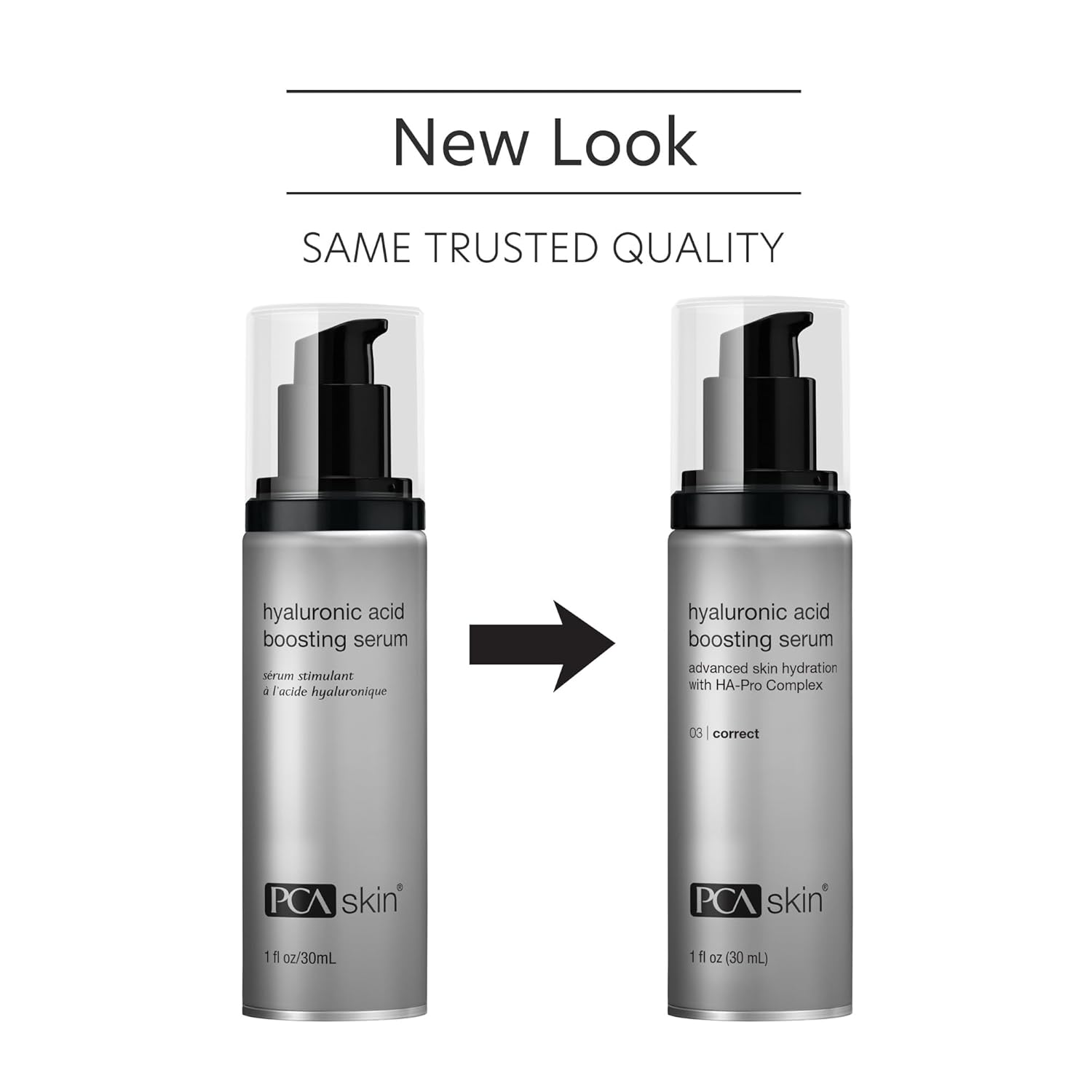
At roughly $95–$98, PCA SKIN’s serum occupies a different category entirely — it’s a clinical-grade professional line sold through licensed providers and select authorized retailers, and it’s formulated accordingly. The ingredient deck includes multiple forms of hyaluronic acid (a mixed-weight approach for both surface and subsurface hydration), ceramides (lipid molecules that are structural components of the skin barrier), and peptides (small proteins that signal skin repair and firmness). This is not a delivery vehicle for HA — it’s a comprehensive hydration and barrier-support formula in which HA is the anchor.
Here’s where the cost-per-use math becomes the actual conversation:
By the numbers:
- Sticker price: ~$98
- Owner-reported duration: ~3 months with daily use (reported consistently across multiple long-term reviews)
- Daily cost: ~$1.09/day
- Comparison: Good Molecules at ~$10 for a comparable usage period ≈ ~$0.11–$0.16/day
The gap is real — you’re paying roughly 7–10x more per day for PCA SKIN. Whether that’s justified depends entirely on what the ceramides and peptides are adding to your routine. Paula’s Choice Skincare Ingredient Dictionary notes that ceramides are among the most well-evidenced barrier-repair ingredients available in topical skincare, and that combining them with HA addresses both hydration delivery and the barrier integrity that makes that hydration last. For skin that’s compromised — post-procedure, sensitized by prescription retinoids, dealing with rosacea or eczema flares — that distinction is clinically meaningful, not cosmetic.
For healthy, non-sensitized skin running a complete skincare routine that already includes a ceramide moisturizer, the incremental benefit narrows. If you’re already covering ceramides in your moisturizer and your barrier is intact, the premium over Good Molecules is harder to justify on a daily-maintenance basis. If you’re in a compromised-barrier situation and your routine is designed to repair rather than maintain, PCA SKIN earns its price through formulation depth.
Where it fits: Post-procedure recovery routines, sensitized or barrier-compromised skin, and practitioners sourcing for client recommendations where clinical credential and ingredient density matter.
The trade-off: Price and access. This isn’t a walk-in-to-Sephora product — distribution is through licensed providers and select authorized retailers. It’s worth confirming authorized-retailer status before purchasing, as gray-market diversion is a documented issue in clinical skincare lines.
PCA
$128.00
In stock on Amazon
Check price on AmazonFrequently Asked Questions
Why does hyaluronic acid sometimes make my skin feel drier after I use it?
This is the humectant-without-occlusive problem, and it’s formulation behavior, not product failure. If you apply an HA serum and don’t follow it with a moisturizer that contains emollients or occlusives — think shea butter, squalane, or petrolatum — the HA has nowhere to hold the moisture it pulled in, and it can draw from the skin itself in dry conditions. The fix is always: serum, then seal. Allure’s hyaluronic acid skin care guide addresses this mechanism directly, framing the follow-up moisturizer as a non-optional step rather than an optional layer.
Should I apply hyaluronic acid serum on wet or dry skin?
Slightly damp is the evidence-supported sweet spot, especially for high-viscosity serums like The Ordinary HA 2% + B5. Pat your face with a towel but leave a faint residual dampness — don’t apply to fully dry skin in low-humidity environments. The reason is the same one driving that serum’s most widely shared user tip: humectants need a moisture source to pull from, and your own skin barrier should not be the primary one.
Can I layer two hyaluronic acid serums, or is that wasteful?
Layering is not inherently wasteful, but it’s also not additive in a simple linear way. Where it makes sense: using a low-molecular-weight HA first for depth, then a high-molecular-weight HA for surface plumping. Where it’s redundant: two serums with identical or similar molecular weight ranges. If you’re already using a ceramide moisturizer with HA, adding a second HA serum probably matters less than ensuring your sealing step is solid.
What is the difference between hyaluronic acid with B5 and ceramides versus plain HA?
Plain HA attracts and binds water. B5 (panthenol) adds mild barrier-soothing and its own hydrating properties — a complementary co-ingredient that supports the skin’s surface while the HA works on hydration. Ceramides repair and reinforce the lipid structure of the skin barrier itself, which determines how long any hydration actually stays where you put it. They’re working at different layers of the problem: HA brings water in, ceramides build the container that holds it.
Is the PCA SKIN serum worth the price compared to The Ordinary?
If your skin barrier is intact and your moisturizer already delivers ceramides, the honest answer is: probably not for daily maintenance. If you’re navigating barrier compromise, post-procedure recovery, or you’re a practitioner recommending to clients with clinical skin concerns, the formulation depth at PCA SKIN justifies the investment. The cost-per-use gap is real, but so is the formulation gap — this is a case where the math and the ingredient deck need to be read together, not separately.