June 13, 2026 • Celeste Morrow • 9 min reading time • Prices verified June 4, 2026
K-Beauty Niacinamide + TXA Combos: The Glass-Skin Serum Formula Dermatologists Are Watching
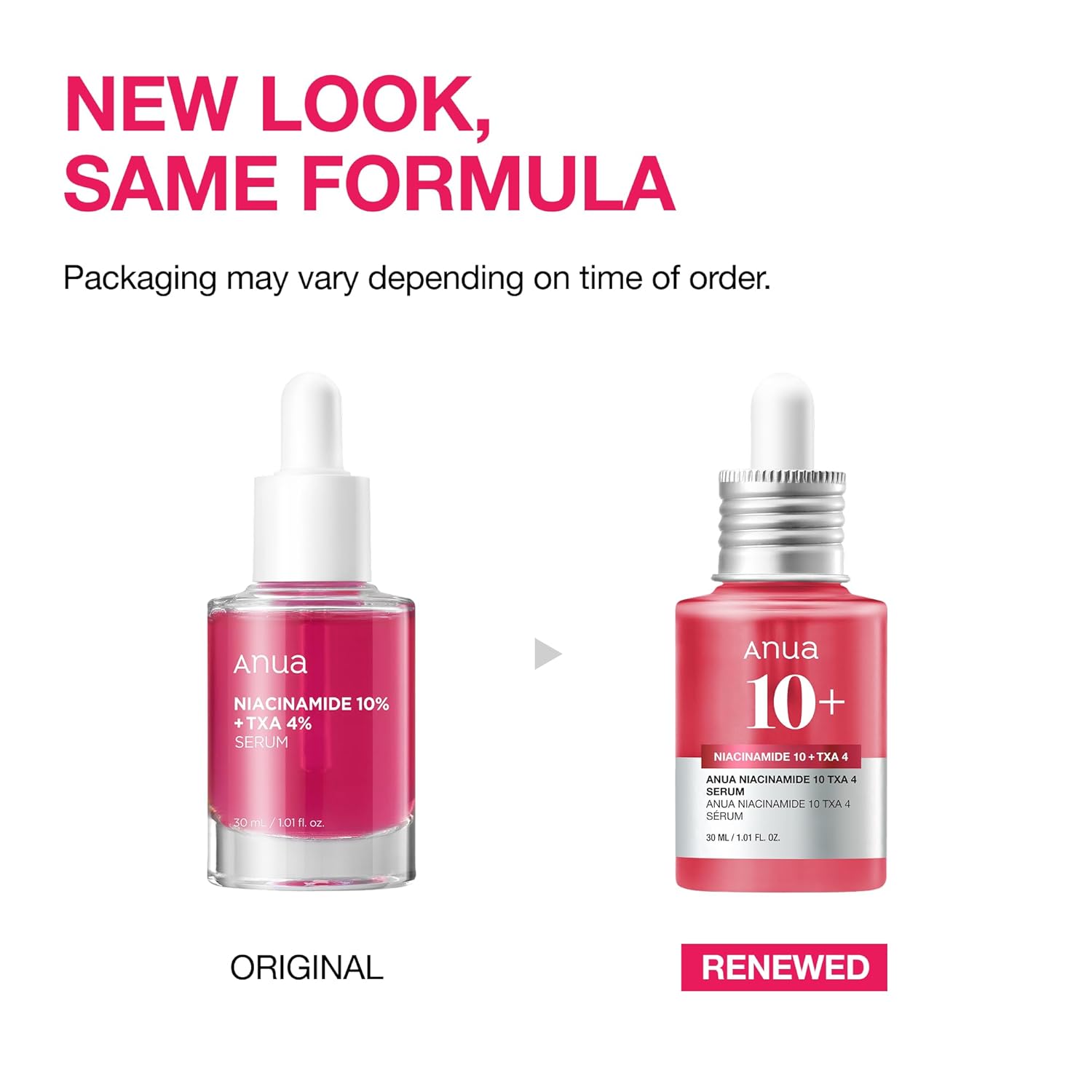
If you’ve spent any time browsing Korean beauty — often called K-beauty, a shorthand for the skincare philosophy and product category that originated in South Korea and is now sold globally at Sephora, Nordstrom, and across DTC stores — you’ve probably seen phrases like “glass skin” used to describe a look that’s luminous, even-toned, and almost poreless in appearance. Two ingredients are showing up together more and more in the K-beauty serums chasing that finish: niacinamide (a form of vitamin B3 that reduces redness, minimizes the look of pores, and helps fade dark spots) and tranexamic acid, often abbreviated TXA (a newer-to-skincare compound, originally a pharmaceutical used to control bleeding, that dermatologists have started recommending for stubborn hyperpigmentation — the patchy darkening that can follow acne, sun exposure, or hormonal shifts). The reason dermatologists are paying attention to this specific pairing, and why it’s worth your time if you’re building or refining a brightening routine, is what we’re going to walk through here: the evidence, the trade-offs, the formulas earning serious notice, and the decision framework for spending $35 to $120 on a single brightening serum.
| EDITOR'S PICK[BLITHE Niacinamide 5% + TXA Tra…](https://www.amazon.com/dp/B0F6TKMHCB?tag=greenflower20-20) | Mid-tier[Anua Niacinamide 10 + TXA 4 Ser…](https://www.amazon.com/dp/B0CLLV2T1P?tag=greenflower20-20) | Budget pick[SKIN1004 Tone Balancing Capsule…](https://www.amazon.com/dp/B0DBR61WV9?tag=greenflower20-20) | |
|---|---|---|---|
| Niacinamide % | 5% | 10% | — |
| TXA % | 3% | 4% | — |
| Size | 1 oz | 1.01 fl oz | 3.38 fl oz |
| Key extra ingr. | Cica & Allantoin | Hyaluronic Acid | Centella |
| Texture claim | — | Lightweight | — |
| Price | $24.00 | $21.85 | $13.58 |
| See on Amazon → | See on Amazon → | See on Amazon → |
Why These Two Ingredients Work Better Together Than Alone
To understand why the combination matters, you need to know how each one works — and crucially, where in the pigmentation pathway each one intervenes.
Hyperpigmentation isn’t a single problem. It’s the downstream result of a multi-step biological cascade: UV exposure or inflammation triggers keratinocytes (skin cells) to send distress signals; those signals prompt melanocytes (pigment-producing cells) to ramp up melanin synthesis; that melanin then transfers into surrounding skin cells, darkening them. The process has several chokepoints, and different ingredients block different ones.
Niacinamide works primarily at the transfer stage. According to the Paula’s Choice Ingredient Dictionary entry on niacinamide, it inhibits the transfer of melanosomes (melanin-containing packets) from melanocytes to surrounding keratinocytes. It does not meaningfully suppress melanin production itself — it intercepts the delivery. The result, with consistent use at concentrations of 5% and above, is gradual fading of existing spots and prevention of new ones darkening further. The secondary benefits — improved skin barrier function, reduced transepidermal water loss, anti-inflammatory action — are well-documented and meaningful. Niacinamide is one of the most evidence-backed topical actives in the category, and at the 5–10% range it is exceptionally well-tolerated.
Tranexamic acid (TXA) operates differently and, importantly, at an earlier stage in that cascade. As Byrdie’s overview of tranexamic acid explains, TXA blocks the interaction between UV-stimulated keratinocytes and melanocytes by inhibiting plasmin — an enzyme that would otherwise activate the signaling chain that tells melanocytes to produce more melanin in the first place. It also appears to downregulate endothelin-1, another pro-pigmentation signaling molecule. A 2020 study published in the Journal of the American Academy of Dermatology confirmed TXA’s efficacy in treating melasma (a particularly stubborn form of hormonally driven hyperpigmentation) at topical concentrations ranging from 2% to 5%, with a favorable side-effect profile compared to older treatments like hydroquinone.
Stack the two mechanisms side by side and the logic becomes clear:
| Ingredient | Where it acts | Primary mechanism | Effective concentration range |
|---|---|---|---|
| Niacinamide | Melanosome transfer stage | Inhibits melanin delivery to skin cells | 5–10% |
| Tranexamic acid (TXA) | Melanocyte activation stage | Blocks plasmin / keratinocyte signaling | 2–5% |
Blocking the signal and intercepting the delivery creates a two-point disruption. The Dermstore editorial piece on using niacinamide and TXA together describes this as a “complementary mechanism” approach — each ingredient covers a gap in the other’s coverage, which is exactly why formulators are combining them rather than relying on either alone.
What K-Beauty Formulas Are Actually Getting Right
Korean skincare brands were early to move on TXA at meaningful concentrations, driven partly by a domestic consumer base with very high awareness of post-inflammatory hyperpigmentation (PIH) from acne — a concern that skews toward Asian skin types in both prevalence and intensity of impact, though it affects all skin tones. The K-beauty approach also tends to favor layered, lower-irritation formulas over aggressive single-active treatments, which plays well with TXA’s gentler profile relative to retinoids or high-concentration AHAs.
Several formulas are receiving consistent attention from both dermatologists and experienced beauty consumers as of mid-2026:
Some By Mi Galactomyces Pure Vitamin C Glow Serum has been repositioned by the brand to emphasize its niacinamide content alongside vitamin C, though the TXA story is stronger in their 30 Days Miracle Toning Serum, which pairs niacinamide with brightening extracts at a price point (roughly $25–$35 at authorized retailers) that makes it a credible entry-level option. Reviewers on Dermstore consistently rate it as a solid performer for early PIH.
COSRX The Niacinamide 15 Serum — a single-active formula at 15% niacinamide — is notable because it establishes a baseline for what a very high-concentration niacinamide serum does on its own, useful for comparison. Owners report visible pore refinement and gradual brightening but note it works more slowly on deeper pigmentation, which is precisely the gap TXA combinations aim to close.
The more aggressive TXA-forward formulas worth tracking are coming from brands like Skin1004, By Wishtrend, and the Innisfree Brightening Essence reformulations. By Wishtrend’s Vitamin C, B, E & Ferulic Acid Serum sits adjacent to this category; their dedicated brightening serums have layered TXA at approximately 3% alongside 5% niacinamide in formats that reviewers describe as lightweight, fast-absorbing, and non-sensitizing — the trifecta that makes or breaks a K-beauty serum in the real world.
At the premium end, Dr. Jart+ Dermask and Sulwhasoo lines have introduced TXA-containing treatments at $60–$120 price points, backed by brand investment in clinical testing. Cosmetics & Toiletries has noted that the premium segment’s advantage isn’t always higher active concentrations — it’s often superior vehicle formulation (the base formula that determines how well actives penetrate and how the skin tolerates them), more sophisticated delivery systems, and better supporting cast ingredients like ceramides and peptides.
The Tradeoffs You Need to Price In
The enthusiasm in the dermatology-adjacent community is real, but it comes with caveats worth naming explicitly before you commit budget.
TXA is not a fast active. The Journal of the American Academy of Dermatology study showing melasma improvement noted changes appearing at 8–12 weeks of consistent use. If you’re three weeks into a formula and expecting visible results, you are still in the runway period. This is a slower-burn investment than, say, a chemical exfoliant, and buyers who don’t know this end up cycling through products before any formula has had a fair run.
Concentration transparency is inconsistent. Most Korean brands list TXA in their ingredient deck (INCI: tranexamic acid) but don’t always disclose the percentage on packaging. At concentrations below 2%, clinical evidence for pigmentation efficacy is limited. When brands are opaque about percentages, you’re often inferring from position in the ingredient list — higher up means higher concentration. If TXA appears in the bottom third of a long ingredient list, treat it as a supporting actor rather than a lead.
Niacinamide at very high concentrations (above 10–12%) can cause flushing in some users, a reaction driven by free niacin that can form when niacinamide breaks down — more common with heat or instability, less common in well-formulated stable serums, but worth knowing if you’re sensitive. The sweet spot most dermatologists recommend is 5–10%; the 15%+ serums are not inherently better and introduce more tolerance risk.
The combination doesn’t replace SPF. Every brightening expert and dermatologist — including those cited in Byrdie’s TXA overview — emphasizes that no brightening serum overcomes the daily pigmentation stimulus of unprotected UV exposure. Niacinamide + TXA as a stack is a treatment layer, not a substitute for a broad-spectrum SPF 30+ worn daily. If you’re building a serious brightening routine, the SPF is non-negotiable.
How to Decide: A Decision Framework by Budget and Skin Profile
Here’s the plain-English version of where this analysis lands:
By the numbers:
- Effective TXA concentration range: 2–5% topical
- Effective niacinamide range: 5–10%
- Minimum time to assess results: 8–12 weeks
- Price range for credible K-beauty TXA/niacinamide combos: $25–$120
If you have mild, early-stage PIH from acne or sun — and your budget is $25–$45: Entry-level K-beauty combination serums from Some By Mi or COSRX at authorized retailers (Sephora, Dermstore, YesStyle for authorized-stocked brands) give you a legitimate clinical dose of niacinamide with supporting brighteners. Add a dedicated TXA serum if you’re not seeing movement at the 10-week mark.
If you have moderate, established hyperpigmentation — melasma or persistent PIH — and your budget is $60–$120: The premium tier from brands like Sulwhasoo or Dr. Jart+ is worth considering, not primarily for higher actives but for formulation stability, elegant layering texture, and the supporting-ingredient ecosystem. Pair with a prescription or physician-dispensed azelaic acid or retinoid under dermatologist guidance if the topical-only approach stalls.
If you’re a makeup artist or esthetician sourcing brightening serums for client recommendations: The combination formula angle is a genuinely compelling conversation to have with clients who’ve plateaued on single-active vitamin C serums. The mechanism story (two-point blockade vs. single-point) is easy to communicate, the tolerance profile is client-friendly, and the K-beauty price-to-performance ratio builds loyalty. The caveat to give clients is the 8–12 week commitment framing upfront — set that expectation before the first bottle is empty.
If the brightening goal is primarily about skin texture and radiance rather than discrete dark spots: Niacinamide alone, at 10%, used consistently, may be the more efficient spend. TXA’s value proposition sharpens considerably for pigmentation that is discrete, post-inflammatory, or melasma-type — it is less differentiated for general luminosity.
The dermatologists watching this category aren’t watching it because it’s trendy. They’re watching because a two-mechanism approach to hyperpigmentation, at concentrations that consumer products can now reliably deliver, is a clinically coherent idea — and K-beauty’s formulation culture has been faster to execute on it than Western prestige brands. The question is always whether a specific product delivers those concentrations in a stable, well-penetrating formula. That’s the homework worth doing before the purchase.