August 4, 2026 • Celeste Morrow • 10 min reading time • Prices verified June 4, 2026
The Prescription-Skin Companion Guide: Moisturizers and Serums That Actually Work Alongside Tretinoin and Hydroquinone
If you’ve just started using tretinoin (a prescription-strength vitamin A derivative that speeds up skin-cell turnover to fight acne, fine lines, and uneven tone) or hydroquinone (a prescription or OTC skin-lightening agent that reduces dark spots by slowing melanin production), you already know the catch: both ingredients are effective precisely because they’re disruptive to your skin. Peeling, tightness, stinging, and a temporarily compromised skin barrier are part of the process — the dermatology community calls this the “retinization” phase for tretinoin, and it’s real. The question isn’t whether to use supportive products; it’s which ones won’t make things worse. This guide is built around what buyers who are actually on these prescriptions report using successfully, cross-referenced with ingredient science and dermatologist guidance, so you can make a confident, informed decision about what to layer.
One disclaimer before we start: this is editorial research, not a prescription. The framework here reflects aggregated buyer experience and published dermatologist guidance. Your prescribing physician’s instructions always take priority over anything you read here.
| EDITOR'S PICKKiehl's Ultra Facial Cream | Mid-tierHyaluronic Acid Serum for Skin… | Budget pickThe Ordinary Hyaluronic Acid 2%… | |
|---|---|---|---|
| Format | Cream | Serum | Serum |
| Squalane | 4.5% | — | — |
| Hyaluronic Acid | — | ✓ | 2% |
| Ceramides | — | — | ✓ |
| Size | — | 2 oz | 1 fl oz |
| Price | $70.00 | $13.98 | $9.90 |
| See on Amazon → | See on Amazon → | See on Amazon → |
Why Your Usual Moisturizer Might Suddenly Sting
When you’re on tretinoin or a combination hydroquinone-tretinoin cream, your skin barrier — the outermost layer that holds moisture in and keeps irritants out — is running compromised. This is why products that felt perfectly fine before your prescription may suddenly burn, tingle, or peel further. The mechanism matters for shopping: you’re not looking for the most luxurious formula or the most active one. You’re looking for one that is inert enough not to provoke inflammation while being film-forming enough to seal moisture in.
The ingredients that tend to cause problems in this context, per Self’s guide on building a tretinoin routine, include:
- Fragrance (synthetic or natural): a known sensitizer even on healthy skin; a near-guarantee of stinging on compromised barrier skin
- High-concentration AHAs and BHAs (glycolic, salicylic): exfoliating acids on already-exfoliated skin compounds irritation
- Alcohol-forward toners or essences: drying and barrier-disruptive
- Vitamin C in its most acidic form (L-ascorbic acid at low pH): can irritate sensitized skin when applied in the same window as prescription actives
The Allure overview of hydroquinone notes that the ingredient can cause dryness and peeling on its own — layered with tretinoin in a combination cream, that effect is compounded, which is why moisturizer selection becomes genuinely consequential, not just a comfort measure.
What Actually Works: The Buyer-Reported Ingredient List
Across aggregated reviews from verified buyers on prescription retinoid regimens, the moisturizer ingredients that appear repeatedly as tolerated — not just theoretically gentle — cluster around:
Ceramides (lipid molecules that are native to the skin barrier — they literally replace what prescription actives deplete), glycerin (a humectant that pulls water into skin without any pH activity), colloidal oatmeal (anti-inflammatory, FDA-approved for barrier conditions), panthenol/provitamin B5 (soothing and barrier-supportive), and occlusive agents like petrolatum or shea butter (which sit on top of skin and prevent transepidermal water loss without penetrating deeply enough to cause reactivity).
Hyaluronic acid (HA) deserves its own note. It’s a humectant — a molecule that attracts and binds water — and at molecular weights above 100 kDa (the larger, surface-sitting form), it doesn’t penetrate deeply enough to interact with active prescriptions. Dermstore’s overview of hyaluronic acid confirms it’s one of the most universally tolerated hydrating ingredients across skin types and conditions.
The Products Buyers Actually Name on Prescription Regimens
Farmacy Honey Halo: The Anchor Case Study
One of the most specific and grounded accounts in the buyer-review dataset for this topic comes from a user managing a prescription hydroquinone-tretinoin combination cream. She describes her skin as “super dry, sensitive and peely” at baseline during her prescription — which represents peak barrier compromise — and calls Farmacy Honey Halo “one of the only creams I can use that doesn’t sting.”
That specificity is worth unpacking, because Honey Halo’s formula is designed exactly for this: its centella asiatica extract, royal jelly, and propolis (bee-derived compounds with documented anti-inflammatory and barrier-supportive properties) keep the formula inert from an acid or exfoliant perspective. There’s no fragrance, no AHA/BHA, and the honey-derived humectants work osmotically rather than chemically. For buyers whose skin is in active retinization, that combination of anti-inflammatory actives inside an otherwise gentle frame is the working theory for why it doesn’t sting when other moisturizers do.
The trade-off: at its price point, it’s a premium option, and a small number of reviewers note that oilier skin types can find the texture heavy. If your barrier is severely compromised, the richness is likely a benefit. If you’re in a milder phase of adjustment, it may be more than you need.
La Roche-Posay Toleriane: The Sensitive-Skin Benchmark
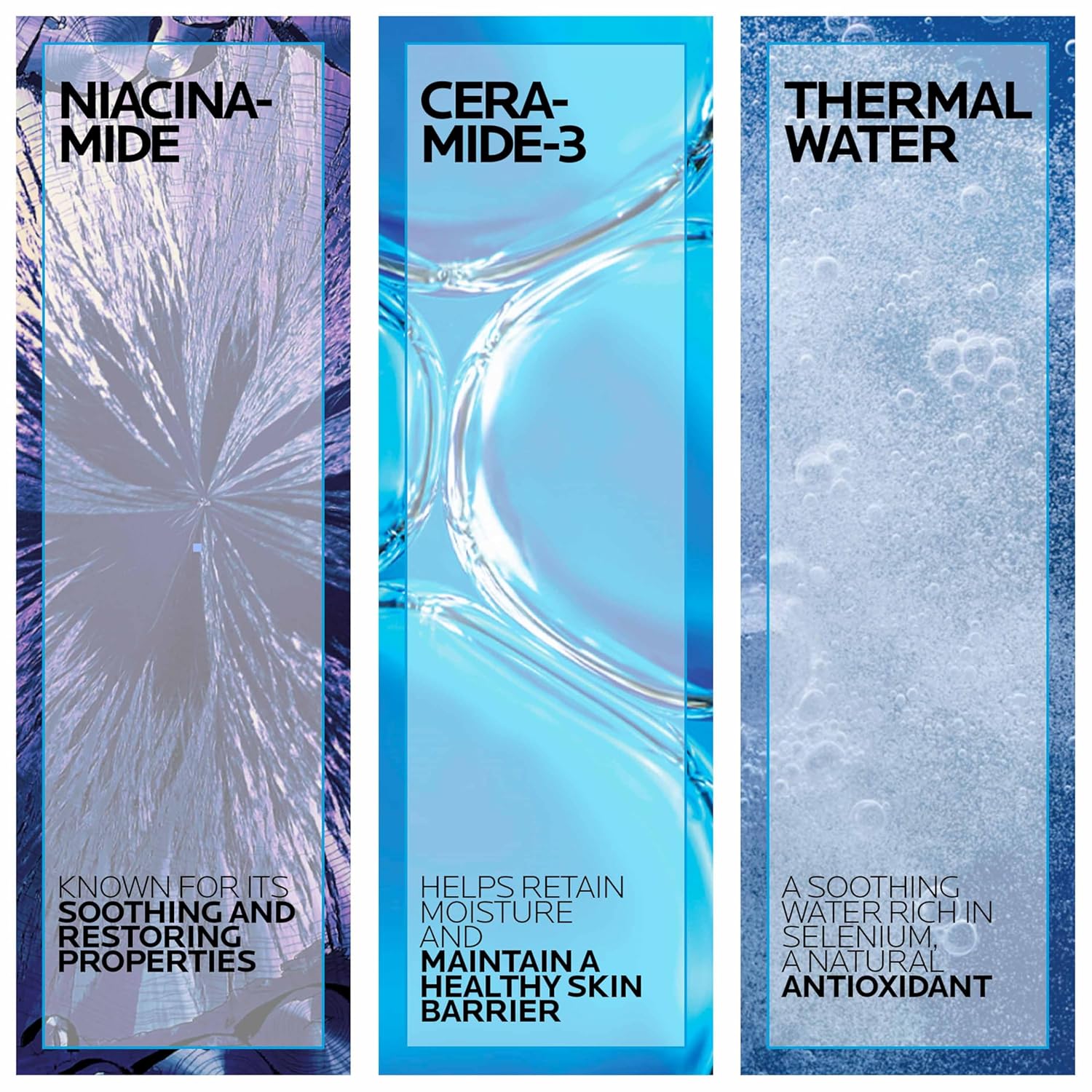
A prescription retinoid user who describes having “found the trick” for sensitive post-retinoid skin names La Roche-Posay Toleriane as their pairing solution. This is consistent across dozens of similar accounts: Toleriane’s core innovation is a preservative-system redesign (the brand’s patented airless packaging prevents the formula from needing the preservative concentrations that can irritate reactive skin). The formula leads with glycerin, niacinamide (at a concentration low enough to hydrate rather than visibly brighten in the short term), and ceramide NP, all of which are on the AAD’s general list of barrier-supportive ingredients.
Byrdie’s roundup of moisturizers for dry, irritated retinoid skin consistently names La Roche-Posay Toleriane Double Repair as a benchmark in the drugstore tier — a meaningful editorial signal given how many options exist at that price range.
By the Numbers
| Product tier | Key barrier-supportive ingredients | Fragrance-free? | Acid-free? |
|---|---|---|---|
| Farmacy Honey Halo | Centella, propolis, honey | Yes | Yes |
| La Roche-Posay Toleriane | Ceramide NP, glycerin, niacinamide | Yes | Yes |
| CeraVe Moisturizing Cream | Ceramides 1/3/6, hyaluronic acid, MVE tech | Yes | Yes |
Good Molecules Hyaluronic Acid Serum: The Rescue Layer
One of the most useful accounts in the buyer-review dataset for this topic comes from someone with severe post-retinol irritation — they describe a condition where “regular stuff burned” and specifically credit Good Molecules Hyaluronic Acid Serum with rescuing their moisture levels when nothing else was tolerated.
This is the category case for a serum-first approach: when even a rich cream feels like too much surface contact on acutely inflamed skin, a hydrating serum applied first creates a buffer layer. Because Good Molecules HA Serum uses a multi-weight hyaluronic acid blend (both surface-sitting high-molecular-weight HA and some mid-weight HA for slightly deeper hydration) in a minimal formula — no fragrance, no actives, no pH-disrupting ingredients — it reads as genuinely inert to compromised barriers in a way that even some “gentle” creams don’t. The trade-off is that it’s not occlusive: it needs to be followed by a cream or balm to seal the hydration in, especially on very dry or peeling skin.
Timeless Vitamin C: The Morning Active That Fits the Framework
Several buyers who use prescription retinoids at night describe building a careful morning/evening split — and Timeless Vitamin C + E + Ferulic Acid serum appears repeatedly on the morning side of that split. The logic is sound: L-ascorbic acid (the active vitamin C form) is not compatible with tretinoin in the same application window because the acidic pH required for L-ascorbic acid stability conflicts with how tretinoin works, and both can increase irritation. But in the morning, after the tretinoin has been absorbed and largely metabolized overnight, a well-formulated vitamin C serum adds photoprotection and antioxidant benefit — and sunscreen, which is non-negotiable on any retinoid regimen, layers over it.
Paula’s Choice ingredient explainer on combining vitamin C with other actives confirms this morning-use logic: vitamin C and prescription retinoids don’t need to avoid each other permanently, just simultaneously.
The Decision Framework: Matching Product to Regimen Phase
Your regimen phase matters more than your skin type when you’re on prescription actives.
Phase 1 — Active retinization (weeks 1–8 for most users): Prioritize fragrance-free, acid-free, occlusive-leaning moisturizers. Skip all supplemental exfoliants entirely. A hyaluronic acid serum underneath a ceramide cream is a defensible daily stack. Hold off on vitamin C until peeling has meaningfully subsided.
Phase 2 — Skin adjusting, barrier stabilizing (months 2–4): You can reintroduce a morning vitamin C serum (L-ascorbic acid or the gentler ethyl ascorbic acid). Niacinamide — a B vitamin with anti-inflammatory and barrier-strengthening properties — can be added either morning or evening around the prescription, not layered on top of it in the same moment.
Phase 3 — Maintenance: Your routine can look more like a conventional active routine. BHA at low concentration (0.5–1%) can be used on alternate days if your prescriber approves. The core ceramide-plus-humectant moisturizer should stay — it’s doing ongoing barrier maintenance, not just rescue work.
The “Is this moisturizer too active?” test: If a product contains any of the following — glycolic acid, lactic acid, salicylic acid above 0.5%, retinol, benzoyl peroxide, or fragrance — and your skin is in Phase 1 or peeling, it’s too active. The bar should be: could a dermatologist hand this to a patient with eczema and feel fine? If yes, it’s probably safe for your retinoid skin.
Frequently Asked Questions
Can I use hyaluronic acid serum on the same night I apply tretinoin? Yes — with one caveat. Dermstore’s HA overview notes that hyaluronic acid has no pH-based reactivity and doesn’t interfere with how tretinoin is absorbed. Many dermatologists actually recommend applying a thin HA serum before tretinoin as a buffer (“sandwich method”) or immediately after to support hydration. The only risk is applying it to damp skin in very dry environments, where HA can draw moisture from skin rather than the air — in that case, follow immediately with a cream.
Which moisturizer ingredients are safe when my skin is peeling from hydroquinone-tretinoin cream? Per AAD patient guidance on retinoids, the safest ingredients during active peeling are ceramides, glycerin, petrolatum, colloidal oatmeal, and panthenol. Avoid anything with fragrance, essential oils, exfoliating acids, or retinol — even a low-strength over-the-counter retinol on top of a prescription retinoid is compounding irritation without adding clinical benefit.
Should I use vitamin C in the morning and prescription retinoid at night? This is the approach most dermatologists recommend, and it’s what the buyer-reported split consistently reflects. Vitamin C (antioxidant, photoprotective) in the morning under SPF. Tretinoin or combination cream at night. The two actives aren’t permanently incompatible — just don’t layer them in the same application session. Paula’s Choice confirms this morning/evening split as standard practice for this combination.
Is it okay to add niacinamide if I’m already using a prescription retinoid? Generally yes. The older concern that niacinamide converts to niacin when combined with vitamin C and causes flushing has been largely debunked at cosmetic concentrations, per Paula’s Choice ingredient research. Niacinamide is well-tolerated alongside prescription retinoids and can actually help manage the redness and barrier disruption associated with early retinization. Use it in your moisturizer (already present in many gentle formulas) or as a standalone serum — just not stacked directly on top of freshly applied tretinoin.
How do I know if a moisturizer is too heavy or too active to layer with my prescription? “Too active” is ingredient-based (see the checklist above — acids, retinol, benzoyl peroxide, fragrance). “Too heavy” is a texture issue, not a safety issue: if a rich cream is causing milia (small white bumps from occlusion) around your nose or chin, switch to a lighter gel-cream in those zones. “Too heavy” doesn’t mean harmful — it means the formulation isn’t matching your skin’s current sebum production. Byrdie notes that retinoid users often need richer formulas than they’d typically choose because barrier function is genuinely suppressed during treatment.
The bottom line: if your skin is peeling or stinging, your first question shouldn’t be “what new active should I add?” — it should be “is my moisturizer doing its job?” A fragrance-free, ceramide-based formula tolerated by eczema-prone skin is the right benchmark. Once your barrier stabilizes, you have room to layer a morning vitamin C, a gentle niacinamide treatment, and eventually a low-strength supplemental exfoliant — in that order, with gaps between introductions. The prescription does the heavy lifting; your companion products just need to stay out of its way.