August 9, 2026 • Celeste Morrow • 10 min reading time • Prices verified June 4, 2026
Niacinamide at 10%, 15%, and 20%: What Buyers Actually Notice at Each Strength
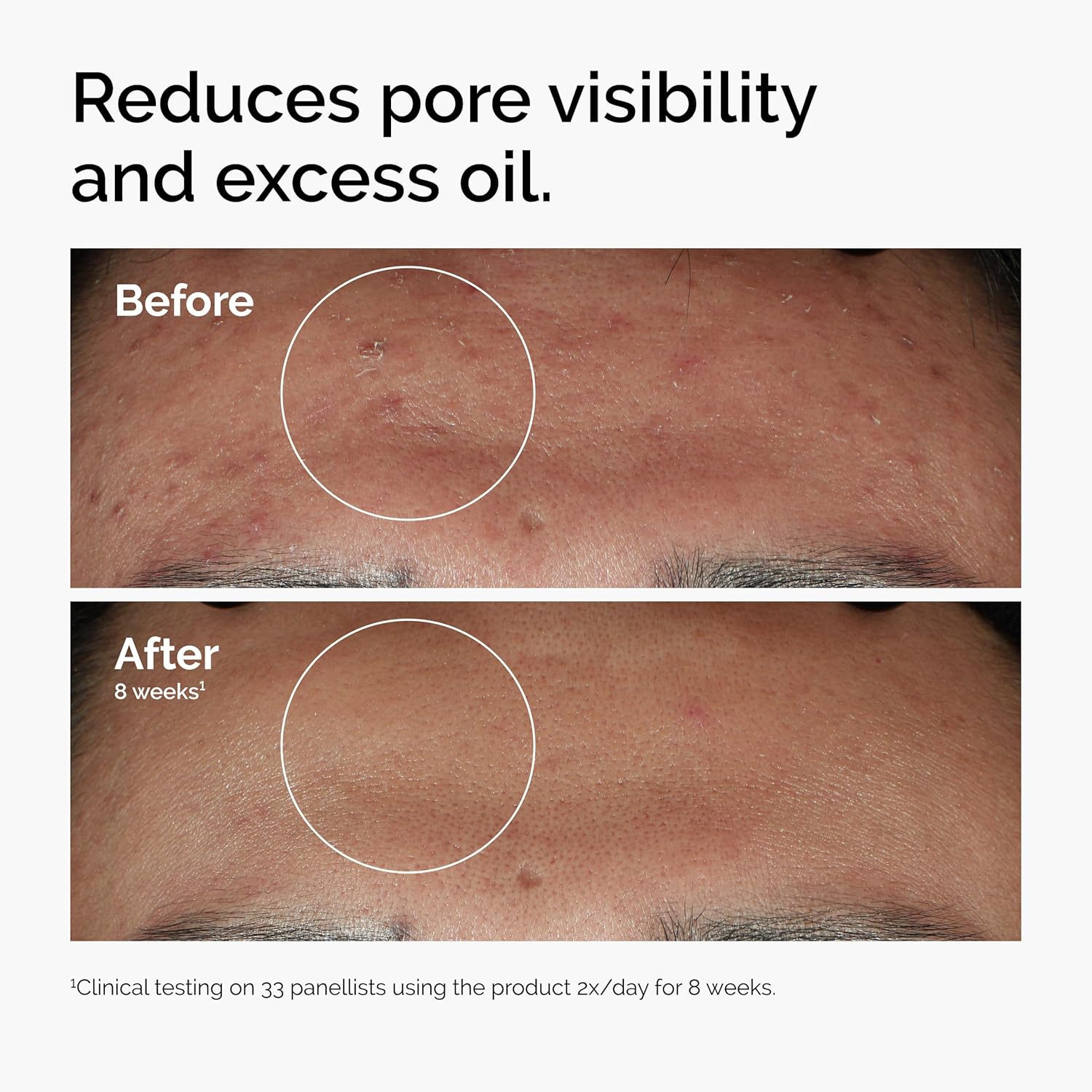
Niacinamide is a form of vitamin B3 — a water-soluble nutrient that, when applied to skin, helps minimize pores, fade dark spots (areas of skin that have darkened from sun exposure or breakouts), and strengthen the skin’s outer barrier (its protective top layer). You’ll find it in serums and moisturizers across every price point, from budget drugstore buys to prestige skincare lines. What the label doesn’t always make obvious is that the concentration — the percentage listed in the name or ingredient deck — matters enormously. A 10% formula and a 20% formula are not the same product wearing different packaging. This guide breaks down what buyers at each key concentration level actually report noticing, how long it takes, and where the tradeoffs start to show up.
If you’re sitting on a decision right now — weighing whether to move up in strength, whether your current formula is even working, or whether a higher-percentage option is safe for your skin — this is the comparison you need.
| EDITOR'S PICKPaula's Choice CLINICAL 20% Nia… | Mid-tierNaturium Niacinamide Face Serum… | Budget pickThe Ordinary Niacinamide 10% +… | |
|---|---|---|---|
| Niacinamide % | 20% | 12% | 10% |
| Size | 0.67 fl oz | 1 fl oz | 1 fl oz |
| Key add-ons | — | Zinc 2% | Zinc 1% |
| Fragrance-free | ✓ | — | — |
| Vegan | — | ✓ | — |
| Cruelty-free | — | ✓ | — |
| Price | $38.50 | $16.99 | $6.00 |
| See on Amazon → | See on Amazon → | See on Amazon → |
The Baseline: What 10% Niacinamide Actually Delivers
10% Formulas — Entry-Level Strength With Strong Tolerance
Ten percent has become the de facto entry concentration for niacinamide serums, largely because The Ordinary’s 10% Niacinamide + Zinc formula made it the category-defining reference point. Byrdie, in their ingredient overview “Everything You Need to Know About Niacinamide,” notes the concentration has strong published evidence behind it for pore appearance, oil regulation, and early-stage hyperpigmentation (darkening caused by inflammation or UV exposure).
What do buyers actually notice? Across aggregated reviews of The Ordinary’s formula and Good Molecules’ comparable offering, the pattern is consistent: lightweight texture, near-instant absorption, and visible improvement in acne congestion and pore appearance within four to six weeks of daily use. One frequently cited Good Molecules buyer account describes the serum as a rescue product after retinol (a vitamin A derivative that accelerates skin cell turnover and can cause peeling or irritation) temporarily compromised their barrier — the 10% formula reportedly calmed redness and helped re-establish tolerance without adding more actives to the routine.
The practical tradeoff at 10%: pore results tend to be clear and reliable; dark-spot fading is modest and slow. Reviewers with significant hyperpigmentation or melasma (a skin condition causing larger patches of discoloration, often triggered by hormones or sun exposure) consistently report that 10% stalls out before delivering the results they want. For that goal specifically, 10% is a starting point, not a destination.
A note on The Ordinary specifically: Its formula pairs niacinamide with 1% zinc (a mineral with separate sebum-regulating and anti-inflammatory effects). Paula’s Choice Skincare Education, in their published piece “Niacinamide: The Multi-Tasking Skin Brightener,” explains that the zinc component adds a distinct acne benefit that a niacinamide-only 10% formula doesn’t replicate — something buyers often don’t realize when comparison-shopping. If acne is the primary concern, that zinc pairing is meaningful. If the goal is purely pigment correction, the zinc is largely irrelevant.
The
$6.00
In stock on Amazon
Check price on AmazonThe Middle Ground: 12–15% and Where Results Get Specific
12% Formulas — Transitional Strength for Texture and Early Pigmentation
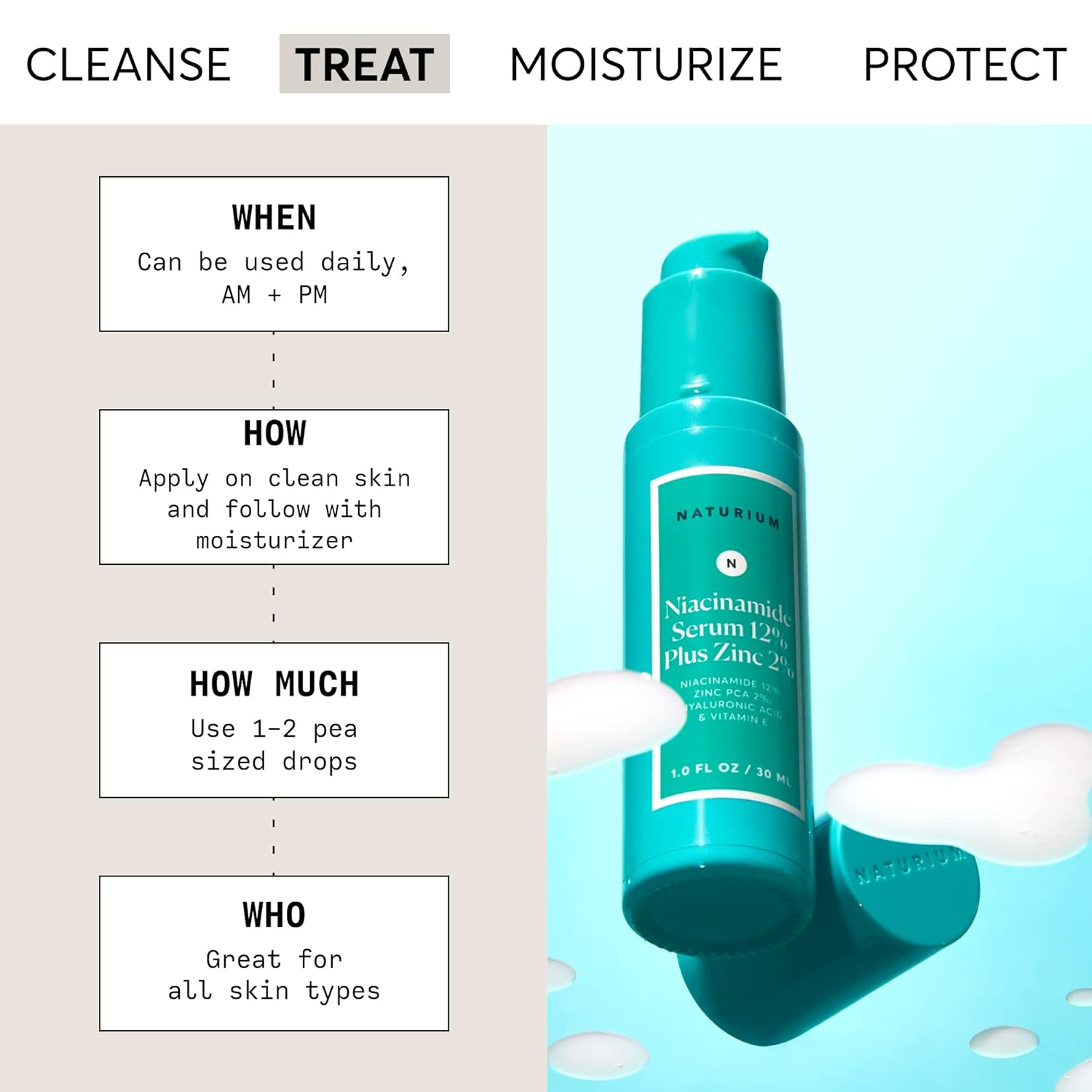
At 12%, Naturium’s niacinamide offering sits in a transitional zone. Reviewers commonly describe pore and texture improvements as “subtle but definitely noticeable” after roughly six weeks — a timeline that aligns with the four-to-eight-week cellular turnover cycle that Cosmetics and Toiletries, in their technical review “Niacinamide: A Multifunctional Ingredient with Broad Skin Benefits,” identifies as the minimum window for meaningful skin-surface change. The six-week benchmark is useful: if you’re not seeing anything by week seven or eight, the formula — or the concentration — may not be the right match for your concern.
Reviewers who switch to 12% from 10% frequently describe the upgrade as incremental rather than dramatic — a meaningful step for those who want more from their routine without introducing sensitivity risk. For buyers whose skin has already built tolerance at 10% and whose primary goals are texture refinement and mild dark-spot improvement, 12% occupies a sensible middle position.
Naturium
$16.99
In stock on Amazon
Check price on Amazon15% Formulas — The Sweet Spot for Pigmentation Without Sensitivity Escalation
At 15%, the evidence from COSRX buyer accounts shifts the pattern noticeably. Reviewers targeting both hyperpigmentation and enlarged pores report more consistent improvement compared to their previous 10% use, and many are repeat purchasers — a signal worth weighing. The recurring finding in aggregated COSRX reviews is that 15% delivers visibly faster pigment improvement without triggering the sensitivity spike that buyers associate with going even higher.
Allure, in their roundup “The Best Niacinamide Serums for Brighter, Clearer Skin,” has noted that the 15% tier is where pigmentation-focused formulas begin to meaningfully differentiate themselves from pore-focused options — a distinction that matters when you’re choosing based on your specific concern rather than grabbing the most-reviewed product. For skin that’s already tolerant of niacinamide at 10% and has hit a ceiling on results, 15% appears to be the sweet spot where payoff and tolerability stay in productive balance.
Naturium
$16.99
In stock on Amazon
Check price on AmazonThe High End: What 20% Buyers Are Reporting — and the Real Tradeoffs
20% Formulas — Maximum Pigmentation Payoff With Real Sensitivity Caveats
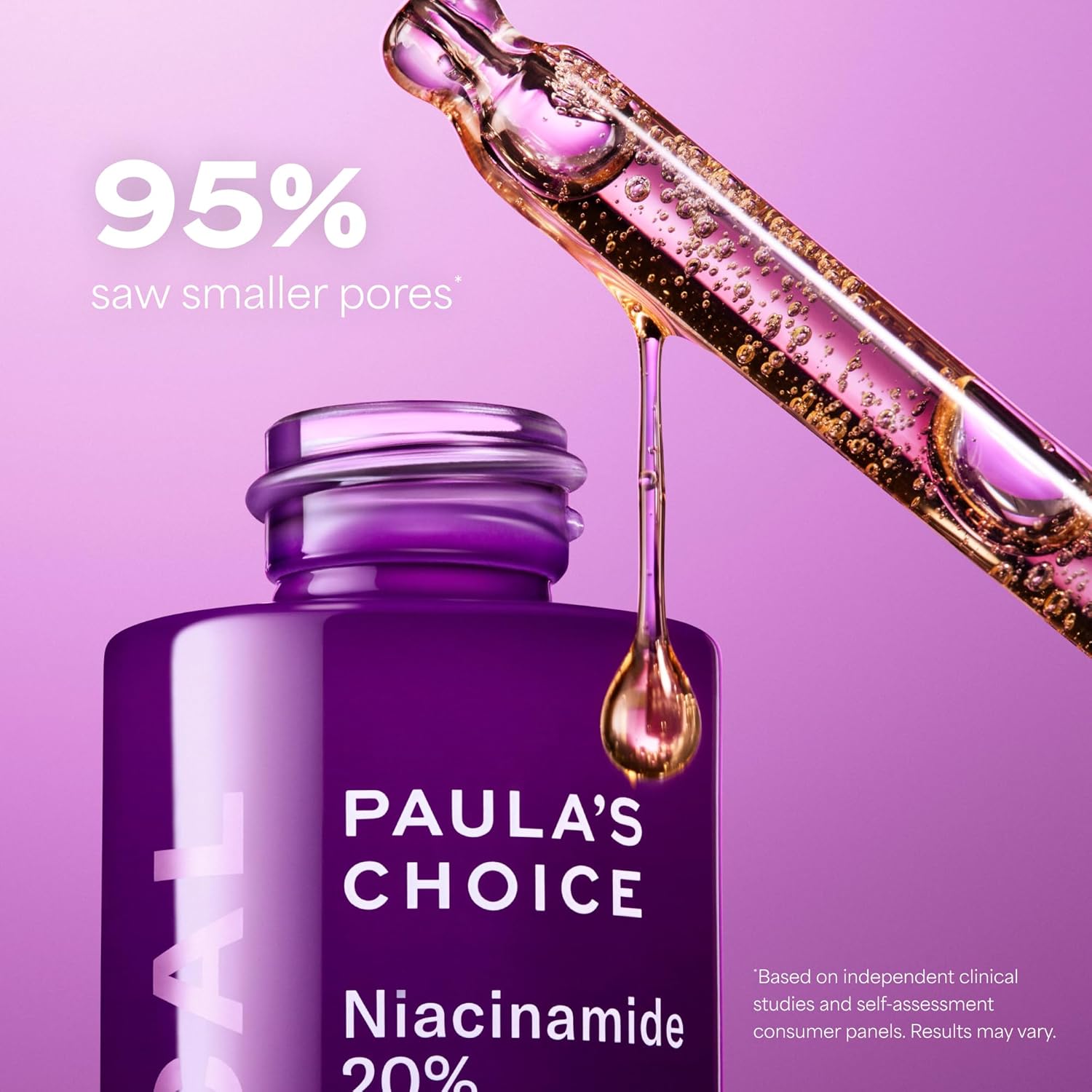
Twenty percent is where the category gets polarizing. Paula’s Choice reviewers describing their high-strength niacinamide report dramatic glow and dark-spot fading — the kind of before-and-after improvement that prompts brand switching. At least one widely cited reviewer account describes moving from a significantly pricier brand specifically because the 20% Paula’s Choice formula delivered equivalent or better visible results at a lower per-ml cost.
Self, in their explainer “What Is Niacinamide and What Does It Actually Do for Your Skin?,” notes that at higher concentrations, the ingredient’s ability to inhibit melanin transfer (the process by which pigment moves into surface skin cells and creates dark spots) becomes more pronounced — which tracks with what reviewers at this tier consistently describe. The mechanism, in plain terms: more niacinamide available at the skin surface means more interference with the pigment-depositing process, and the results follow.
JUMISO’s 20% formula draws a different but equally enthusiastic buyer profile: people managing active melasma and sun-damage pigmentation who have previously used clinical-level treatments. Multiple buyer accounts compare the JUMISO formula favorably to prescription-adjacent skincare lines often recommended by dermatologists for stubborn pigmentation — a meaningful benchmark given the price differential. Allure’s coverage of brightening serums, in “The Best Niacinamide Serums for Brighter, Clearer Skin,” has flagged JUMISO’s positioning in this brightening-specialist space as notable for exactly this reason.
The tradeoff you need to name explicitly if you’re considering moving up: Twenty percent carries a real initial sensitivity risk, particularly for rosacea-prone skin (a chronic inflammatory skin condition causing redness, flushing, and sometimes broken capillaries). Most 20% reviewers report adjustment within a few uses, and the sensitivity is usually described as temporary flushing rather than lasting irritation — but for rosacea-prone buyers, even temporary flushing can be a trigger that worsens baseline redness. Byrdie’s ingredient coverage, in “Everything You Need to Know About Niacinamide,” is consistent with dermatologist commentary that cautions rosacea-prone users against high-concentration niacinamide without professional guidance. The honest decision rule: if rosacea is in the picture, 15% is almost certainly the ceiling you want to respect unless a dermatologist has specifically cleared higher concentrations.
For buyers without rosacea who have already built tolerance at 15%, the jump to 20% is a legitimate upgrade for pigmentation goals — not an arbitrary escalation.
Paula's
$38.50
In stock on Amazon
Check price on AmazonConcentration Comparison at a Glance
Reported timeline to visible change across concentrations (aggregated reviewer data, not controlled trial results):
| Concentration | Tier | Pore improvement | Dark-spot improvement |
|---|---|---|---|
| 10% | Entry | 4–6 weeks | Slow; modest at 8–12 weeks |
| 12% | Mid | 6 weeks (subtle) | Moderate at 8–10 weeks |
| 15% | Mid | 4–6 weeks | More consistent; 6–8 weeks |
| 20% | High | 2–4 weeks (glow onset) | Noticeable at 4–6 weeks |
Individual results depend on skin type, other actives in use, sun protection habits, and baseline pigmentation depth. These timelines reflect what owner accounts most commonly report — they are not guarantees.
Frequently Asked Questions
Can I use niacinamide every day, or should I start slower at higher percentages?
At 10%, daily use from day one is well-tolerated by most skin types — the published tolerance profile is strong, and reviewers at this concentration rarely mention an adjustment period. At 15% and especially 20%, the smarter approach is to introduce it every other day for the first two weeks and observe. If flushing or tightness appears and resolves within 20 minutes of application, that’s typically a normal adjustment response, not an allergic reaction. If irritation persists for hours or returns consistently, that’s a signal to drop back to a lower concentration rather than push through.
Why does The Ordinary’s 10% behave differently from other 10% formulas?
Formulation context matters as much as percentage. The Ordinary’s formula includes 1% zinc PCA (a form of zinc with targeted sebum and inflammation-regulating effects), which shifts the formula’s behavior toward acne and oil control. Other 10% formulas — often using a simpler water-glycerin base — may absorb differently and target pigmentation or barrier function more directly. Per Paula’s Choice Skincare Education’s published ingredient analysis, the base formula and secondary ingredients also influence how much niacinamide the skin actually absorbs. Two 10% labels are not interchangeable if the surrounding formula is different.
Is 20% niacinamide safe for sensitive or rosacea-prone skin?
For sensitive skin without rosacea, 20% is often tolerable with a slow introduction. For rosacea-prone skin specifically, the consensus from dermatologist commentary covered in Self’s niacinamide explainer and Byrdie’s ingredient guides is cautious: the initial flushing response that some users experience at 20% can be a genuine rosacea trigger. If rosacea is a factor, 15% is a more defensible ceiling until you’ve confirmed your skin’s response, ideally with a dermatologist’s guidance.
How long does it realistically take to see pore or dark-spot results at each strength?
See the table above. The short version: pores tend to respond faster than pigmentation at every concentration. Dark-spot fading is a slow process regardless of strength — the difference between 10% and 20% is not weeks versus days, it’s more like eight to twelve weeks versus four to six weeks. Consistency and daily SPF use (sun protection, which prevents new pigmentation from forming while the serum works on existing spots) are non-negotiable for any visible result.
Should I use a niacinamide serum before or after my moisturizer and retinol?
Niacinamide is water-based and absorbs best on clean or lightly moisturized skin — apply it before your moisturizer, not after. The retinol sequencing question is more nuanced. Paula’s Choice Skincare Education’s ingredient analysis notes that niacinamide can actually buffer retinol’s irritation potential, making the combination useful for people building tolerance to vitamin A derivatives. Apply niacinamide first, let it absorb for a minute or two, then follow with retinol if using both in the same routine.
Does the zinc in The Ordinary’s formula actually help with acne differently than niacinamide alone?
Yes — meaningfully so. Niacinamide reduces sebum production and calms the inflammatory response that drives acne; zinc adds a separate sebum-regulating and antimicrobial effect. Cosmetics and Toiletries’ technical review “Niacinamide: A Multifunctional Ingredient with Broad Skin Benefits” identifies zinc PCA specifically as addressing the surface conditions that allow acne-causing bacteria to proliferate. Buyers whose primary concern is acne and oiliness have a concrete reason to prioritize that zinc-paired formula. Buyers whose primary concern is pigmentation or anti-aging don’t lose anything by choosing a formula without zinc — they’re just optimizing for a different outcome.
The Decision Rule
If your primary goal is pore minimization or acne control, 10% (especially with zinc) is where the evidence is strongest and the tolerance profile is most forgiving. If you’ve been at 10% for three months without meaningful pigmentation improvement, 15% is the logical move — reviewers consistently report this as the concentration where pigmentation results become reliable without sensitivity escalating. If you’re dealing with active melasma, significant sun damage, or stubborn post-inflammatory hyperpigmentation and your skin has already demonstrated tolerance to niacinamide, 20% is a defensible upgrade — but pair it with a genuine slow-introduction protocol and non-negotiable daily SPF. Rosacea-prone skin should treat 15% as the ceiling unless a dermatologist has specifically said otherwise.
Higher percentage is not automatically better. It’s the right tool for a specific job — and knowing which job you’re actually trying to do makes the difference between a purchase that works and one that sits half-used in a drawer.