September 20, 2026 • Celeste Morrow • 11 min reading time • Prices verified June 4, 2026
Niacinamide Plus TXA Serums Ranked: Anua, Medicube, JUMISO, SKIN1004, and TOSOWOONG Head to Head
If you’ve ever stared at a dark spot left behind by a pimple or a summer’s worth of sun exposure and wondered what actually fades it — not eventually, but noticeably — you’ve probably landed on two ingredients that keep appearing together: niacinamide (a form of vitamin B3 that calms inflammation, tightens pores, and interferes with the pigment-transfer process in skin) and tranexamic acid, or TXA (a molecule originally used in medicine to control bleeding, now used in skincare at lower concentrations to interrupt the signals that trigger excess melanin, or pigment, production). Used separately, each has a respectable track record. Used together, the combination targets hyperpigmentation — the umbrella term for dark spots, post-acne marks, melasma, and uneven tone — through two different biological pathways at once. That’s the theory. The question this article answers is: which niacinamide-plus-TXA serum from the current wave of Korean formulas is actually worth your money, and for which skin situation?
We analyzed aggregated reviewer data, published ingredient decks, and community discussion patterns across Anua, Medicube, JUMISO, SKIN1004, and TOSOWOONG. No firsthand testing — what follows is honest synthesis of what owners, dermatologist commentators, and longtime users report, with the trade-offs named explicitly.
How These Five Formulas Actually Differ
At first glance, these serums look nearly identical on the shelf: all five combine niacinamide with TXA in a water-based, layerable format at price points that undercut most Western prestige alternatives. But the ingredient decks and concentration choices diverge meaningfully.
According to Paula’s Choice Ingredient Dictionary (Niacinamide entry), niacinamide’s brightening and barrier-supporting effects are well-documented across a range of concentrations — roughly 2–10% in most published clinical studies. Byrdie’s Tranexamic Acid Skin Care Guide notes that TXA at 2–5% is where the bulk of cosmetic efficacy data sits. Both reference points are worth keeping in mind as you assess the concentration claims below.
Key concentration claims as labeled by each brand:
| Brand | Niacinamide | TXA | Tier |
|---|---|---|---|
| JUMISO | 20% | 3% | Premium-range actives |
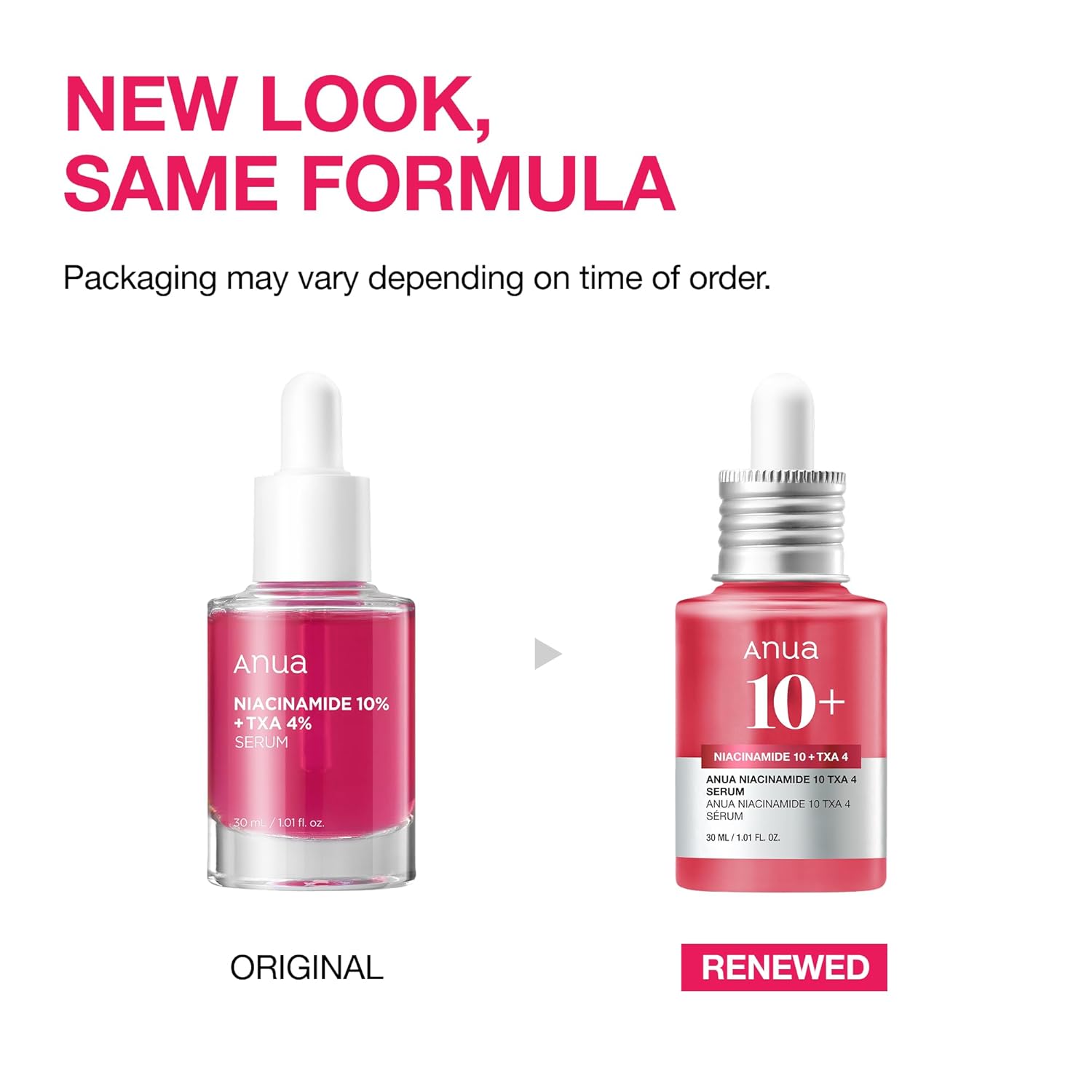
| Anua | 10% | 4% | Mid-tier, highest TXA |
| Medicube | 10% | 3% | Mid-tier, stack-friendly |
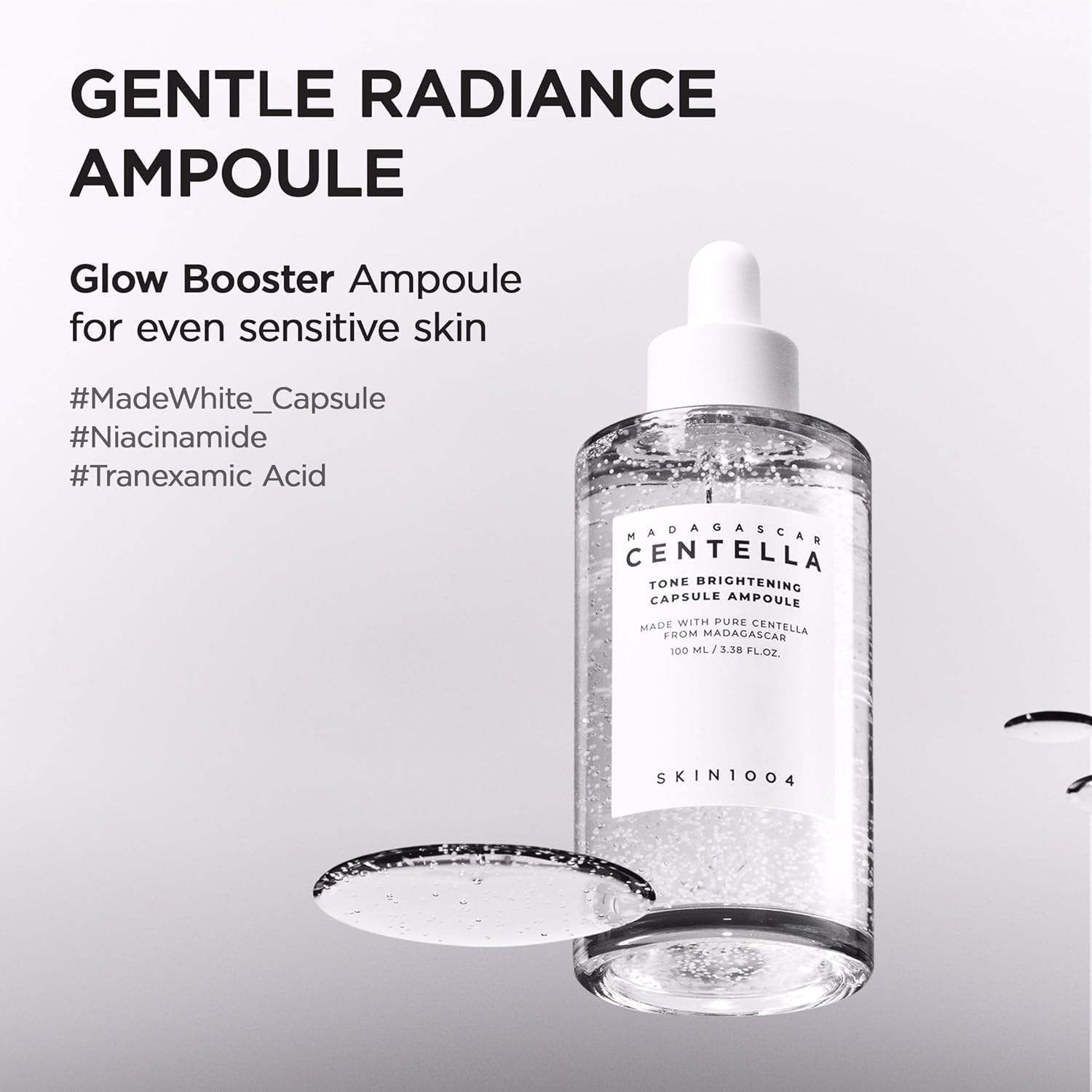
| SKIN1004 | 5% | 3% | Gentle mid-tier |
| TOSOWOONG | 5% | 2% | Budget-accessible |
JUMISO leads on niacinamide concentration by a wide margin. Anua leads on TXA. SKIN1004 and TOSOWOONG cluster at more conservative doses. Medicube sits in the middle on both counts but leans into its marketing harder than any of the others — which matters for managing expectations.
Brand-by-Brand Breakdown
JUMISO — The High-Concentration Gamble Worth Taking for Sun Damage
JUMISO’s 20% niacinamide concentration is the headline number in this comparison, and it earns a specific kind of loyalty: reviewers dealing with stubborn hyperpigmentation — long-standing sun spots, melasma that has resisted milder products — report results they describe as surpassing what they saw from prescription-adjacent options. That’s a striking claim, and it should be attributed to reviewers directly rather than accepted as fact, because self-reported comparisons are subjective and competing formulas may contain actives that work via entirely different mechanisms.
What’s more analytically interesting is who makes this claim. The pattern across aggregated reviews skews toward buyers in their late 30s and 40s who have tried multiple brightening approaches and describe the JUMISO formula as the first one that moved the needle on melanin that had been there for years, not months. Allure’s Best Brightening Serums roundup consistently cites high-niacinamide Korean formulas as punching above their price point for this demographic, a pattern that holds across multiple annual editions of that guide.
Trade-off to name explicitly: At 20%, niacinamide is above the concentration range used in most published clinical studies. Some reviewers — particularly those with oilier skin — flag initial texture sensitivity or a brief flush. The reported irritation rate is low, but the “start slow” advice that applies to any high-concentration active applies here.
If X, then Y: If your primary concern is multi-year sun damage or melasma that hasn’t responded to 5–10% niacinamide products, JUMISO is the highest-upside option in this group. If you have reactive or rosacea-prone skin, it’s not your first stop.
Anua
$21.85
In stock on Amazon
Check price on AmazonAnua — Effective but Earn Your Way Into Full-Face Use
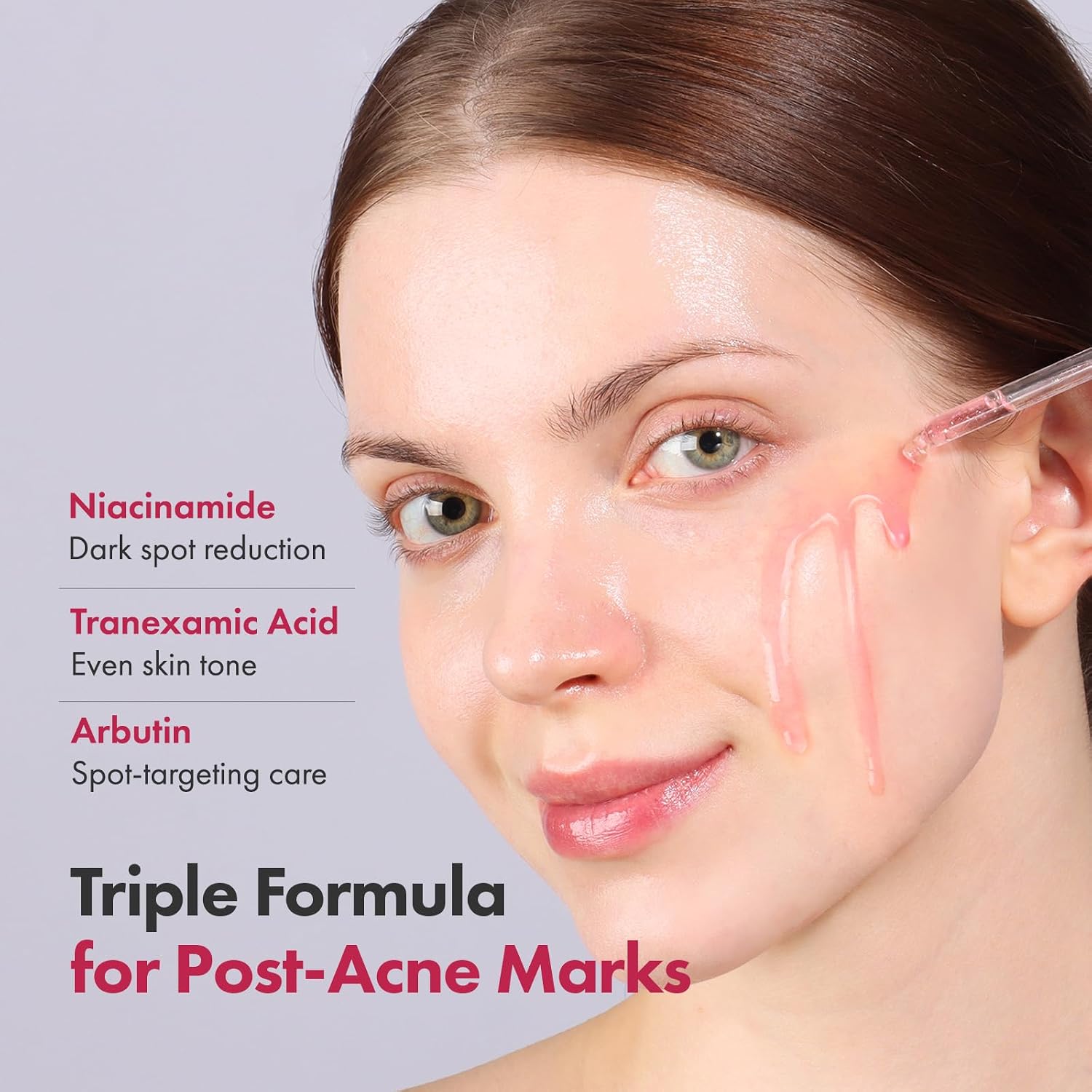
Anua’s 10% niacinamide and 4% TXA formula holds the highest TXA concentration in this group — meaningful, because Byrdie’s Tranexamic Acid Skin Care Guide identifies this range as where efficacy data is most compelling for post-inflammatory hyperpigmentation: the flat, darkened skin left after acne heals. TXA at this concentration works by calming the inflammation-triggered signals that instruct melanin-producing cells to overproduce pigment in response to injury.
The nuance that Anua reviewers surface is a skin-type dependency that the other brands in this comparison don’t flag as consistently. Owners with rosacea or reactive skin report that they had to begin with spot application rather than spreading the serum across the full face — some describe a warm flush or mild stinging on sensitized areas during initial use. This isn’t an unusual response to a higher-TXA formula, but it’s worth knowing before you commit. Self’s guide to layering skin-care actives recommends spot-testing any new active serum before full-face application, advice that applies with particular force here.
For owners without those sensitivities, Anua earns consistent praise for texture and absorption, and the 4% TXA is a legitimate selling point for post-acne marks where the target mechanism needs the most support.
If X, then Y: If post-acne hyperpigmentation is your primary target and your skin doesn’t lean reactive, Anua is the strongest option for that specific use case. If you have rosacea or eczema-prone skin, start with spot application or skip to SKIN1004.
TOSOWOONG
$21.80
In stock on Amazon
Check price on AmazonMedicube — Dramatic Before-and-Afters, with a Stack Asterisk
Medicube generates the most emphatic before-and-after language of any brand in this comparison. Reviewers describe “rapid spot erasure,” and at least one documented user pairing it with a kojic acid cream on top of the Medicube serum described results within three to four weeks that they attributed to the combination.
Here’s the trade-off that needs naming: stacking multiple brightening actives complicates result attribution. Kojic acid is itself an established melanin-inhibitor — Paula’s Choice Ingredient Dictionary covers its mechanism alongside arbutin and azelaic acid as part of its broader brightening actives documentation. When someone adds a kojic acid cream on top of a niacinamide-TXA serum and sees rapid results, it’s genuinely unclear which product — or the synergy — is doing the heavy lifting. Medicube’s formula at 10% niacinamide and 3% TXA is a solid mid-tier formulation, but the most dramatic reviewer claims should be read as stack-dependent, not as evidence that the serum alone outperforms the others.
Medicube also invests heavily in before-and-after visual marketing, which can prime expectation in ways that don’t always translate to clinical reality for a new user.
If X, then Y: If you’re already running a brightening routine and looking to add a well-formulated niacinamide-TXA layer without disrupting your existing actives, Medicube slots in cleanly. If you’re looking for a single-product brightening solution and the marketing language is shaping your expectations, calibrate those before you buy.
TOSOWOONG
$21.80
In stock on Amazon
Check price on AmazonSKIN1004 — The Reactive-Skin Default
SKIN1004’s positioning in this comparison is defined by a single, consistent signal across reviewer profiles: gentleness. At 5% niacinamide and 3% TXA, the formula sits at concentrations that are well-studied and within the range where tolerance issues are rare. What distinguishes SKIN1004 is the breadth of reviewer profiles who report tolerating it without incident — owners who disclose rosacea, dry skin, and eczema-prone skin all appear in the positive-outcome cluster. That’s unusual in a category where most formulas claim universal suitability but generate sensitivity reports from reactive-skin users in practice.
Dermstore’s Editorial Korean Skincare Actives Guide notes that lower-concentration niacinamide-TXA formulas are the sensible starting point for compromised skin barriers, and SKIN1004’s formulation philosophy aligns directly with that guidance. The EWG Skin Deep Cosmetic Ingredient Safety Database reflects a clean ingredient profile for this formula, consistent with low-irritant design principles.
The honest trade-off: if your hyperpigmentation is deep-set, multi-year sun damage, the 5% niacinamide may move more slowly than you’d like. SKIN1004 is the right long-game answer for reactive skin; it’s not the high-impact choice for someone who needs visible progress in six weeks.
If X, then Y: If your skin profile includes any of rosacea, eczema, dryness, or a recently disrupted barrier, SKIN1004 is the clear recommendation. Start here and graduate to a higher-concentration formula after six months if you want more.
TOSOWOONG
$21.80
In stock on Amazon
Check price on AmazonTOSOWOONG — Quiet Consistency, Limited Data
TOSOWOONG is the least-reviewed brand in this comparison by a significant margin. At 5% niacinamide and 2% TXA, it uses the most conservative formulation of the five, and the reviewer consensus — though smaller — is notable for what’s absent: no meaningful sensitivity complaints, no dramatic outlier claims in either direction, just steady positive reports from owners who describe gradual, consistent improvement in skin tone.
The 2% TXA sits at the lower bound of where Byrdie’s Tranexamic Acid Skin Care Guide identifies meaningful cosmetic efficacy data, so the brightening pace will be slower than Anua or JUMISO. For someone prioritizing tolerance over speed — or buying their first brightening serum with limited knowledge of their own active-ingredient tolerance — that conservative formulation is a feature, not a limitation.
For a practitioner audience building a recommendation toolkit, TOSOWOONG’s low irritation signal makes it a reasonable option for clients who’ve had negative experiences with actives before. Expectations should be set accordingly: this is a steady, low-drama formula, not a rapid-results one.
If X, then Y: If you’ve had sensitivity reactions to actives in the past, or this is your first brightening serum and you want a low-risk entry point, TOSOWOONG or SKIN1004 are the two formulas to consider first.
SKIN1004
$13.58
In stock on Amazon
Check price on AmazonFrequently Asked Questions
How does tranexamic acid actually differ from niacinamide when it comes to fading dark spots? They work on different parts of the same process. As documented in Paula’s Choice Ingredient Dictionary (Niacinamide entry), niacinamide blocks the transfer of melanin-containing packages called melanosomes from pigment cells to skin cells — reducing how much pigment gets deposited in the first place. TXA, as Byrdie’s Tranexamic Acid Skin Care Guide explains, works upstream, interrupting the UV- and inflammation-triggered signals that tell melanin-producing cells to ramp up production. Together, they address the process at two different points, which is why the combination has become so common in targeted brightening formulas.
Can I use a niacinamide-TXA serum if I have rosacea or eczema-prone skin? Yes, but brand choice and application strategy matter. SKIN1004 is the most consistently tolerated across reviewer profiles that include rosacea and eczema. Regardless of brand, Self’s guide to layering skin-care actives recommends introducing any new active serum with spot testing before full-face application. For rosacea specifically, Anua reviewers advise spot application as a starting point rather than committing to full-face use from day one.
Should I apply a niacinamide-TXA serum in the morning, at night, or both? Both windows work, but morning application requires a committed SPF step after — since anything that reduces melanin production leaves skin more vulnerable to UV-triggered pigment rebounds. Dermatologist commentary synthesized across Allure’s Best Brightening Serums roundup and Byrdie’s brightening coverage generally recommends morning as the primary slot with broad-spectrum sunscreen layered on top, and evening for a second application if you’re running both.
How long does it realistically take to see fading on post-acne marks versus sun spots? Post-acne marks (post-inflammatory hyperpigmentation) typically respond faster — reviewers across these brands report visible improvement at six to ten weeks. Sun spots and melasma move more slowly because the pigment is deeper and more established; the honest range in reviewer accounts is three to six months of consistent use before significant change.
Is JUMISO’s 20% niacinamide safe, or is that concentration too high for daily use? The published clinical literature on niacinamide concentrates on the 2–10% range, so 20% is above what most studies cover. That doesn’t make it unsafe — niacinamide has a favorable tolerance profile across the dermatology literature — but it does mean you’re working with less precedent. Reviewers who flush or tingle at 20% are experiencing a known and typically transient response. Alternate-day use before committing to daily application is a reasonable approach.
Can I layer these serums with a vitamin C serum, or will that cause a reaction? The concern that niacinamide and vitamin C form a yellowing compound (nicotinic acid) when combined has been largely addressed by Paula’s Choice Ingredient Dictionary and Byrdie coverage, both of which note the reaction is negligible at concentrations used in cosmetic products. Layering is generally safe. The practical note is that both vitamin C and TXA are brightening actives — running both increases efficacy potential but also the chance of sensitivity on reactive skin. Using vitamin C in the morning and the niacinamide-TXA serum at night is a reasonable strategy to minimize interaction risk while running both.
The Decision Frame
The simplest way to sort this group:
- Stubborn sun damage or melasma, non-sensitive skin → JUMISO Anua — $21.85
- Post-acne marks, non-reactive skin → Anua TOSOWOONG — $21.80
- Existing brightening routine, stack-friendly add-in → Medicube TOSOWOONG — $21.80
- Reactive skin, rosacea, eczema, barrier-compromised → SKIN1004 TOSOWOONG — $21.80
- First brightening serum, unknown tolerance, low risk appetite → TOSOWOONG SKIN1004 — $13.58
The price gap between these formulas is small enough that it should not be the deciding factor. Match the concentration profile to your skin’s tolerance and your hyperpigmentation’s depth — that variable determines whether you’re satisfied at eight weeks or still waiting at six months.