August 4, 2026 • Celeste Morrow • 11 min reading time • Prices verified June 4, 2026
Retinol vs. Retinal: Matching the Right Retinoid Strength to Your Skin's Actual History
If you’ve ever picked up a retinoid serum, scanned the label, and immediately second-guessed whether it was the right one — you’re in good company. “Retinoid” is the umbrella term for a family of vitamin A derivatives that speed up how quickly skin cells turn over, which over time reduces fine lines, uneven tone, and clogged pores. The two forms you’ll see most often at retail are retinol and retinal (also called retinaldehyde). They’re related — but they’re not the same thing, and they don’t behave the same way on skin. This guide is built around one question: given your skin’s specific history with retinoids, which form, which delivery system, and which strength should you actually reach for right now? By the end, you’ll have a clear framework — not a one-size-fits-all answer, but an honest decision tree based on what reviewers, dermatologists, and longtime users have reported.
| EDITOR'S PICKLa Roche-Posay Redermic R Anti… | Mid-tierCeraVe Resurfacing Retinol Seru… | Budget pickThe Ordinary Retinol 1% in Squa… | |
|---|---|---|---|
| Form | Cream | Serum | Serum |
| Retinol type | Pure retinol | — | Retinol 1% |
| Retinol % | — | — | 1% |
| Key additives | — | Licorice root | Squalane |
| Target concerns | Wrinkles, fine | Post-acne marks, | Anti-aging, skin |
| Size | — | — | 1 Fl Oz |
| Price | $54.97 | $18.68 | $9.90 |
| See on Amazon → | See on Amazon → | See on Amazon → |
The Conversion Chain: Why Retinal Is Meaningfully Stronger Than Retinol
Here’s the chemistry in plain English. Your skin can’t use retinol directly. It has to convert it — twice. First, enzymes in your skin transform retinol into retinal (retinaldehyde). Then retinal gets converted a second time into retinoic acid, which is the biologically active compound that actually signals your skin cells to behave differently. Prescription tretinoin skips both steps because it is retinoic acid. Retinal, applied topically, skips one step. Retinol has to go through both.
That single extra conversion step is not a minor distinction. Paula’s Choice Skincare Education, in their published comparison document “Retinol vs. Retinaldehyde,” states that retinal is estimated to be approximately 11 times more potent than retinol at equivalent concentrations — a figure also discussed in formulation literature published by Cosmetics & Toiletries in their coverage of retinoid delivery mechanisms and encapsulated retinol clinical outcomes. In practical terms, a 0.2% retinal product is not equivalent to a 0.2% retinol product. They are not in the same league.
By the numbers:
| Form | Conversion steps to retinoic acid | Estimated relative potency |
|---|---|---|
| Retinol | 2 | Baseline (1×) |
| Retinal (retinaldehyde) | 1 | ~11× retinol |
| Tretinoin (prescription) | 0 | Reference standard |
What this means for your purchasing decision: if you are retinoid-naive or returning after a break, starting with retinal — even at 0.1% or 0.2% — is not a “gentle” choice just because the number looks small.
Matching Retinoid Strength to Your Skin History: Four Decision Points
The comparison below is organized as a decision tree across four experience tiers. Each tier closes with a pick marker so the right product surfaces at the right stage. Read only the section that describes where you actually are — not where you’d like to be.
Tier One — Retinoid-Naive or Returning After a Break
If you’ve never used a retinoid consistently, or if you stopped during pregnancy and are resuming, your skin’s enzymatic tolerance is essentially reset. The American Academy of Dermatology, in their patient-facing resource “Retinoids: A Closer Look,” recommends starting with the lowest available OTC retinol and building frequency before building concentration — applying once or twice a week before moving to nightly use.
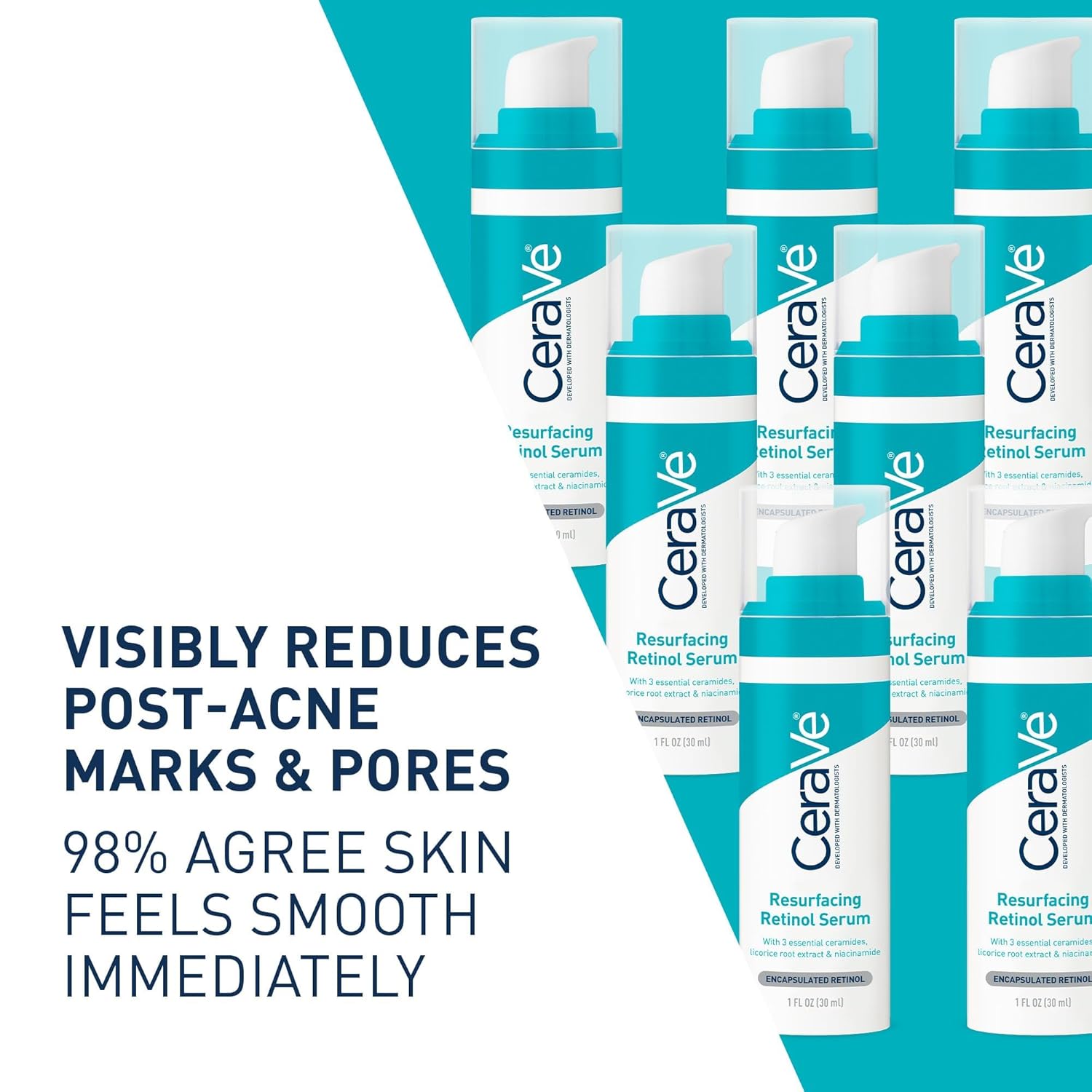
Reviewers of the CeraVe Resurfacing Retinol Serum, which contains encapsulated retinol alongside ceramides and niacinamide, repeatedly describe it in milestone terms — many call it a “re-entry” product after a postpartum pause. That language is telling. The formulation is designed to deliver retinol incrementally rather than all at once; the encapsulation slows release, which reduces the likelihood of the characteristic redness, peeling, and dryness that cause most people to abandon retinoids in the first few weeks.
As Byrdie explains in their editorial “The Difference Between Retinol and Retinal, Explained,” encapsulation is not simply a marketing term — it describes a genuine delivery mechanism that lowers peak skin-surface concentration at the moment of application. Products in a ceramide-rich base add a second layer of barrier support, which is particularly useful if your skin is emerging from the hormonal shifts of pregnancy or a prolonged product hiatus.
If X: You are retinoid-naive, postpartum, or returning after six or more months off. Then Y: Start with an encapsulated retinol in a barrier-supportive base. Build to nightly use at your current concentration before considering a strength increase. Do not start with retinal.
The
$9.90
In stock on Amazon
Check price on AmazonTier Two — Six to Twelve Months of Consistent Low-Strength Retinol
This is the practitioner’s most common decision point: you’ve tolerated your starter retinoid without major issues, you’re applying it nightly or near-nightly, but you’re not sure whether to increase concentration within the same format or step up to retinal.
Allure, in their guide “How to Build a Retinoid Routine Without Wrecking Your Skin,” consistently reinforces the “sandwich method” at this stage — applying a lightweight moisturizer before and after the retinoid to moderate penetration when tolerance is established but not fully robust. This is appropriate practitioner behavior, and it’s particularly useful with mid-range retinol concentrations where the margin between effective and irritating is narrower.
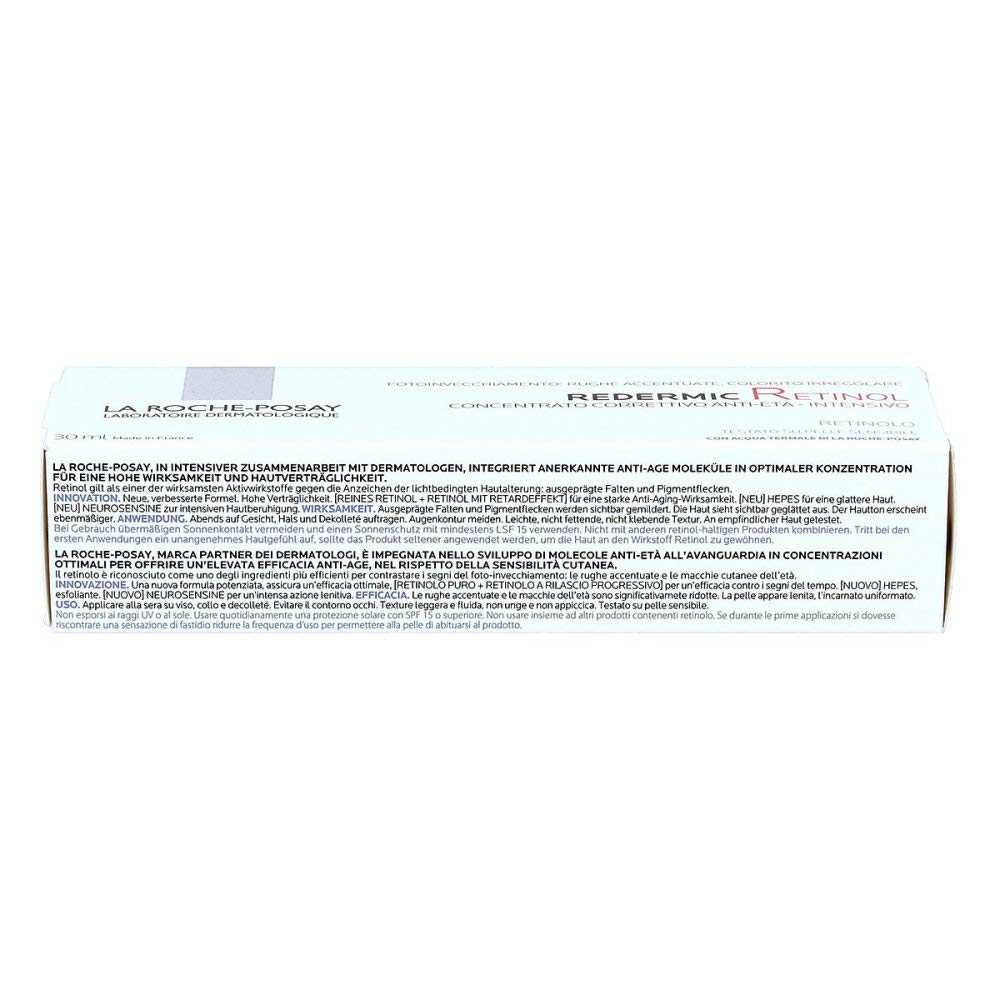
La Roche-Posay Redermic R, with its 0.3% encapsulated retinol, represents a meaningful step up from entry-level formulas. Reviewers migrating from gentler options describe pairing it with a rich moisturizer buffered on top, or alternating nights with an exfoliating acid — careful, considered behavior that signals these users understand they’ve moved up a rung.
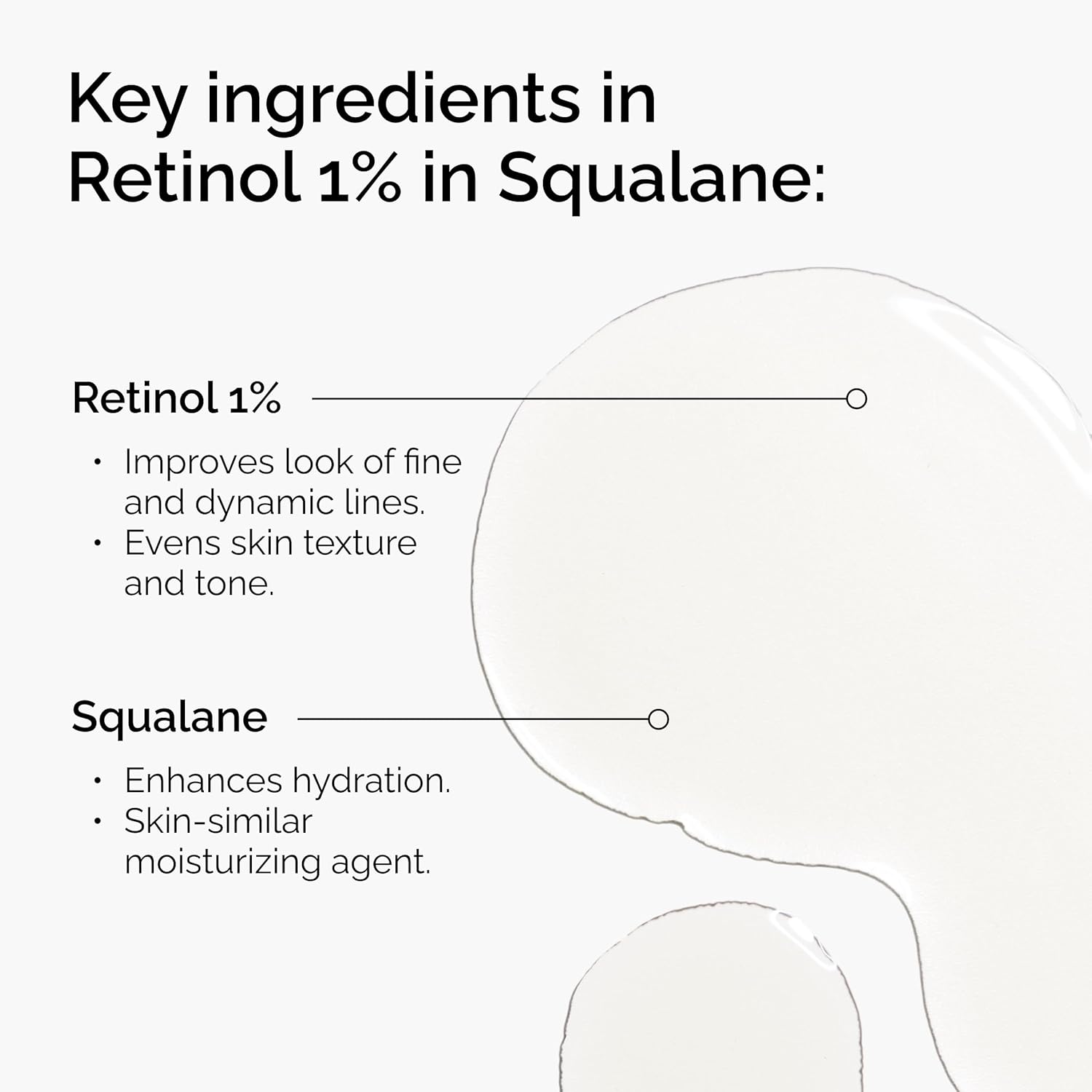
The Ordinary 0.5% Retinol in Squalane sits at the upper range of accessible retinol concentrations. Squalane as a base matters: it is a skin-identical emollient that reduces the dryness effect without dampening retinol activity the way a heavy occlusive might. For skin that has successfully cleared the 0.3% threshold, this is a logical next station.
If X: You’ve completed six or more months of consistent low-strength retinol without barrier disruption and want more visible results. Then Y: Move to a higher retinol concentration (0.5% or 1%) before considering retinal. Do not skip concentration steps to reach retinal faster — the jump in effective potency is steep enough to cause barrier disruption that can set your timeline back by months.
CeraVe
$18.68
In stock on Amazon
Check price on AmazonTier Three — Established Retinol Users Ready to Evaluate Retinal
If you’ve been using 1% retinol nightly for three or more months without sensitivity issues, retinal is a legitimate next consideration. But “ready” does not mean “tolerant of irritation.” It means your skin’s enzymatic machinery is primed and your barrier is robust — evidenced by no persistent dryness, flaking, or reactive redness.
The Ordinary Retinal 0.2% Emulsion is the most discussed accessible retinal product in this category, and its reviewers are notably specific in ways that typical retinol reviews are not. Users report milia reduction under the eyes — those tiny white keratin bumps that are notoriously resistant to standard retinol — and describe improved superficial skin clarity over time. These granular, specific claims point to meaningful keratinocyte activity beyond what reviewers attribute to standard retinol.
Byrdie’s editorial coverage in “The Difference Between Retinol and Retinal, Explained” notes that these reported benefits align with retinal’s more direct pathway to retinoic acid signaling — one fewer conversion step means more consistent delivery of the active signal across the full application period, rather than the variable output of a two-step conversion. Paula’s Choice Skincare Education’s “Retinol vs. Retinaldehyde” overview makes the same point, framing retinal as the compound that closes the practical gap between OTC retinol and prescription-strength tretinoin without requiring a prescription.
Start retinal at 0.05% or 0.1% if those concentrations are available. At 0.2%, buffer with a non-occlusive moisturizer and do not assume your retinol tolerance fully translates — the potency differential is real.
If X: You have twelve or more months of consistent 1% retinol use and no active sensitivity. Then Y: Retinal 0.05%–0.1% is a reasonable starting point. If 0.2% is your only accessible entry point, apply every third night initially and watch your barrier carefully.
La
$54.97
In stock on Amazon
Check price on AmazonA Practical Warning: The Night Cream Migration Problem
No honest guide to OTC retinoids can skip the pattern that appears across reviews of rich retinol night creams, because it illustrates a trade-off that matters to anyone advising clients. Reviewers of products like the RoC Retinol Correxion Night Cream give strong ratings while simultaneously describing eye-area reactions and barrier burns — the skin around the eye swells or becomes raw from product migration, but the reviewer still recommends the product overall. This is not contradictory; it is a consequence of a relatively high-concentration retinol in a rich occlusive base that moves during sleep.
The mechanism is straightforward: occlusive night creams increase the penetration of active ingredients through occlusion, and the skin around the eye is thinner and more reactive. Applying a retinol night cream close to the orbital bone — or simply sleeping in a way that transfers product — produces predictable irritation. This is not a formulation defect; it is a user-technique mismatch.
Allure’s guidance in “How to Build a Retinoid Routine Without Wrecking Your Skin” specifies applying retinoids at least 1cm away from the orbital rim and never directly to the lower lid. That guidance exists precisely because periorbital skin responds to retinoid migration faster and more dramatically than the rest of the face — and because users eager to target fine lines around the eye routinely apply product closer than they should.
Off-Label Uses: Body Skin and Keratosis Pilaris
One pattern from aggregated reviewer commentary that receives almost no editorial coverage: users apply high-concentration retinol to arms and legs for keratosis pilaris — the rough, bumpy texture sometimes called “chicken skin” that is common on the upper arms. The American Academy of Dermatology, in their published resource on keratosis pilaris, includes retinoids among recognized treatment options, noting that increased cell turnover can gradually reduce the keratin plugging that causes the characteristic texture.
Body skin is generally more tolerant of retinoids than facial skin — it is thicker and less reactive. But the cost-per-use calculation changes when you are covering larger surface areas. A 30ml bottle of a premium retinoid will deplete significantly faster on body use than on a nightly facial routine. A less expensive high-concentration option makes more economic sense at scale; the clinical mechanism does not require a premium price-per-ml formula.
Frequently Asked Questions
What is the difference between retinol and retinal, and which is stronger? Retinal requires one fewer enzymatic conversion step than retinol to become biologically active in skin, making it significantly more potent at equivalent percentages — estimated at roughly 11 times the effective strength, per Paula’s Choice Skincare Education’s “Retinol vs. Retinaldehyde” overview. Retinal is the stronger form.
Can I use a retinoid serum right after stopping during pregnancy? Topical retinoids are typically avoided during pregnancy as a precaution. After delivery and once breastfeeding has concluded (confirm timing with your prescriber), you can resume — but treat your skin as retinoid-naive and restart at low concentrations, building frequency before strength.
What does encapsulated retinol actually do differently? Encapsulation slows the release of retinol into the skin, reducing the peak concentration delivered at any one moment. As Byrdie explains in “The Difference Between Retinol and Retinal, Explained,” this lowers the incidence of initial purging, dryness, and redness without eliminating retinol activity — making it a genuinely useful mechanism for sensitive or returning users, not merely a marketing term.
How long does it take to see real results from an over-the-counter retinoid? The American Academy of Dermatology, in “Retinoids: A Closer Look,” cites a minimum of 12 weeks for visible improvements in texture and tone, with six months representing a more meaningful benchmark for fine line reduction. Results before that window are possible but not the baseline expectation.
Why is a retinol night cream irritating the skin around my eyes? Rich night cream formulas migrate during sleep, and retinol penetrates more aggressively under occlusion. Applying product too close to the orbital rim — or sleeping in a way that presses cream toward the eye — causes irritation of thinner periorbital skin. Apply at least 1cm from the eye contour and avoid the lower lid entirely, per Allure’s retinoid application guidance in “How to Build a Retinoid Routine Without Wrecking Your Skin.”
Is retinol safe to use on body skin like arms and legs? Yes. Body skin tolerates retinoids well due to its greater thickness. For conditions like keratosis pilaris, retinoids are a recognized treatment option per the American Academy of Dermatology’s published resources on the condition. Be aware that covering larger body-surface areas increases product consumption, which affects cost-per-use calculations when choosing your formula.