July 28, 2026 • Celeste Morrow • 10 min reading time • Prices verified June 4, 2026
Retinol for Beginners to Veterans: Matching Strength, Format, and Price to Where You Actually Are
Retinol is one of those words that gets thrown around in beauty aisles constantly, but it can mean very different things depending on the product. At its most basic: retinol is a form of vitamin A that your skin converts into retinoic acid — the compound that actually signals your cells to behave younger, turning over faster, building more collagen, and fading discoloration. It’s the most research-backed anti-aging ingredient in over-the-counter skincare, full stop. But “retinol” on a label tells you almost nothing on its own. A 0.025% encapsulated retinol in a rich cream and a 0.2% retinal serum are both technically vitamin A derivatives — and they will produce completely different results on completely different timelines, with completely different risk profiles for irritation. This article is built to help you figure out which tier of the experience curve you’re on and which products the evidence actually supports for that stage.
| EDITOR'S PICKLa Roche-Posay Redermic R Anti… | Mid-tierThe Ordinary Retinol 1% in Squa… | Budget pickGood Molecules Gentle Retinol C… | |
|---|---|---|---|
| Strength | — | 1% | — |
| Format | Cream | Serum | Cream |
| Target age spots | ✓ | ✗ | ✗ |
| With bakuchiol | ✗ | ✗ | ✓ |
| Price | $54.97 | $9.90 | $7.97 |
| See on Amazon → | See on Amazon → | See on Amazon → |
The Experience Curve: Four Stages, Four Different Product Needs
Think of retinol fluency as a four-stage progression: sensitive or first-timer, step-up, experienced, and veteran. Most people either start too strong (and quit after their skin purges and peels) or stay too weak forever (and wonder why they see no results after a year). Neither mistake is necessary if you map the product to the stage.
Stage 1 — Sensitive or Returning After a Reaction
Your skin’s tolerance for vitamin A is low or unknown. You may be postpartum, newly off a prescription retinoid, or someone who reacted badly to a stronger formula and is trying again. Products at this stage should carry low concentrations (0.025%–0.1%), rely on encapsulated retinol (more on what that means below), and come embedded in a calming base with ceramides or niacinamide.
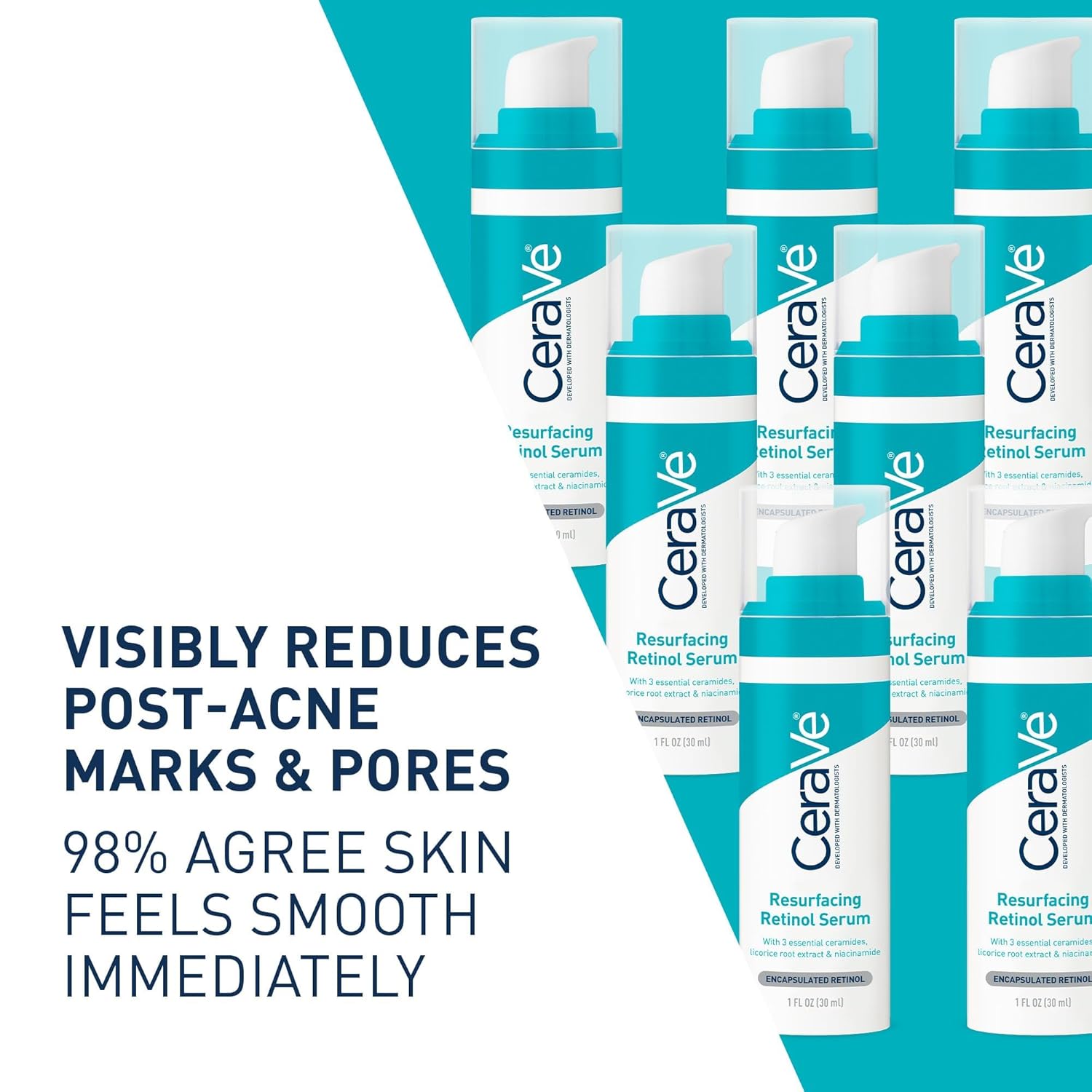
CeraVe Resurfacing Retinol Serum consistently shows up in this category. Users who choose it intentionally — people stepping back from prescription-strength tretinoin, or those reintroducing vitamin A after a reaction — report visible glow without the flush-and-peel response. The ceramide base does real work here: it reinforces the skin barrier at the same time the retinol is working on cell turnover, so the formula is simultaneously treating and protecting rather than stripping while it treats. As Byrdie’s complete guide to retinol notes, encapsulated and ceramide-buffered formulas are the standard recommendation for first-time users precisely because barrier support reduces the acute irritation window without sacrificing long-term efficacy.
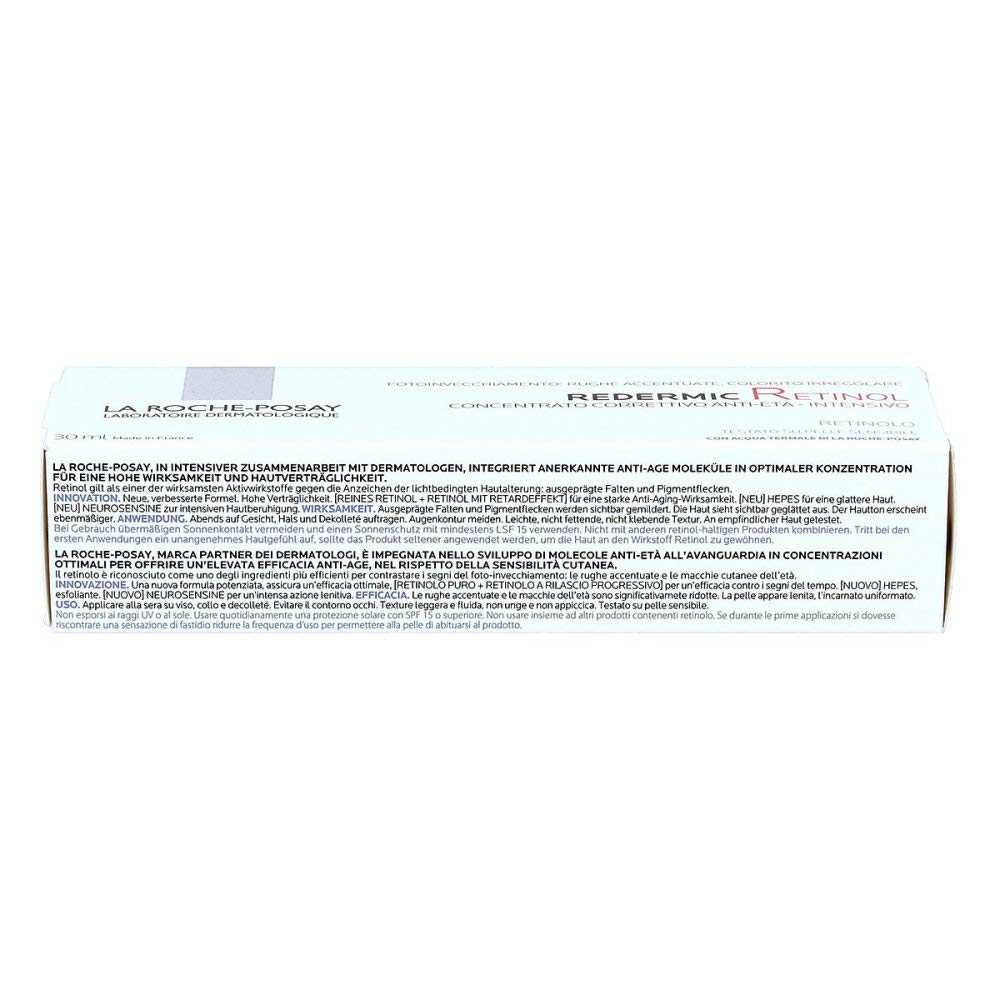
La Roche-Posay Redermic R lands in the same lane. Its user base skews toward people who are either retinol-naive or cautiously reintroducing. Surface texture and tone improvements can appear within the first two to four weeks — not because structural collagen remodeling has occurred (that takes months) but because even gentle vitamin A concentrations accelerate the natural cell-turnover cycle enough to produce cosmetic brightness relatively quickly.
Good
$7.97
In stock on Amazon
Check price on AmazonStage 2 — Tolerant but Not Maximized (6–18 Months of Consistent Use)
Your skin has adapted. You’re not peeling. You’re not seeing the results you want. This is usually the moment to either increase concentration or change the molecular format. The difference between 0.1% and 0.3% retinol is meaningful; so is switching from pure retinol to retinal (also called retinaldehyde), which sits one conversion step closer to the active retinoic acid your skin is actually after.
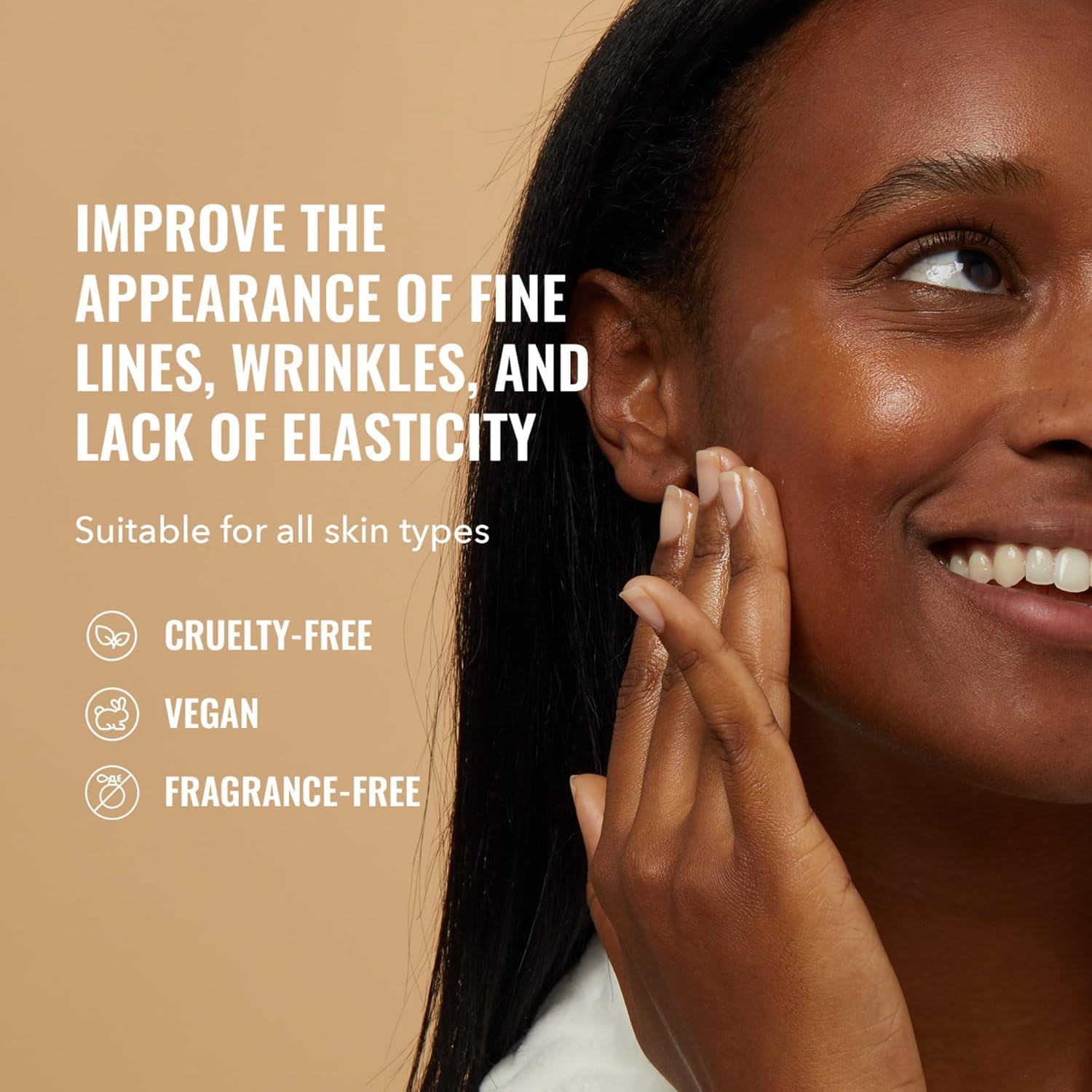
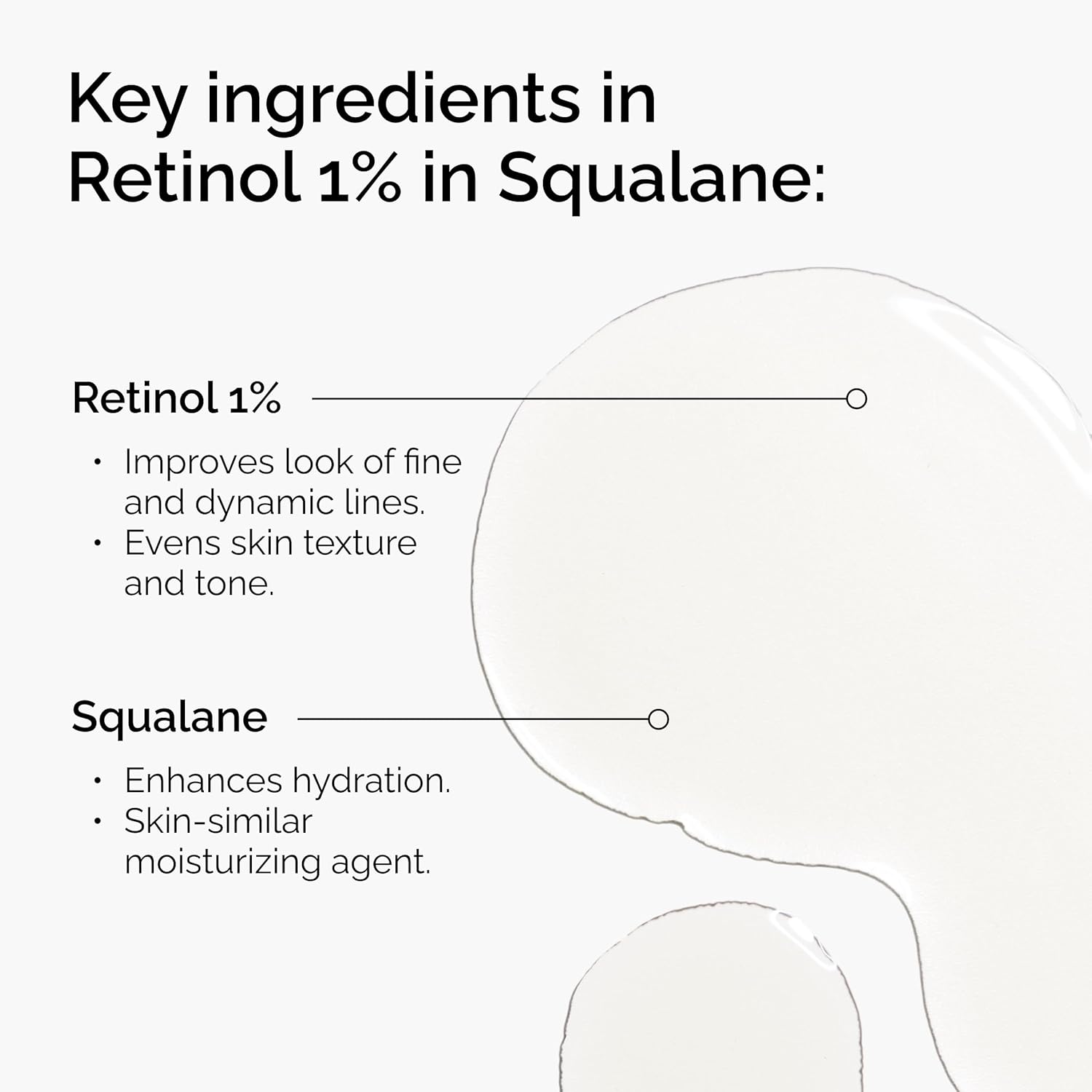
Good Molecules Gentle Retinol Cream is a credible mid-tier option at this stage. The formula is listed at 1%, but the emollient base buffers delivery significantly — which is why experienced users who pair it with a niacinamide serum report tolerating it well even at that nominal percentage. The combination works because niacinamide calms the inflammation pathway while retinol accelerates cell turnover; they are complementary rather than redundant. Dermstore’s editorial guidance on layering retinol with niacinamide explicitly supports this pairing as one of the most practical ways to extend tolerance at higher concentrations. The key takeaway from aggregated user feedback on this product is that it consistently earns the description “doesn’t burn” — a meaningful signal that formula architecture matters at least as much as the percentage printed on the label.
The
$9.90
In stock on Amazon
Check price on AmazonStage 3 & 4 — Experienced to Veteran: Retinal, the Upgrade That Changes the Equation
You have established tolerance, you’ve been consistent for one to two-plus years, and you want the most clinically meaningful molecule available without a prescription. This is the retinal tier.
The Ordinary Retinal 0.2% is the most widely discussed OTC retinal product in the current market, and its user pattern is qualitatively different from what you see with standard retinol products. Retinal — retinaldehyde — is one biochemical step closer to retinoic acid than retinol, which means faster and more efficient delivery to the cell receptors responsible for collagen synthesis, pigment regulation, and accelerated cell turnover.
Paula’s Choice’s ingredient dictionary entry on retinaldehyde describes it as significantly more potent than an equivalent percentage of retinol, with research suggesting it works up to eleven times faster than retinol at comparable concentrations. Allure’s dermatologist-sourced coverage of retinol versus retinal consistently frames retinaldehyde as the strongest OTC vitamin A option available — which is accurate, and which also means the irritation potential is proportionally higher than standard retinol formulas.
Structural outcomes — including visible improvement in skin thinning and surface capillary visibility in users with diminished dermal thickness — align with what dermatologists describe when explaining why retinal outperforms retinol on a per-molecule basis. These are meaningful, not merely cosmetic, results; but they require months of consistent use to materialize.
Is The Ordinary Retinal 0.2% appropriate for beginners? No. This belongs at Stage 3 or 4, with established tolerance. If you’re new to vitamin A, start with a 0.025%–0.1% encapsulated retinol and graduate to retinal after six to twelve months of consistent, uneventful use. Even experienced users typically need a buffer strategy — applied over moisturizer, or mixed into a fragrance-free cream — during the first month at this concentration.
La
$54.97
In stock on Amazon
Check price on AmazonThe Adverse-Event Case Study You Need Before Recommending High-Strength Retinol
Concentrated retinol applied too close to the orbital bone carries a documented risk of significant periorbital irritation — in some cases, enough swelling to nearly seal the eyes. This is not brand-specific; it is a risk profile that belongs to any strong retinol applied to the thin skin near the eye socket, particularly in users with sensitive skin or a compromised barrier.
The anatomy explains why. The skin around the eyes is measurably thinner — roughly 0.5mm compared to approximately 2mm on the rest of the face, per dermatological anatomy references in the American Academy of Dermatology’s retinoid patient guidance. Thinner skin means faster absorption and less buffering capacity against irritation. A concentration that is well-tolerated on the cheek can be genuinely inflammatory at the orbital margin.
The practical decision rule: any retinol product, regardless of brand or concentration, should be kept at minimum a half-inch away from the eye socket when first introduced. If eye-area treatment is the goal, dedicated eye-zone retinol products with lower concentrations and barrier-reinforcing bases are a separate category with their own risk profile. Adjust the application zone before abandoning vitamin A altogether.
By the Numbers: Vitamin A Potency Ladder
| Molecule | OTC Potency (relative) | Conversion Steps to Retinoic Acid | Typical OTC Range |
|---|---|---|---|
| Retinyl palmitate | Low | 3 steps | 0.1%–1%+ |
| Retinol | Moderate | 2 steps | 0.025%–1% |
| Retinal (retinaldehyde) | High | 1 step | 0.05%–0.2% |
| Retinoic acid (tretinoin) | Highest | 0 steps (prescription only) | 0.025%–0.1% Rx |
How to Sequence Retinol Into Your Routine
The question Byrdie’s retinol guide and Dermstore’s layering editorial both address consistently: moisturizer before or after retinol? The answer depends on your current tolerance stage.
Buffer method (Stages 1–2): Apply a plain, fragrance-free moisturizer first, wait two to three minutes, then apply retinol over the slightly damp skin. This slows absorption and significantly reduces the flush-and-peel response without meaningfully reducing long-term results. The retinol still converts and signals cell turnover; it simply does so over a longer diffusion window. Byrdie’s complete retinol guide specifically recommends this method for anyone in their first three months of use.
Direct method (Stages 3–4): Apply retinol to clean, dry skin, wait twenty minutes, then seal with moisturizer. Faster absorption, higher efficacy ceiling, more short-term irritation risk. If you’ve built genuine tolerance, this approach maximizes the molecule’s performance.
Frequency: Start at two nights per week regardless of stage. The American Academy of Dermatology’s retinoid patient guidance specifically flags that most irritation failures stem from daily use in weeks one and two, not from concentration alone. Building frequency gradually — two nights per week for four weeks, then three, then every other night — is more reliable than starting with nightly application and white-knuckling through the reaction.
Frequently Asked Questions
What does “encapsulated retinol” actually mean, and is it less effective or just gentler? Encapsulated retinol means the molecule is wrapped in a polymer or lipid shell that breaks down gradually after application, releasing the ingredient in a controlled, slower curve. It does not reduce the total retinol delivered — it changes the delivery timeline. The result is less acute irritation (the so-called “retinol uglies” — dryness, flaking, redness in weeks two through four) with comparable long-term results over a slightly extended horizon. Per Paula’s Choice’s ingredient dictionary, encapsulated formats are particularly well-suited to beginners and sensitive skin types. Same destination, longer road, smoother ride.
Can I use retinol if I am postpartum or breastfeeding? Current dermatological consensus — consistently reflected in Allure and Byrdie’s coverage of postpartum and pregnancy skincare — recommends avoiding all vitamin A derivatives while breastfeeding. Topical absorption is generally low, but because vitamin A is fat-soluble and the theoretical transfer risk is not zero, the standard recommendation is to pause and substitute with bakuchiol, niacinamide, or azelaic acid until breastfeeding ends. Wait until nursing is complete before reintroducing, then restart at Stage 1 with an encapsulated formula regardless of where you were before pregnancy.
How is retinal different from retinol, and is a 0.2% retinal product safe for beginners? Retinal (retinaldehyde) is one biochemical step closer to retinoic acid than retinol, which means faster and more efficient signaling at the cell level. A 0.2% retinal product is not a beginner formula — it belongs at Stage 3 or 4, after six to twelve months of consistent, uneventful retinol use. If you’re new to vitamin A, start with a 0.025%–0.1% encapsulated retinol and work up.
Why did my eyes swell and react badly to a retinol cream? Almost certainly periorbital application of a formula too concentrated for the thin skin near the orbital margin. The skin around the eyes is dramatically thinner than the rest of the face, which means retinol absorbs faster and irritates more intensely there. Keep any retinol product at least a half-inch from the eye socket until your skin has built tolerance — and even then, use a formula designed specifically for the eye area at reduced concentrations.
Should I moisturize before or after my retinol to reduce irritation? Before, if you’re in Stage 1 or 2. This buffer method materially reduces the acute irritation response without eliminating long-term results. After, once you have established tolerance (Stage 3–4) — applying retinol to clean, dry skin and sealing with moisturizer afterward maximizes absorption and efficacy.
How long before I should expect visible results from a low-strength retinol? Surface texture and glow: four to eight weeks. Meaningful reduction in fine lines or discoloration: three to six months of consistent use at two to three nights per week minimum. Full structural benefits — collagen remodeling, pore refinement — require six to twelve months. Set realistic timelines, and don’t quit at week six when the initial irritation has passed but visible results haven’t yet accumulated.
The decision rule, plainly stated: If your skin is new to vitamin A, reactive, or recovering — start with an encapsulated retinol in a ceramide base at 0.025%–0.1%, buffer with moisturizer, two nights a week. If you’ve been consistent for six-plus months with no irritation and you’re not seeing results — step up to 0.3%–1% or make the format jump to retinal. If you’ve had a bad periorbital reaction — the formula wasn’t wrong, the application zone was. Adjust, don’t abandon. And if you’re at the retinal stage, a 0.2% retinaldehyde formula earns its reputation — but it’s a graduation, not a starting point.