August 26, 2026 • Celeste Morrow • 10 min reading time • Prices verified June 4, 2026
The Sensitive-Skin Serum Starter Kit: Building a First Routine From Products That Rarely Cause Reactions
The Sensitive-Skin Serum Starter Kit: Building a First Routine From Products That Rarely Cause Reactions
If the word “serum” makes you nervous because your skin has a history of turning red, itchy, or tight the moment you introduce something new, you’re in the right place. A serum is simply a lightweight, concentrated formula designed to deliver specific active ingredients — things like hydration boosters, skin-calming agents, or gentle resurfacers — more efficiently than a standard moisturizer can. For people with reactive or sensitive skin (skin that tends to respond to products with redness, stinging, or breakouts more easily than average), building a serum routine isn’t impossible. It just requires a more deliberate sequence and a much shorter introduction list than beauty marketing usually suggests.
This guide pulls from aggregated reviewer accounts, dermatologist-sourced protocols, and published ingredient research to help you build a low-risk first routine. The goal isn’t a 10-step regimen. It’s a three-to-four product foundation you can actually trust.
Why Sensitive Skin Needs a Different Starting Logic
Most serum guides are written for people who can tolerate a lot. Sensitive-skin routines require a different decision frame: instead of “what does the most,” the question is “what does enough while giving my barrier nowhere to fail.”
The skin barrier — the outermost layer of skin that keeps moisture in and irritants out — is the throughline here. When it’s compromised, even products that are ordinarily gentle can sting or inflame. This is why the order in which you introduce products, and the buffer strategies around them, matter as much as the formulas themselves.
Two foundational principles from the American Academy of Dermatology’s guidance on testing skincare products are worth internalizing early: introduce one new product at a time, and wait at least one to two weeks before adding the next. That timeline feels slow but it’s the only way to know which product caused a reaction if one occurs.
The Sensitive-Skin Starter Stack: Four Products, Three Phases
By the Numbers
| Phase | Product Type | Typical Wait Before Adding Next |
|---|---|---|
| 1 | Hydrating HA serum | 1–2 weeks |
| 2 | Niacinamide serum | 1–2 weeks |
| 3 | Buffered moisturizer | 3–5 days (non-active) |
| 4 | Gentle retinol | 2–4 weeks minimum |
Phase One: Hyaluronic Acid as Your First Serum
Hyaluronic acid (HA) — a molecule that draws water to the skin from the environment and deeper skin layers — is the most logical starting point for sensitive skin because it is almost entirely inert. It has no exfoliating action, no pigment-altering chemistry, and almost no known contact allergens. Its job is simply to add and retain moisture, which makes it a stabilizing layer before anything more active gets introduced.
Two products generate the most consistent sensitive-skin praise across aggregated reviews: the Good Molecules Hyaluronic Acid Serum and The Ordinary Hyaluronic Acid 2% + B5.
The Good Molecules Hyaluronic Acid Serum earns one of the most clinically specific recovery accounts in the category. A buyer with severe post-retinol irritation — describing a point where her usual products were actively burning her compromised skin — credits this serum with stabilizing her barrier when nothing else could. That account isn’t marketing; it reflects what HA serums at their best are designed to do: provide moisture delivery without adding any chemical load to an already-overwhelmed skin surface. Reviewers consistently note the absence of fragrance, alcohol, and silicones, and the lightweight finish that layers without pilling.
The Ordinary Hyaluronic Acid 2% + B5 attracts a specific reviewer profile: people who had been disappointed by multiple HA serums before and describe this as the first one that actually produced visible plumping and hydration. Byrdie’s roundup of hyaluronic acid serums notes that The Ordinary’s multi-weight HA formula (which uses both high- and low-molecular-weight hyaluronic acid to hydrate at different skin depths) is among the most studied formulations at this price tier. The B5 — panthenol, a well-documented skin-soothing agent — adds a secondary calming layer that makes it particularly relevant for reactive skin types.
Practical note: Apply HA serum to slightly damp skin and follow immediately with a moisturizer. Hyaluronic acid needs a water source to draw from; applied to dry skin in a low-humidity environment, it can pull moisture from the dermis upward and out, which counterintuitively increases dryness.
Phase Two: Niacinamide — The Tradeoff Conversation No One Has
Niacinamide (vitamin B3) is probably the most recommended ingredient in sensitive-skin forums right now, and for good reason: it has a well-documented record of reducing redness, supporting the barrier, and minimizing pore appearance without the exfoliating mechanism that makes acids and retinoids risky. Paula’s Choice’s published ingredient education on niacinamide cites evidence for its role in reducing transepidermal water loss — the technical term for moisture escaping through the skin — and calming inflammatory signals, which is why it appears in rosacea-adjacent formulas.
But there’s a tradeoff that most guides skip: niacinamide can cause an initial flush in some users, particularly those with rosacea or very reactive skin. This is not an allergy. It’s a temporary vasodilation response (blood vessel widening) that typically settles within the first few uses. The most honest reviewer account in this category comes from a Good Molecules Niacinamide Serum buyer with diagnosed rosacea who documented a mild flare on first and second use that resolved by day three or four. She continued using it, and it became a cornerstone of her barrier-support routine. That trajectory — initial response, resolution, long-term benefit — is important context for sensitive-skin users who might otherwise abandon a product that was, in fact, going to work.
The decision rule: If you have rosacea or vasomotor reactivity, introduce niacinamide at two to three times per week, not daily, for the first two weeks. If the flush persists beyond two weeks or worsens, it warrants a conversation with a dermatologist. If it follows the pattern above and fades, you’ve successfully added one of the most broadly beneficial ingredients in the category.
Phase Three: The Moisturizer That Buffers Everything Else
The La Roche-Posay Toleriane Double Repair Moisturizer earns its place in a sensitive-skin starter kit not just as a standard moisturizer, but as a strategic tool. Reviewers specifically describe using it in the context of prescription retinoid sensitivity — applying it before the retinoid to create a buffer layer, and again on top of the retinoid to seal everything down. This is a real technique with a name in dermatology circles: the “sandwich method.” Dermstore’s editorial guide to sensitive-skin routines references the buffering-moisturizer technique as one of the primary tools dermatologists recommend to extend retinoid tolerance in patients who can’t tolerate straight-on application.
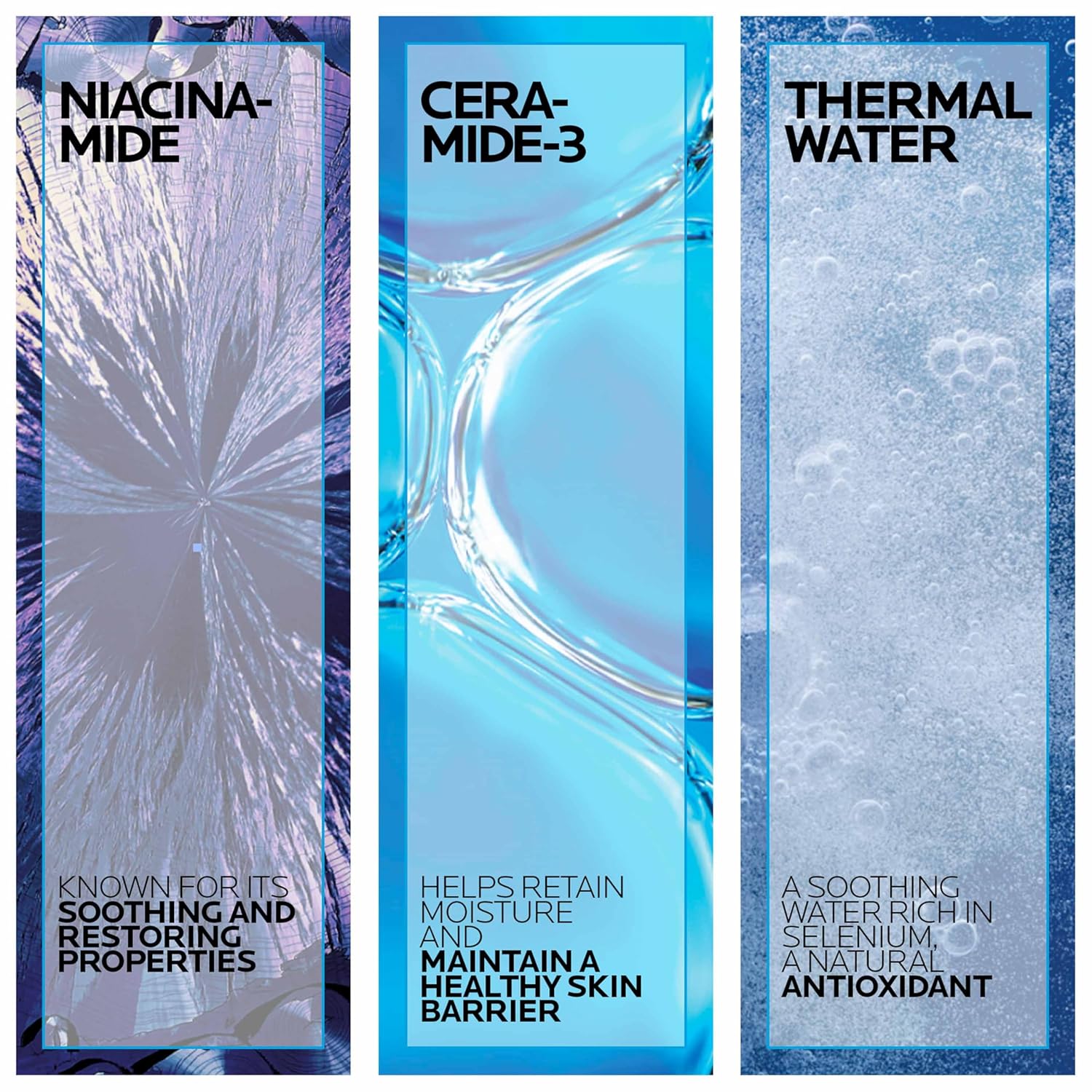
The Toleriane formula contains ceramides (lipids that are native to the skin barrier and help repair it), niacinamide, and prebiotic thermal water — all ingredients with robust safety records for reactive skin. Crucially, it is fragrance-free and preserves a relatively short, readable ingredient list, which matters when you’re trying to isolate what caused a reaction.
Phase Four: Retinol, Done Carefully
Retinol is a vitamin A derivative that signals skin cells to turn over faster, which over time reduces fine lines, refines texture, and — at higher concentrations — can meaningfully address hyperpigmentation. It is also the most common source of sensitivity setbacks for first-time users, which is why it’s the last phase in this sequence, not the first.
The CeraVe Resurfacing Retinol Serum draws a remarkably consistent profile across reviewer demographics: postpartum users returning to active ingredients after months off, rosacea-prone users who had been told to avoid retinol entirely, and sensitive-skin beginners who had read horror stories and approached cautiously. Across all of these groups, reviewers report zero irritation on the CeraVe formula, which they attribute to the encapsulated retinol delivery (a format that releases retinol slowly to reduce the acute skin response) and the ceramide base that treats and supports the barrier simultaneously. Allure’s guide to retinol specifically notes encapsulated delivery as the mechanism that makes entry-level retinol products more tolerable for sensitive users.
The practical protocol: use the Toleriane moisturizer first, apply the CeraVe Resurfacing Retinol Serum on top, then seal with another layer of moisturizer if dryness develops. Start at two nights per week, add a third night after two weeks if your skin is stable, and expect two to three months before any meaningful resurfacing effect is visible.
Frequently Asked Questions
How do I know if my skin is reacting to a product or just purging? Purging is a specific phenomenon tied to active ingredients that accelerate cell turnover — primarily retinoids and exfoliating acids. It produces breakouts in areas where you already break out, typically within the first two to six weeks of use, and resolves on its own. A reaction looks different: redness, stinging, itching, or hives that appear anywhere on the face, sometimes immediately or within 24 to 48 hours of application. If you’re using a hydration-only product like an HA serum and your skin is breaking out, that is a reaction, not a purge — HA has no mechanism to cause purging.
Is niacinamide safe for rosacea-prone or reactive skin? Generally yes, but with the caveat described above: an initial flush is possible in vasomotor-reactive skin. The evidence base for niacinamide reducing rosacea-associated redness over time is stronger than the evidence for it being a trigger. Start slowly, not at daily use.
Can I use a hyaluronic acid serum and a niacinamide serum at the same time, or should I wait? Chemically, there is no conflict between HA and niacinamide — they layer safely. The reason this guide sequences them with a one-to-two-week gap is diagnostic, not chemical: if you introduce them simultaneously and react, you won’t know which one caused it. Once you’ve confirmed each individually, layering them in the same routine (HA first, niacinamide second) is standard practice.
What does “applying moisturizer before retinol” actually do, and does it reduce effectiveness? The moisturizer layer dilutes the retinol’s contact concentration with the skin surface and slows its absorption, which reduces the acute irritation response. There is a tradeoff: the sandwich method does modestly reduce how much retinol penetrates, and therefore slightly extends the timeline to visible results. For sensitive skin, that is almost always the right tradeoff — a slower result you can sustain is better than a faster result you abandon because your skin is raw.
How many new products can I safely introduce at once if I have sensitive skin? One at a time, per the American Academy of Dermatology’s guidance. The minimum diagnostic window is seven to fourteen days. At two new products per month — which is already ambitious for reactive skin — a four-product routine takes two months to build. That timeline is frustrating and completely correct.
Is fragrance-free always better for sensitive skin, or are there fragrance-containing products that are still tolerated well? Fragrance is the most common cosmetic allergen, per Self’s reporting on fragrance in skincare, and fragrance-free is the safest default for reactive skin. That said, “fragrance-free” doesn’t mean a product is automatically well-tolerated — essential oils and botanical extracts can be sensitizing even without a listed “fragrance” on the label. Conversely, some people with sensitive skin tolerate certain fragranced products without issue. The rule of thumb: start fragrance-free while your routine is new and your skin is reactive, and only introduce fragrance-containing products once your barrier is stable and you have a baseline to compare against.
Building a sensitive-skin serum routine is fundamentally a sequencing problem, not a formula problem. The products in this guide exist at accessible price points precisely because barrier support and gentle hydration don’t require complex chemistry. The logic is: stabilize first, layer cautiously, introduce actives only when your skin has given you a clear signal that it’s ready. The readers who report the most durable results with these products are uniformly the ones who moved slowly enough to hear that signal.