July 17, 2026 • Celeste Morrow • 9 min reading time • Prices verified June 4, 2026
The Vitamin C Serum Pairing Guide: What to Layer Before, With, and After L-Ascorbic Acid
If you’ve ever stared at a row of serums and wondered which one goes first, you’re not alone. Vitamin C serum — specifically the kind built around an ingredient called L-ascorbic acid, the most clinically studied form of vitamin C used in skincare — is one of the most potent brightening and antioxidant tools available at any price point. It works by neutralizing free radicals (unstable molecules that accelerate skin aging), stimulating collagen production, and gradually fading dark spots. But here’s the part that gets skipped in most product descriptions: vitamin C doesn’t perform in isolation. The results buyers consistently report after months of use aren’t coming from the serum alone — they’re coming from how that serum is sandwiched into the rest of a routine. This guide maps the full layering picture, from pH chemistry and texture sequencing to the pairings that amplify results and the ones that quietly undermine them.
| EDITOR'S PICKTimeless Skin Care Vitamin C Se… | Mid-tierTruSkin Vitamin C Serum for Fac… | Budget pickOlay Vitamin C + Peptide 24 Ser… | |
|---|---|---|---|
| Skin type | Oily/Dry | — | — |
| Fragrance | Fragrance-Free | — | — |
| Key pairings | Vit E + Ferulic | Hyaluronic + Vit E | Peptide 24 |
| Volume | 1.7 oz | — | 40 mL |
| Price | $35.95 | $19.99 | $17.99 |
| See on Amazon → | See on Amazon → | See on Amazon → |
The Chemistry Case for Layering Vitamin C Strategically
L-ascorbic acid is notoriously finicky, and understanding why will make every pairing decision click. It’s water-soluble, oxidizes quickly on exposure to air and light, and requires a low pH environment — generally below 3.5 — to absorb effectively through the skin barrier. Paula’s Choice Ingredient Dictionary’s L-ascorbic acid entry notes that concentrations between 10–20% at the right pH deliver the antioxidant and brightening effects backed by published research; above 20%, irritation risk climbs without a proportional efficacy payoff.
That low-pH requirement has a direct layering consequence: anything you apply before vitamin C that raises the skin’s surface pH can reduce its absorption. This is why the standard protocol — confirmed across dermatologist guidance cited at Byrdie and Allure — is to apply L-ascorbic acid serums to clean, dry skin before other actives, essences, or hydrators.
By the numbers:
- Effective L-ascorbic acid range: 10–20% concentration, pH ≤ 3.5
- Oxidation signal: serum turns yellow → orange → brown; discard if dark orange or brown
- Stability window after opening: typically 3–6 months (varies by formula and packaging)
- Ferulic acid + vitamin E: both extend vitamin C’s stability and documented antioxidant effect, per published formulation data
The ferulic acid point matters in practice. Several formulas — including Drunk Elephant C-Firma Fresh Day Serum — combine L-ascorbic acid with both ferulic acid and vitamin E specifically to exploit this synergy. Buyers who’ve tracked that formula long-term note the serum carries a distinctive, slightly fermented scent (one widely circulated review describes a “hotdog-like” smell) that intensifies when the ferulic acid concentration is meaningful. That scent is not a spoilage signal — it’s the ferulic acid doing its job. A fresh, just-opened bottle of C-Firma does not smell like oxidized vitamin C (which has a sharper, almost vinegar-like edge); if you’re uncertain which smell you’re dealing with, color is the more reliable indicator.
The Morning Stack: What Goes Before, With, and After
The most durable layering pattern across long-run buyer reviews is simple: vitamin C → moisturizer → SPF, applied every morning without exception. The Timeless 20% Vitamin C + E Ferulic Acid Serum has generated particularly detailed multi-year routines in its review base, with several buyers documenting five or more years on this exact three-step sequence. The consistency matters because vitamin C’s brightening and photoprotective effects are cumulative — irregular use breaks the chain.
Here’s how to sequence the full morning stack:
Step 1 — Cleanse and, if applicable, tone (optional) If you use a hydrating or pH-balancing toner, apply it and let it dry fully before vitamin C. Some toners — especially fermented or essence-style formulas — can nudge surface pH higher and slightly reduce L-ascorbic acid uptake, though the practical impact is modest with most modern formulas.
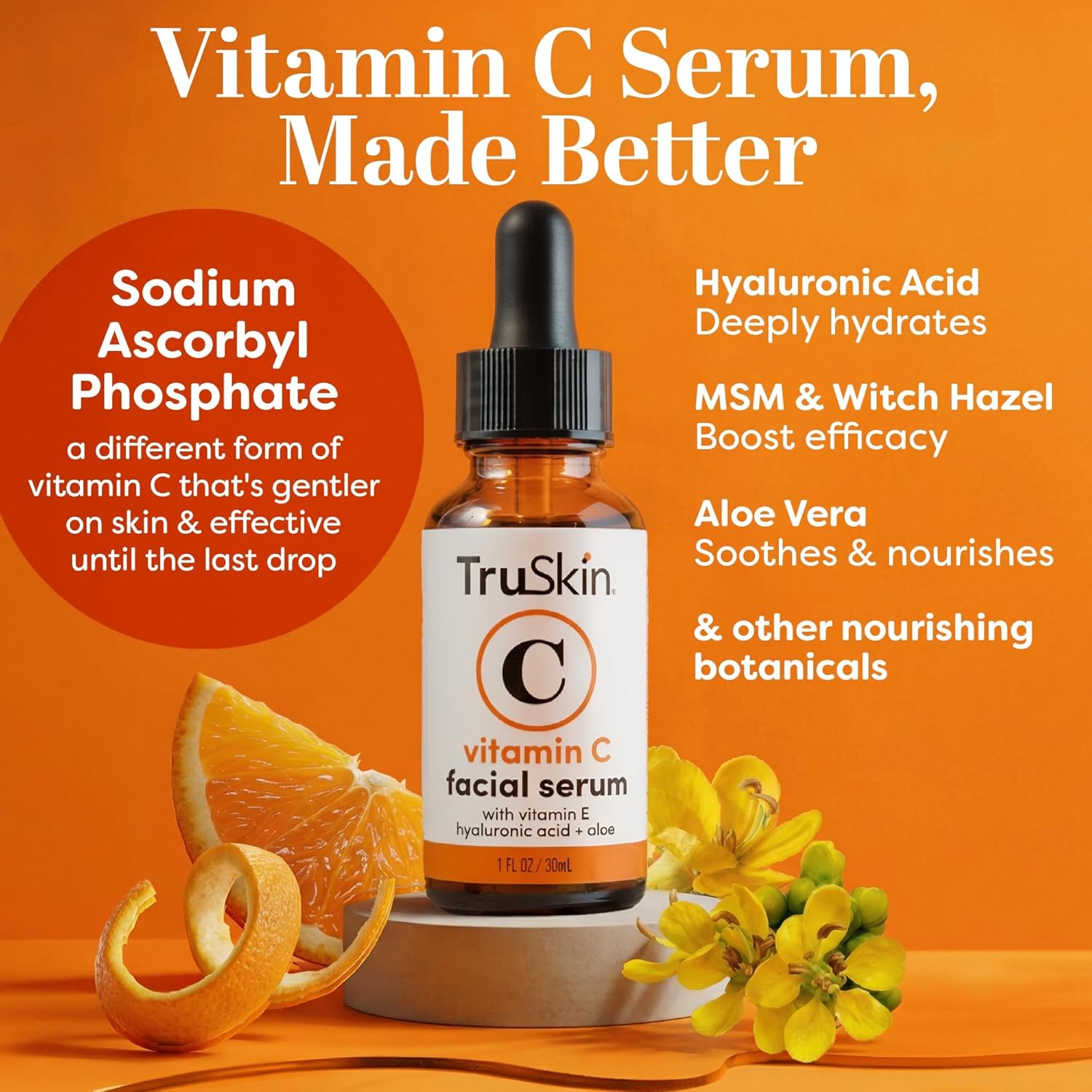
Step 2 — Vitamin C serum on bare (or nearly bare) skin Apply to dry skin — not damp. Water on the surface dilutes the formula and can interfere with the pH gradient needed for absorption. Two to three drops is sufficient for the full face; SeoulCeuticals 20% Vitamin C reviewers specifically note that the serum’s lighter, more watery texture makes underapplication easy — go a touch more generous than you think you need. TruSkin Vitamin C Serum buyers report the opposite calibration challenge: the formula runs thicker, so a single pump is often enough and layering anything on top too quickly leads to pilling.
Step 3 — Wait for full absorption (60–90 seconds minimum) This is where most pilling problems originate. L-ascorbic acid serums need to settle before the next layer, not because they need time to “sink in” in some abstract sense, but because a partially wet serum layer will ball up against the silicones or emollients in a moisturizer. Allure’s skincare layering guidance consistently flags this wait step as one of the most skipped — and most consequential — in an active-heavy morning routine.
Step 4 — Moisturizer Any well-formulated moisturizer is compatible here. The only category to flag is niacinamide-containing moisturizers (see FAQ below), and even that concern is more theoretical than clinical at typical concentrations.
Step 5 — SPF, always This is non-negotiable and worth being blunt about: vitamin C enhances photoprotection but does not replace it. The antioxidant activity of L-ascorbic acid reduces oxidative stress from UV exposure, which is why vitamin C + SPF together outperform either ingredient alone — but the serum provides zero UV-filtering protection on its own. Dermstore’s editorial coverage of antioxidant serums cites published research showing vitamin C + sunscreen combinations produce measurably better outcomes on photoaging markers than sunscreen alone.
The Night Side: Retinol, BHA, and Ingredient Separation
Vitamin C in the morning, retinol at night — this is the most consistently recommended AM/PM split across dermatologist guidance at Byrdie and in Paula’s Choice’s published routine-building resources, and it exists for a concrete reason: both actives work, both can irritate, and there’s no clinical upside to running them simultaneously that justifies the combined irritation load.
The more sophisticated version of this — documented by buyers stacking multiple actives — separates not just by time of day but by night. One CeraVe Resurfacing Retinol Serum reviewer details a three-product rotation: Timeless 20% Vitamin C every morning, retinol on Monday/Wednesday/Friday nights, Paula’s Choice 2% BHA Liquid Exfoliant on alternating nights. This is a genuinely intelligent stack because:
- BHA (salicylic acid) works at a low pH, similar to vitamin C, but runs in the evening where it won’t compete for absorption position
- Retinol works best in the absence of other actives and without sun exposure accelerating potential irritation
- Vitamin C anchors every morning with antioxidant and brightening support that compounds over months
If you’re earlier in the process and not yet running multiple actives, the simpler version — vitamin C every morning, retinol two or three nights a week, and a rest night in between — gives your barrier time to adapt. Dermstore’s guide to combining retinol and vitamin C recommends this graduated approach specifically for anyone within the first three months of adding retinol to an existing routine.
Texture Sequencing and the Pilling Problem
Pilling — when product rolls into small balls on the skin surface rather than absorbing — is the most commonly reported layering failure with vitamin C serums, and it almost always comes down to two variables: incomplete drying between steps, and texture incompatibility.
The general rule is thinnest-to-thickest: water-based vitamin C serum goes before a cream moisturizer, which goes before a heavier SPF. Where this breaks down is when a vitamin C serum is itself thick (TruSkin’s formula is a frequent example) or when a moisturizer contains silicones that don’t bond well with a partially absorbed water-based layer underneath.
Solutions that buyers consistently report working:
- Wait the full 60–90 seconds after vitamin C before the next step — even if the skin looks dry
- Use a lighter, gel-format moisturizer under SPF if pilling is chronic
- Apply SPF in a single, light layer rather than buffing in circular motions (mechanical friction is a pilling accelerant)
- If layering hyaluronic acid serum as well, apply it after vitamin C, while skin is still slightly damp — HA is a humectant (a moisture-drawing ingredient) that actually benefits from a bit of surface moisture to pull into the skin
Frequently Asked Questions
Can I use a vitamin C serum and niacinamide at the same time, or will they react? The concern — that the two ingredients combine to form a compound called niacin that causes flushing — is chemically possible but practically irrelevant at the concentrations in modern skincare. Self’s coverage of this ingredient pairing cites dermatologists who note that the reaction requires far higher concentrations and longer exposure times than any topical product delivers. You can use them together. If you prefer to keep them separate, vitamin C in the morning and niacinamide in the evening is a clean solution.
Should vitamin C go on before or after hyaluronic acid serum? Vitamin C first, hyaluronic acid second. L-ascorbic acid needs low-pH contact with the skin surface to absorb. Applying a hydrating serum first creates a physical and pH buffer. After vitamin C has had 60 seconds to settle, a hyaluronic acid serum applied while skin is slightly damp will perform well.
Can I use vitamin C in the morning and retinol at night in the same routine? Yes — this is the standard dermatologist-endorsed separation protocol. They work through different mechanisms, and keeping them on opposite ends of the day avoids stacking irritation risk.
Why does my vitamin C serum sometimes pill under moisturizer? Almost always an incomplete drying issue, a texture mismatch, or both. Wait a full 60–90 seconds after applying vitamin C, switch to a lighter moisturizer, and avoid rubbing or buffing motions that create friction against a still-settling serum layer.
Does vitamin C replace sunscreen, or do I still need SPF on top? SPF is still required — full stop. Vitamin C provides antioxidant support that makes sunscreen more effective, but it has no UV-filtering function of its own. Per Byrdie’s vitamin C serum guide, this combination produces better long-term outcomes than either product alone, but the serum is not a substitute.
How long should I wait between applying vitamin C and applying my moisturizer? 60 to 90 seconds is the practical minimum. If you’re prone to pilling, extend that to two minutes. The serum should feel fully absorbed — no tackiness or visible sheen — before you move to the next step.