September 2, 2026 • Celeste Morrow • 9 min reading time • Prices verified June 4, 2026
Vitamin C at Every Texture: Why Watery, Oily, Milky, and Gel Formulas Behave Completely Differently on Your Skin
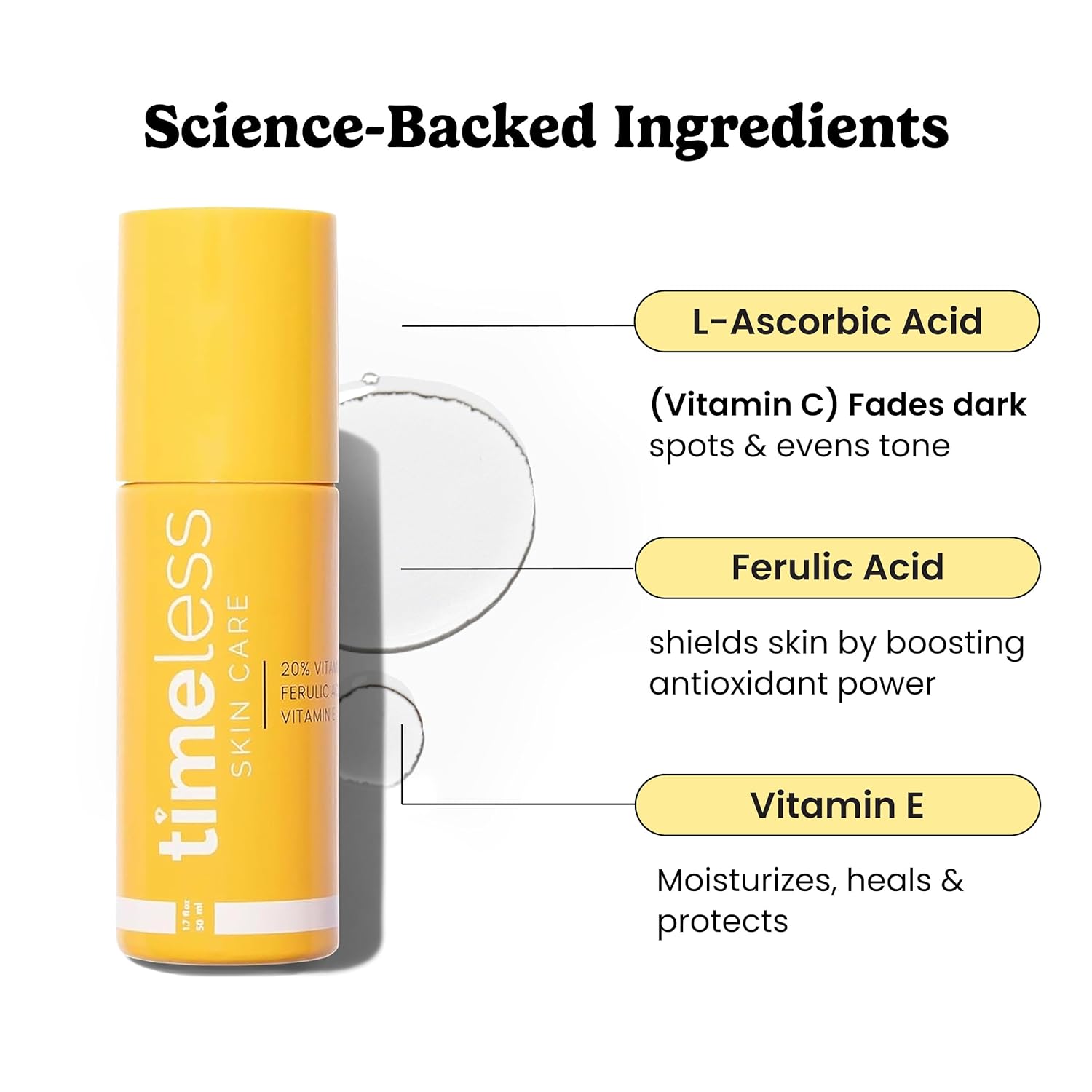
If you’ve ever switched vitamin C serums between purchases and been genuinely surprised by how different the new bottle felt — more watery, oilier, stickier, or oddly thicker — you’re not imagining things. Vitamin C is a broad category, not a single ingredient. In skincare, it refers to a family of compounds (the most famous being L-ascorbic acid, a potent, clinically studied antioxidant that helps brighten dark spots, support collagen production, and defend skin against environmental damage) that each behave differently depending on their chemical form and the base the brand builds around them. That base — the texture vehicle — is where most of the real-world confusion lives. This guide breaks down what watery, oily, milky, and gel-format vitamin C serums actually do differently on skin, which buyers they suit best, and the sensory quirks — yes, including the infamous hot-dog smell — that show up in long-term owner reviews.
| EDITOR'S PICKTATCHA The Dewy Skin Cream | Ri… | Mid-tierSeoulCeuticals Korean Skin Care… | Budget pickThe Ordinary Ascorbyl Glucoside… | |
|---|---|---|---|
| Format | Cream | Serum | Serum |
| Vitamin C type | — | 20% | 12% |
| Key actives | — | Hyaluronic, ferulic | Ascorbyl glucoside |
| Size | 50 mL | 1 Fl Oz | 1 Fl Oz |
| Skin type | Dry, combo | — | — |
| Concern | Hydrate, plump | Anti-aging | Even skin tone |
| Price | $74.00 | $22.99 | $14.80 |
| See on Amazon → | See on Amazon → | See on Amazon → |
Why Texture Isn’t Just a Preference — It’s a Delivery System
Here’s the part most product descriptions skip: the texture of a vitamin C serum directly affects how fast the active ingredient reaches your skin cells, how stable it stays in the bottle, and how it layers with everything else in your routine.
Paula’s Choice Skincare Education’s guide to vitamin C notes that L-ascorbic acid (LAA), the gold-standard form, is inherently water-soluble and requires an acidic pH (ideally between 2.5 and 3.5) to penetrate effectively. That acidic, low-pH requirement is precisely why water-based vitamin C serums often feel sharp, sometimes tingly, and occasionally smell sulfurous straight out of the bottle — it’s chemistry doing its job, not a sign of a bad product.
But not every vitamin C derivative plays by those rules. Ascorbyl glucoside, ascorbyl tetraisopalmitate, and THD ascorbate (tetrahexyldecyl ascorbate) are all stabilized cousins of LAA that work at higher, skin-friendlier pH levels — and they’re often suspended in oil-heavy or emulsion bases that feel completely different on skin. According to Cosmetics and Toiletries’ formulation research on ascorbic acid stability, these derivatives trade some of the raw potency of LAA for dramatically better shelf stability and tolerability, which makes them a logical choice for sensitive or dry skin types even if the evidence base for LAA remains stronger overall.
The upshot: if your current serum feels completely different from your last one, there’s a meaningful chance you’ve switched derivative families, not just brands.
The Four Texture Formats, Decoded
Watery / Aqueous Serums
What they feel like: Light, fast-absorbing, sometimes slightly tacky. They layer under moisturizer without resistance and dry down within about 30 seconds on most skin types.
What’s usually inside: High-concentration LAA (10–20%), water as the primary vehicle, and a low-pH stabilizer. Timeless Skin Care’s 20% Vitamin C+E+Ferulic Acid Serum is the canonical example in this category — owners with multi-year use histories consistently frame it as a daily non-negotiable, praising the familiar lightweight feel as part of what makes the habit stick.
The trade-off: That acidic, watery base is where the sensory anomalies cluster. Ferulic acid — an antioxidant that dramatically boosts LAA stability — has a naturally sulfurous odor. Byrdie’s long-form vitamin C coverage and aggregated owner reviews for Drunk Elephant’s C-Firma Fresh Day Serum both flag this consistently: buyers describe the scent as “hot dog”-adjacent, funky, or egg-like, and it tends to intensify as the bottle ages. It is completely normal and not a sign of spoilage in a fresh product, though an unusually strong or rancid smell on a new bottle can indicate heat damage during shipping.
Best for: Oily and combination skin types; anyone who prioritizes clinical-strength LAA; those who layer multiple actives and need a formula that doesn’t compete texturally.
Oily / Lipophilic Serums
What they feel like: Silky, sometimes borderline slick. They absorb more slowly and leave a subtle luminosity — reviewers frequently describe a “glow” finish that watery formats don’t quite replicate.
What’s usually inside: Oil-soluble derivatives like THD ascorbate or ascorbyl tetraisopalmitate suspended in a lightweight carrier oil (squalane, jojoba, or C12-15 alkyl benzoate). These formats work at skin-neutral pH, which Allure’s vitamin C overview credits with making them significantly better tolerated by reactive and dry skin types.
The trade-off: The evidence base is thinner than for LAA. Paula’s Choice Skincare Education is direct about this: oil-soluble derivatives convert to active ascorbic acid on skin, but the conversion rate and penetration depth aren’t as extensively documented as LAA at equivalent concentrations. You’re trading peak potency for comfort and stability.
The texture anomaly flag: The Ordinary’s Ascorbyl Glucoside Solution 12% sits in a genuinely confusing middle zone — buyers in aggregated reviews frequently describe it as feeling “slightly oily” despite ascorbyl glucoside being a water-soluble derivative. This happens because the formula includes glycerin and a slightly heavier vehicle than a classic watery serum. It’s not an oil-based product, but it doesn’t feel like one either. If you’re calibrating expectations from a strict water-serum frame, that’s the gap to know about.
Best for: Dry, sensitive, or eczema-prone skin; anyone who has experienced irritation or redness from LAA-based formulas; skin types that respond well to a bit of facial oil in their routine.
Milky / Emulsion Serums
What they feel like: Creamy, cushiony — somewhere between a traditional serum and a lightweight lotion. They tend to be the most beginner-friendly texture because they read as familiar and non-threatening.
What’s usually inside: An emulsion (water + oils + emulsifier) carrying a stabilized vitamin C derivative, often at a moderate concentration (5–15%). Garnier’s vitamin C entries in this space earn consistent owner praise specifically for their fresh, pleasantly non-acidic scent — which is unusual enough in vitamin C that reviewers name it as a distinguishing feature. That lighter scent profile is directly tied to lower LAA concentrations and higher-pH derivatives, not to fragrance masking.
The trade-off: Layering can get complicated. Emulsion serums sit heavier on skin than watery formats, and adding a full moisturizer on top can push the routine into pilling or oversaturation territory. Dermstore’s skincare layering guidance consistently recommends applying from thinnest to thickest — which means emulsion-style vitamin C serums occupy an ambiguous middle position that requires routine-specific testing.
Best for: Combination-to-dry skin types who want one less product step; newcomers building a first vitamin C habit; anyone who has found watery LAA formulas too aggressive.
Gel Serums
What they feel like: Cool, bouncy, and refreshing — they absorb quickly but without the almost-instant evaporation of a pure water serum. Many gel formats are hydrogel-based, meaning they deliver hydration alongside the active.
What’s usually inside: A gelled water base (carbomer, hyaluronic acid, or aloe gel) carrying a stabilized vitamin C derivative. TruSkin’s Vitamin C Serum sits in this zone — owners consistently flag that it is “slightly thicker than some” and that dosing matters meaningfully, with the frequent reminder that “more is not better.” That’s a real formulation insight: high-viscosity gels can pill or roll if over-applied, and the thicker medium can slow absorption if layered too heavily.
The Obagi texture anomaly: Obagi Professional-C Serum earns a notable outlier observation across owner reviews — multiple buyers describe it as a serum that “evaporates quickly” despite being a professional-grade, higher-concentration LAA formula. This is worth flagging because it contradicts the intuition that professional-strength = heavier. Obagi’s formulation appears optimized for rapid penetration, which experienced users interpret as a sign of effective delivery — but first-time buyers sometimes interpret it as the product “disappearing before it works,” which is the opposite of what’s happening.
Best for: Oily and acne-prone skin (the gel base is non-comedogenic); anyone who wants vitamin C plus hydration in one step; humid climates where heavier formats feel oppressive.
By the Numbers: Texture Format at a Glance
| Format | Typical Derivative | pH Range | Absorption Speed | Best Skin Type |
|---|---|---|---|---|
| Watery | L-Ascorbic Acid (LAA) | 2.5–3.5 | Fast | Oily / Combination |
| Oily | THD Ascorbate / Ascorbyl Tetraisopalmitate | 5–7 | Moderate | Dry / Sensitive |
| Milky | Stabilized LAA or derivative | 4–6 | Moderate | Combination-Dry |
| Gel | LAA or Ascorbyl Glucoside | 3–5 | Fast-to-Moderate | Oily / Acne-Prone |
Frequently Asked Questions
Why does my vitamin C serum smell like hot dogs or sulfur — and is that normal?
Yes, completely. The culprit is ferulic acid, a co-antioxidant that dramatically stabilizes L-ascorbic acid and extends the formula’s effectiveness. Ferulic acid has a naturally phenolic, sulfurous odor that many people describe as hot dogs, egg, or hay. Byrdie’s vitamin C coverage notes this is a known characteristic of ferulic-containing formulas, not a defect — though a sharp rancid smell on a brand-new bottle can indicate heat damage during storage or shipping. Store your serum away from direct light and heat to minimize odor intensification over time.
Should I apply vitamin C serum before or after moisturizer?
Before, in almost every case. Dermstore’s layering guidance frames the sequencing clearly: apply actives on clean skin in thin-to-thick order, then seal with moisturizer. The exception is if you’re using an oil-soluble derivative (THD ascorbate, for example) that your brand explicitly recommends mixing into moisturizer — some formulations are designed for that — but the default is serum first, moisturizer second.
Why does my new vitamin C serum feel totally different from the last one, even though both are “vitamin C”?
You’ve likely switched derivative families — from LAA to a stabilized ester, or from a water base to an emulsion. As Paula’s Choice Skincare Education explains, these derivatives have different molecular structures, carrier bases, and pH requirements. They aren’t interchangeable on skin feel, and the difference isn’t random. Check the ingredient list: L-ascorbic acid appears near the top of a high-concentration watery serum; ascorbyl glucoside, ascorbyl tetraisopalmitate, or tetrahexyldecyl ascorbate indicate a reformulated or alternative-derivative product.
Is a thicker vitamin C serum more effective than a watery one?
Not as a rule. Viscosity is a formulation vehicle choice, not a potency indicator. A 20% LAA watery serum (like Timeless) typically delivers more active vitamin C than a thick, lower-concentration gel — but a gel at the right concentration can outperform an oily serum in penetration speed. Match the texture to your skin type and layering needs first; check the concentration and derivative second.
Can I mix my vitamin C serum with moisturizer to make it easier to apply?
You can, but you’re likely diluting the active and potentially disrupting the pH that makes LAA-based formulas work. Cosmetics and Toiletries’ formulation research on ascorbic acid stability underscores that LAA’s efficacy is highly pH-dependent — introducing a higher-pH moisturizer into the mix can blunt the acid’s skin-penetration capability. If you find a serum irritating or hard to apply alone, the better call is to choose a derivative designed for comfort (THD ascorbate or ascorbyl glucoside) rather than diluting the formula you have.
The Decision Rule
If you have clinical brightening as your primary goal and your skin tolerates acids reasonably well — go LAA, watery format, accept the smell, keep it refrigerated. If irritation, sensitivity, or dry skin is the variable you’re managing — move toward an oil-soluble or emulsion format and trade some peak potency for daily wearability. The vitamin C serum you actually use every morning is categorically more effective than the one sitting on your shelf because the texture doesn’t suit your skin.