September 23, 2026 • Celeste Morrow • 12 min reading time • Prices verified June 4, 2026
Vitamin C Serums for Beginners: From Garnier and TruSkin to Brandefy and SeoulCeuticals
If you’ve ever walked past a wall of serums at a drugstore and wondered what all the vitamin C fuss is about, here’s the plain-English version: vitamin C serums are leave-on skincare liquids — you apply a few drops to clean skin, usually in the morning — that contain a form of vitamin C designed to gradually fade dark spots, boost radiance, and help protect skin from daily environmental damage. The ingredient has one of the strongest evidence bases in over-the-counter skincare, which is why it shows up everywhere from $12 drugstore bottles to $180 clinical formulas. This guide focuses specifically on the beginner-to-mid-tier landscape — Garnier, TruSkin, Brandefy, SeoulCeuticals, Naturium, and Olay — mapping out who each formula actually suits, what real owners consistently report, and the trade-offs you should weigh before committing.
| EDITOR'S PICKSeoulCeuticals Korean Skin Care… | Mid-tierTruSkin Vitamin C Serum for Fac… | Budget pickNaturium Vitamin C Complex Face… | |
|---|---|---|---|
| Vitamin C % | 20% | — | — |
| Size | 1 fl oz | — | 1 fl oz |
| Vitamin E | — | ✓ | ✓ |
| Ferulic acid | ✓ | — | — |
| Price | $22.99 | $19.99 | $17.89 |
| See on Amazon → | See on Amazon → | See on Amazon → |
The Formulation Basics You Actually Need to Know
Before the comparisons, one concept will unlock every decision in this category: form of vitamin C matters as much as percentage.
The most research-backed form is L-ascorbic acid — the direct, bioavailable version. It’s what most clinical studies cite when they confirm brightening and collagen-support benefits. The Paula’s Choice Skincare Dictionary entry on L-Ascorbic Acid and Vitamin C Derivatives covers this hierarchy in detail: L-ascorbic acid is the gold standard, but its instability is a genuine formulation challenge. It oxidizes when exposed to light and air, turning the formula orange-brown and degrading its potency. It also works best at a low pH (around 3.5), which is why some users notice a mild sting, especially on sensitized skin.
Vitamin C derivatives — like sodium ascorbyl phosphate or ascorbyl glucoside — are gentler, more stable alternatives. They convert to L-ascorbic acid on the skin, but conversion rates vary and the evidence base is thinner. For beginners with reactive skin, that stability trade-off can be worth it.
Why the triple stack (vitamin C + vitamin E + ferulic acid) keeps coming up: Allure’s editorial feature “Everything You Need to Know About Vitamin C Serums” notes that this combination creates a synergistic antioxidant effect. Vitamin E stabilizes L-ascorbic acid, ferulic acid amplifies both, and the overall formula degrades more slowly than single-active versions. Brandefy and SeoulCeuticals both use this architecture, which is part of why enthusiast reviewers compare them to clinical-grade products. The EWG Skin Deep Database ingredient profile for ferulic acid confirms it as a low-hazard, well-studied antioxidant stabilizer — so this isn’t just marketing architecture; the combination genuinely does what the research says it should.
Head-to-Head: Who Each Formula Actually Suits
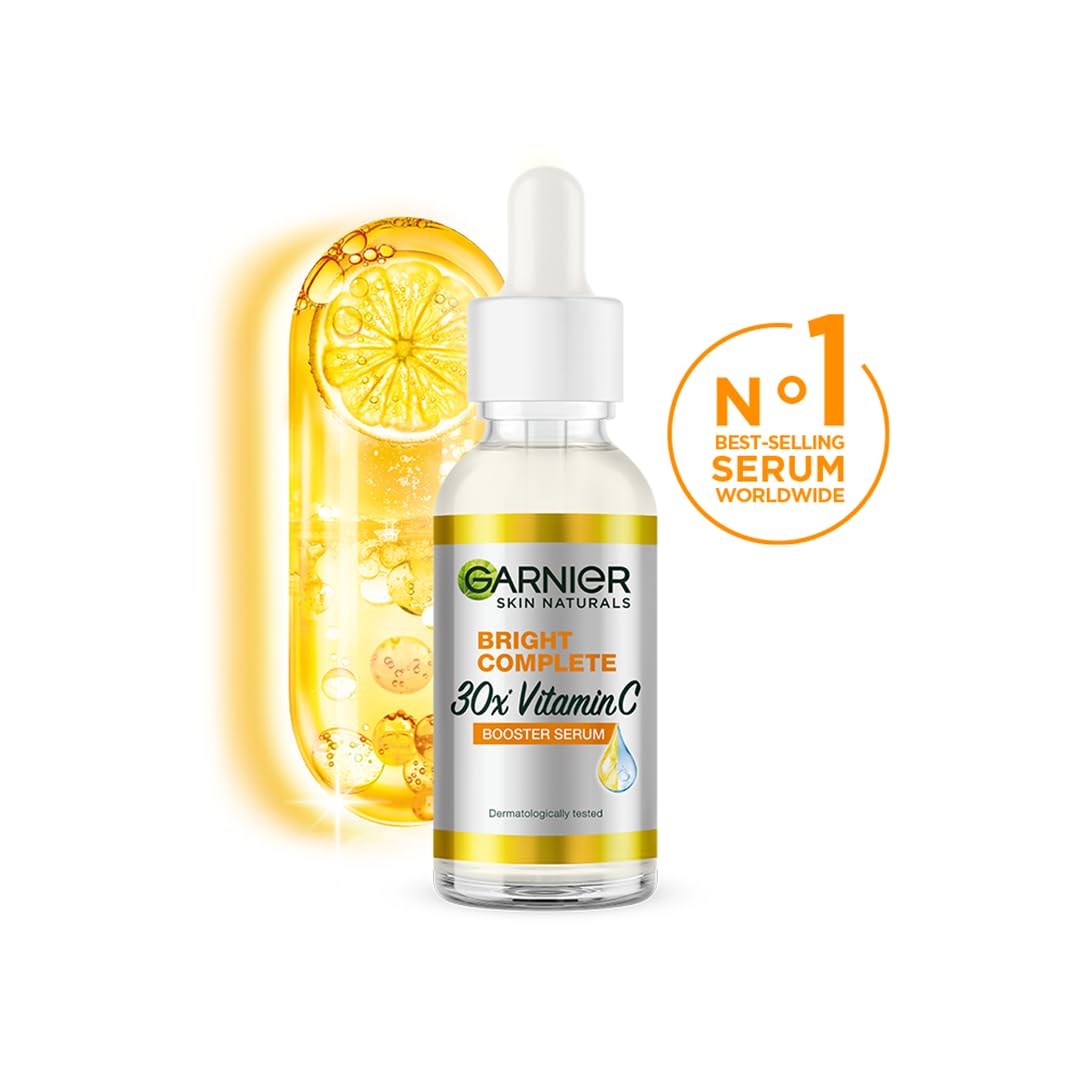
Garnier Vitamin C Brightening Serum — The Accessible Entry Point
The Garnier serum is most buyers’ first encounter with the category, and the review pattern reflects that. Owners consistently praise its fresh, pleasant scent and fast absorption — both significant for anyone who’s bounced off serums that feel sticky or medicinal. The texture sinks in quickly, making morning layering under SPF and makeup low-friction.
The honest caveat: it’s too early for many first-time owners to confirm measurable brightening. This isn’t a failure of the formula — it’s a timeline reality. Byrdie’s roundup “The Best Vitamin C Serums, Tested and Reviewed” notes that visible results typically require 8–12 weeks of consistent use. Garnier is a solid starting point for building the habit, but it shouldn’t be benchmarked against clinical actives in a short window.
One scent note worth flagging: the bright citrus fragrance in this formula is added fragrance, not a marker of actives potency. Active L-ascorbic acid at effective concentrations has only a faint, slightly acidic scent. Neither is inherently problematic — fragrance sensitivity is individual — but the pleasant orange note tells you nothing about efficacy.
Retail range: approximately $12–$15 for 1 fl oz.
Best for: True beginners who want a gentle, sensory-pleasant introduction; anyone shopping at a strict entry-level budget without wanting to compromise on absorption feel.
Naturium
$17.89
In stock on Amazon
Check price on AmazonTruSkin Vitamin C Serum — The Thicker Formula That Divides Opinion
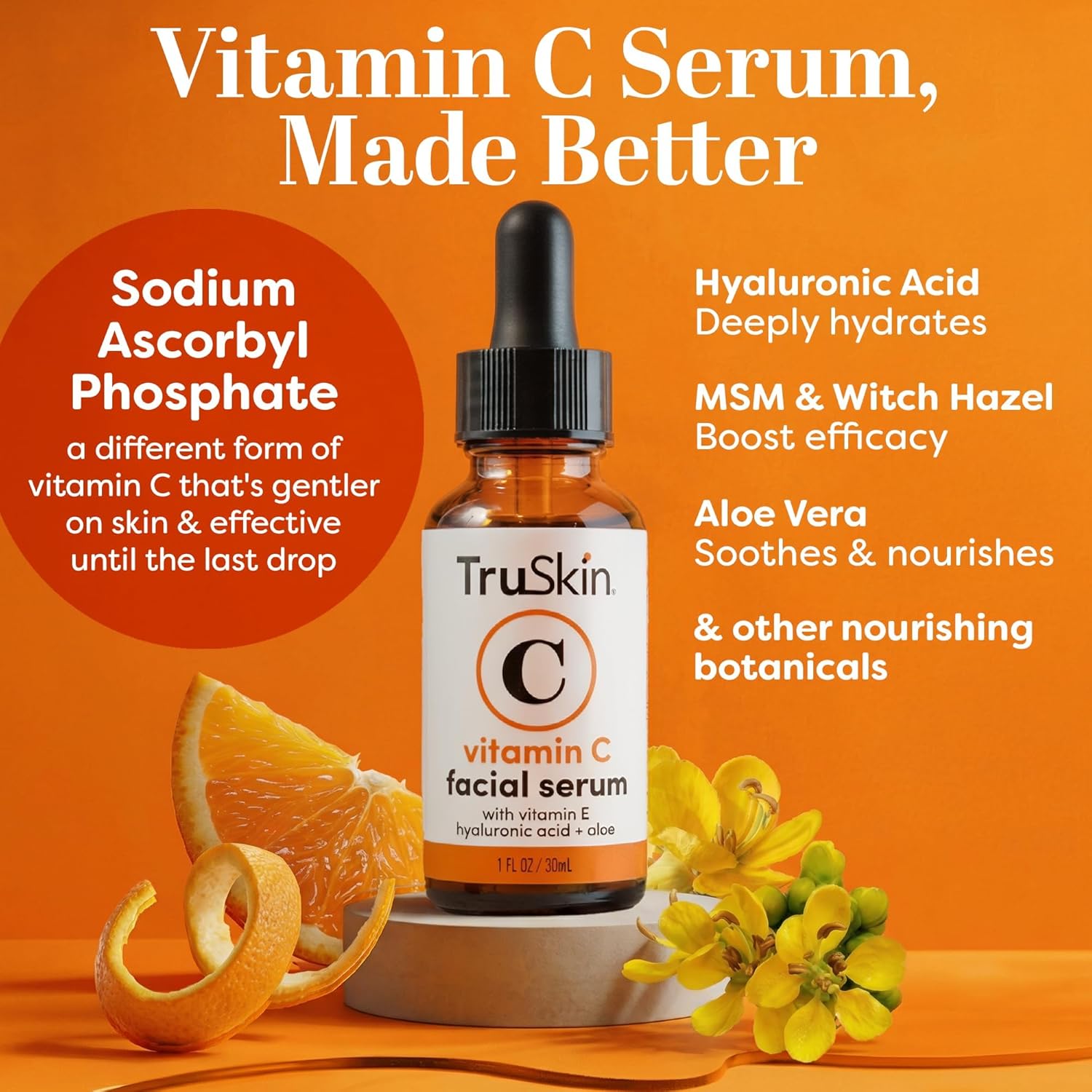
TruSkin has an unusually loyal repurchaser base for a mid-drugstore brand, but the texture is the defining conversation in its reviews. Owners consistently flag it as thicker than average — which the brand positions as a longevity benefit (more actives per drop, longer moisturizing effect), but which creates a real layering challenge. Multiple reviewers mention needing to adjust their routine to avoid pilling under SPF or foundation.
The formula contains a blend of L-ascorbic acid alongside hyaluronic acid and botanical ingredients, which contributes to the thicker feel. Several TruSkin owners mention it in the same breath as pricier alternatives they’ve moved away from — a signal that the formula’s efficacy lands for people who’ve experimented broadly.
Retail range: approximately $20–$35 depending on size and format.
Best for: People who don’t layer multiple serums and can use it as a standalone active step; anyone who finds lighter formulas disappear too fast and wants a formula that stays tactile on application.
Naturium
$17.89
In stock on Amazon
Check price on AmazonBrandefy Vitamin C Serum — The Clinical-Stack Mid-Ranger
Brandefy is the most discussed “dupe-culture” entry in this roundup, and owner reviews are unusually effusive for a brand at this price tier. The consistent praise centers on its L-ascorbic acid, ferulic acid, and vitamin E triple stack — the same architecture used by clinical brands charging multiples of Brandefy’s price. Multiple reviewers who cross-reference ingredient decks carefully call it comparable to expensive clinical formulas they’ve moved away from.
The Paula’s Choice Skincare Dictionary entry on vitamin C explains why the triple combination extends active stability and amplifies antioxidant coverage, and the EWG Skin Deep Database ingredient profile for ferulic acid corroborates its role as a well-studied antioxidant stabilizer. Brandefy’s execution of this architecture at a mid-tier price point is the central reason for its strong owner consensus.
The honest trade-off: dupe performance isn’t guaranteed across all skin types. Reviewers with very sensitive or reactive skin occasionally note mild stinging at L-ascorbic acid concentrations, and first-time users should patch-test. But for the buyer who’s done their research and wants clinical-adjacent formulation without clinical pricing, Brandefy’s owner consensus is among the strongest in this tier.
Retail range: approximately $18–$28 for 1 fl oz.
Best for: Ingredient-literate buyers ready to graduate past derivative-based formulas; anyone comparing it directly to La Roche-Posay or SkinCeuticals alternatives at a fraction of the price.
TruSkin
$19.99
In stock on Amazon
Check price on AmazonSeoulCeuticals 20% Vitamin C Serum — High Percentage, Surprisingly Wearable
SeoulCeuticals occupies a specific niche: 20% L-ascorbic acid — one of the higher concentrations in this tier — in a formula that owners consistently describe as thinner and more watery than expected. That thinness is actually functional. Reviewers repeatedly mention excellent layerability under makeup and no pilling, which at 20% concentration is a genuine formulation achievement.
A realistic expectation note, supported by the Paula’s Choice Skincare Dictionary’s guidance on percentage ranges: 20% L-ascorbic acid is not inherently safer or more effective for beginners than 10–15%. The percentage tells you concentration, not your skin’s tolerance ceiling. Paula’s Choice’s ingredient guidance indicates that most skin gets meaningful benefit starting at 10–15%; the jump to 20% is meaningful for experienced users, not a mandatory starting point. First-time users should start with fewer drops and build frequency gradually.
The longevity question comes up frequently in SeoulCeuticals reviews: owners report the bottle lasting well with controlled dropper use, and repurchase rates are solid for the tier.
Retail range: approximately $20–$25 for 1 fl oz.
Best for: Experienced vitamin C users stepping up concentration; makeup wearers who need a serum that disappears cleanly under a base.
TruSkin
$19.99
In stock on Amazon
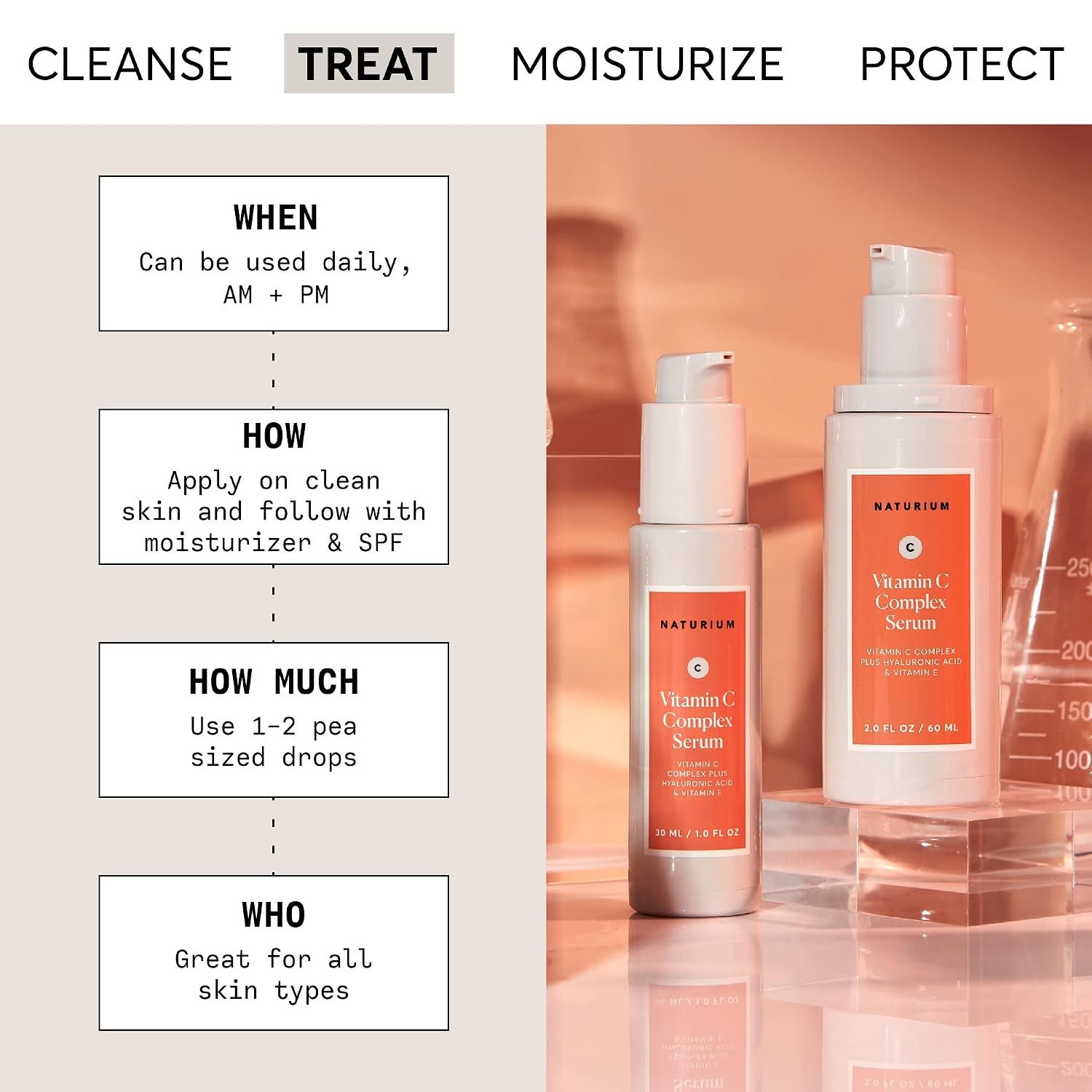
Check price on AmazonNaturium Vitamin C Complex Serum — The Irritation-Free Standout
The most consistent pattern in Naturium’s review corpus is striking: owners report zero stinging, even among people who previously abandoned vitamin C serums due to sensitivity. This makes Naturium a genuinely distinct option in the lineup — not necessarily the most potent formula, but the one with the strongest track record for tolerability.
This matters more than it sounds. If your previous experience with vitamin C serums ended after a few days of redness or tingling, Naturium is the natural re-entry point. It uses a derivative-based approach at a thoughtful concentration, prioritizing stability and skin compatibility over raw percentage numbers. Byrdie’s coverage of vitamin C serums in “The Best Vitamin C Serums, Tested and Reviewed” notes that derivative-based formulas are a legitimate choice for reactive skin, even if the conversion-to-active dynamic means slightly less directness than L-ascorbic acid.
Retail range: approximately $20–$28 for 1 fl oz.
Best for: Anyone who’s had a bad experience with an L-ascorbic acid formula and wants to try again; beginners who are particularly sensitive or rosacea-adjacent.
TruSkin
$19.99
In stock on Amazon
Check price on AmazonOlay Vitamin C + Peptide 24 Serum — The Streamlined Warm-Weather Option
Olay’s vitamin C and peptide hybrid has a clear repurchaser profile: simplicity-seekers. Owners who repurchase consistently describe wanting one effective step — not a four-serum stack — especially in warmer months when heavy routines feel like too much. The peptide addition (short chains of amino acids that signal skin to support its structural proteins) makes this a two-active-in-one proposition.
It’s not the formula for someone who wants to understand exactly which vitamin C form is doing what at what concentration. But for the buyer who wants a streamlined morning routine with one bottle earning its keep, the Olay repurchase rate signals it’s delivering something real.
Retail range: approximately $25–$35 for 1.3 fl oz.
Best for: Routine minimalists; anyone who wants a single active step rather than a layered regimen, particularly in humid or warm seasons.
TruSkin
$19.99
In stock on Amazon
Check price on AmazonQuick-Reference Price Comparison
| Formula | Retail Range | Key Active Architecture | Tier |
|---|---|---|---|
| Garnier Vitamin C Brightening Serum | $12–$15 / 1 fl oz | Vitamin C derivative blend | Naturium — $17.89 |
| TruSkin Vitamin C Serum | $20–$35 / 1–2 fl oz | L-ascorbic acid + hyaluronic acid | Naturium — $17.89 |
| Brandefy Vitamin C Serum | $18–$28 / 1 fl oz | L-ascorbic acid + vitamin E + ferulic acid | TruSkin — $19.99 |
| SeoulCeuticals 20% Vitamin C | $20–$25 / 1 fl oz | 20% L-ascorbic acid + ferulic acid + vitamin E | TruSkin — $19.99 |
| Naturium Vitamin C Complex | $20–$28 / 1 fl oz | Derivative-based blend | TruSkin — $19.99 |
| Olay Vitamin C + Peptide 24 | $25–$35 / 1.3 fl oz | Vitamin C + peptides | TruSkin — $19.99 |
Frequently Asked Questions
Can I use a vitamin C serum without a separate moisturizer in summer? Possibly — but it depends on the formula. Serums like TruSkin that contain hyaluronic acid may provide enough hydration for combination-to-normal skin in humid weather. Thinner L-ascorbic acid formulas like SeoulCeuticals are primarily antioxidant delivery systems, not moisturizers. If your skin skews dry or you’re using a high-percentage formula, following with a moisturizer is broadly recommended regardless of season.
Does a higher percentage like 20% mean more results or more irritation for a beginner? Both, potentially. Higher concentrations of L-ascorbic acid can accelerate visible brightening but increase the likelihood of redness and stinging on first use. The Paula’s Choice Skincare Dictionary notes that most skin gets meaningful benefit starting at 10–15%; the jump to 20% is meaningful for experienced users, not a mandatory starting point for someone new to the category.
How quickly will I notice brighter skin — days or weeks? Weeks to months is the honest answer. Allure’s editorial feature “Everything You Need to Know About Vitamin C Serums” puts visible improvement at 8–12 weeks of daily use, consistent with dermatologist guidance across the category. Some users notice a subtle glow effect earlier from the antioxidant protection alone, but measurable spot-fading and tone evening require sustained use.
Will these serums oxidize or turn orange in the bottle, and how do I prevent it? Yes — especially L-ascorbic acid formulas. Oxidation is visible as the formula shifts from pale yellow or clear to deep orange or brown; at that point, potency has degraded significantly. Prevention: store in a cool, dark location (not a humid bathroom shelf), close caps tightly immediately after use, and buy smaller bottles you’ll finish in 2–3 months. Dark or opaque packaging helps. SeoulCeuticals and Brandefy both use packaging designed to limit light exposure.
Do I need ferulic acid and vitamin E alongside vitamin C, or is a single-active version fine? The triple stack is genuinely better — not just marketing. The ferulic acid and vitamin E combination stabilizes L-ascorbic acid (slowing oxidation) and creates a synergistic antioxidant effect that single-active formulas don’t replicate, as explained in both the EWG Skin Deep Database ingredient profiles and the Paula’s Choice Skincare Dictionary vitamin C entry. That said, a stable derivative-based formula without the stack — like Naturium’s approach — can still deliver meaningful results, especially for sensitive skin. The decision rule: if you’re using L-ascorbic acid and want the full evidence-backed benefit, look for the triple stack. If you’re prioritizing tolerability, a well-formulated derivative is a reasonable trade.
The Decision Frame
If you’ve never used a vitamin C serum: Start with Garnier or Naturium. Lower the variables. Build the daily habit before optimizing the formula.
If you’ve tried vitamin C before but quit due to irritation: Naturium is the specific recommendation here. The owner consensus on tolerability is unusually consistent across review sources.
If you’re ingredient-literate and want clinical-adjacent results at a mid-tier price: Brandefy’s triple-stack formulation earns its reputation. Patch-test first; the payoff for non-reactive skin is real.
If you layer under makeup daily: SeoulCeuticals’ thin-but-potent texture is the practical choice. The 20% concentration rewards users who’ve already established tolerance.
If you want one fewer step in your warm-weather routine: Olay’s peptide hybrid handles the simplicity ask without sacrificing the active ingredient story entirely.
The category is crowded precisely because vitamin C genuinely works — but the right formula depends less on price and more on your skin’s tolerance, your layering habits, and how long you’re willing to wait before judging results. Start simple, stay consistent, and give any formula a full 8–12 weeks before drawing conclusions.